
News  17th February 2026
17th February 2026 

 500k-1m
  0-50k
0-50k  100k-500k
  United States
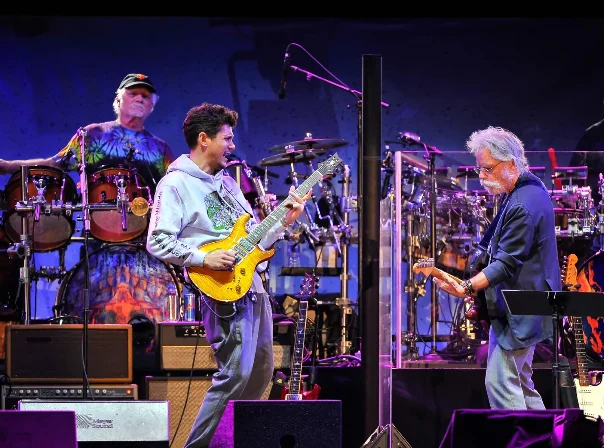
 Dead & Company emerged in 2015 as a fresh iteration of the legendary Grateful Dead, bringing together a blend of original members and new blood. Anchored by guitarists Bob Weir and John Mayer, along with drummers Mickey Hart and Bill Kreutzmann, the band seemed destined to carry on the tradition of live improvisational rock. Their goal, as it were, was to introduce Grateful Dead’s iconic sound to a younger audience, making their music feel alive again, resonating through sprawling concert venues.
The uncertainties that accompanied them—like Kreutzmann’s later replacement by Jay Lane and the subsequent shifts of their final tour—remind us that the past never truly dies, but rather, it morphs into something else. Their final shows in San Francisco drew an over 840,000-strong audience, seemingly embodying the spirit of community that the Grateful Dead championed. Yet, while Mayer reassured fans that “Dead & Company is still a band,” one couldn’t shake the feeling of an ending, a pause, a deep breath before whatever the next chapter holds.
In moments of reflection, Weir spoke about a dream he had, a view of the band decades into the future, the implications of a lineage that might carry on so far beyond themselves. There’s poetry there—a musing on legacy wrapped in the wistfulness of aging rock stars, of hair turning gray while younger musicians take the reins. It makes one wonder how often they looked back at the original spirit that ignited it all.
It’s this tension between continuity and change that shapes the essence of Dead & Company. Their willingness to embrace both echoes of the past and hints of the future reflects a band that, amidst the noise, continues to search for its pulse—not simply as revivalists, but as artists navigating the unpredictable terrain of time, memory, and music.

Looking for a different kind of talent? Browse our other talent rosters below to find the right talent to fit.