
 United States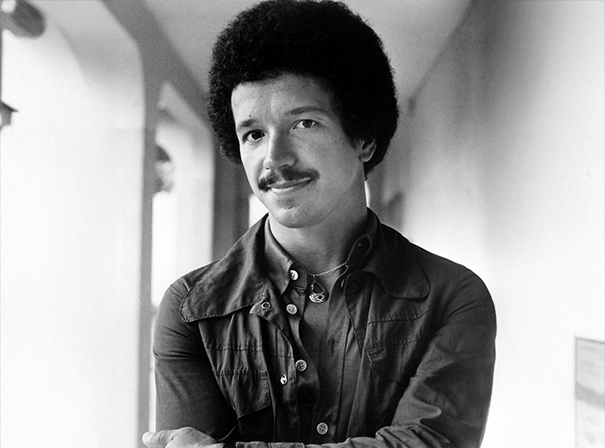

Bimini Headlines Fulham Pier for Hammersmith & Fulham’s Youth Arts Festival
21 hours ago


Keith Jarrett has established a distinguished career as a pianist and composer, recognized for his profound contributions to jazz, classical music, and improvised performances.
Jarrett recorded as a bandleader for several US labels, including Columbia, which signed the pianist to a contract.
Jarrett has an extensive discography with ECM Records, encompassing solo improvisation, duets, trios, quartets, original compositions, multi-instrumental ventures, and classical repertoire. His association with ECM dates from November 1971, when he and producer Manfred Eicher first collaborated on the solo piano album "Facing You."
After Columbia dropped Jarrett, his manager negotiated a contract with Impulse! Records, for whom his 'American Quartet' recorded eight albums.
Jarrett's trio with Charlie Haden and Paul Motian released "Somewhere Before" in 1968 on Atlantic Records. In 1971, he participated in a four-day session for Atlantic Records during which they recorded the trio album "The Mourning of a Star" and two albums, "El Juicio (The Judgement)" and "Birth."
In 1988, New World Records released the CD "Lou Harrison: Piano Concerto and Suite for Violin, Piano and Small Orchestra", featuring Jarrett on piano.
In 1992, Music Masters Classics released Jarrett's performance of Peggy Glanville-Hicks's "Etruscan Concerto." In 1995, Music Masters Jazz released a CD on which one track featured Jarrett performing the solo piano part in "Lousadzak" by Alan Hovhaness.
Keith Jarrett was born on May 8, 1945, in Allentown, Pennsylvania. Exhibiting prodigious musical talent from an early age, he began piano lessons before his third birthday and performed in his first formal recital at seven, including his own compositions. Jarrett’s early education included classical piano studies and a growing interest in jazz, which led him to decline an invitation to study classical composition in Paris with Nadia Boulanger. He furthered his musical education at Berklee College of Music in Boston before moving to New York City in 1964, where he quickly became involved in the vibrant jazz scene. His professional career began with engagements at the Village Vanguard and a brief but impactful tenure with Art Blakey’s Jazz Messengers in 1964, making his commercial recording debut on the album “Buttercorn Lady.”
Jarrett’s career advanced significantly when he joined the Charles Lloyd Quartet in 1966. This group gained international recognition for its blend of open improvisation and rhythmic grooves, touring extensively across the U.S. and Europe, including appearances in Leningrad and Moscow. Their 1966 album “Forest Flower” became a successful jazz recording of the mid-1960s. Following his time with Charles Lloyd, Jarrett joined Miles Davis’s group in 1970, playing electric organ and Rhodes piano on recordings such as “Miles Davis at Fillmore” and “Live-Evil.” Despite his personal preference for acoustic instruments, his association with Davis further solidified his reputation in the jazz world. In 1971, Jarrett began his long-standing collaboration with ECM Records, releasing his influential solo piano album “Facing You.” This marked the beginning of a prolific period that included the formation of his “American Quartet” with Charlie Haden, Paul Motian, and Dewey Redman, and his “European Quartet” with Jan Garbarek, Palle Danielsson, and Jon Christensen, both groups contributing numerous albums to his discography.
A pivotal moment in Jarrett’s career occurred in 1973 when he pioneered the totally improvised solo concert format. His album “The Köln Concert” (1975) became the best-selling piano recording in history, showcasing his spontaneous creativity and establishing him as a global jazz icon. This format led to a succession of acclaimed solo albums, including “Sun Bear Concerts” (1976). In 1983, at the suggestion of ECM’s Manfred Eicher, Jarrett formed the Standards Trio with Gary Peacock and Jack DeJohnette. This trio achieved critical and commercial success, touring and recording for over 25 years and producing a vast catalog of jazz standards and improvised works. Jarrett also maintained a parallel career in classical music, recording works by Bach, Handel, Shostakovich, and Pärt, and composing his own classical pieces. He received the Polar Music Prize in 2003 and the Léonie Sonning Music Prize in 2004. In February 2018, Jarrett suffered a stroke, which, combined with a second stroke in May 2018, led to partial paralysis and his retirement from live performance.

Curious about our offerings or have inquiries? We're eager to assist!
Just complete the form, and we'll respond promptly.