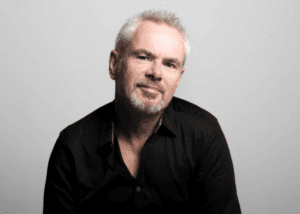


Nik Kershaw to perform at Douro & Porto Wine Festival
3 years ago


 United Kingdom
Nik Kershaw, the influential English singer, songwriter, and multi-instrumentalist, gained prominence in the 1980s as a solo artist, later moving into songwriting and production for other notable artists.
Nik worked with the global music company Audio Network on a project, encouraged by its CEO, Andrew Sunnucks.
Imagem Music, previously known as Rondor, re-signed Nik Kershaw to a worldwide publishing deal in 2013, having originally signed him in 1994.
Nik Kershaw discussed the Roland technologies that were instrumental in the creation of his hit albums "Human Racing" and "The Riddle."
Nik Kershaw collaborated with IPOW on their nature-based project, EarthSonic, which served as an inspiration for sound recordists and composers.
Nicholas David Kershaw was born on March 1, 1958, in Bristol, England, and raised in Ipswich, Suffolk. His early life was influenced by music, with his father being a flautist and his mother an opera singer. Kershaw taught himself guitar and played in local Ipswich bands, including the Deep Purple covers band Half Pint Hogg, and the jazz-funk outfit Fusion. After Fusion disbanded in 1982, he pursued a full-time solo career, placing an advertisement in Melody Maker that led to him securing manager Mickey Modern and a recording contract with MCA Records. This marked the beginning of his professional music journey, culminating in his debut single in 1983.
Kershaw’s breakthrough came in 1984 with the release of “Wouldn’t It Be Good,” which reached No. 4 in the UK and achieved international success. The accompanying music video received significant rotation on MTV, contributing to his global recognition. He followed this with three more top 20 hits from his debut album, “Human Racing,” including a re-issue of “I Won’t Let the Sun Go Down on Me,” which became his biggest hit, peaking at No. 2 in the UK. His second album, “The Riddle,” released in November 1984, further solidified his success, producing two more UK top 10 hits, “Wide Boy” and “Don Quixote.” His extensive touring with his backing band, the Krew, further cemented his status as a prominent artist.
In July 1985, Kershaw performed at Live Aid at Wembley Stadium, a pivotal moment in his career. While his solo pop stardom began to decline afterward, he continued to have success as a songwriter and collaborator. Notably, he penned Chesney Hawkes’ 1991 UK No. 1 single “The One and Only.” He has collaborated with artists such as Elton John, Tony Banks of Genesis, and Bonnie Tyler, and has released nine studio albums, including “15 Minutes” (1999) and “Oxymoron” (2020), showcasing his continued musical output and evolution beyond his initial pop success. In 2019, he received an Honorary Doctorate from the University of Suffolk for his services to the music industry.

Curious about our offerings or have inquiries? We're eager to assist!
Just complete the form, and we'll respond promptly.