
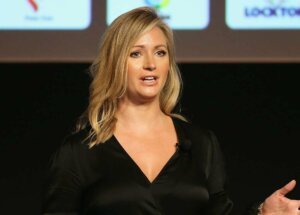
Hayley McQueen partnered with J.P. Morgan for J.P. Morgan International Cricket Cup
4 years ago


 United Kingdom
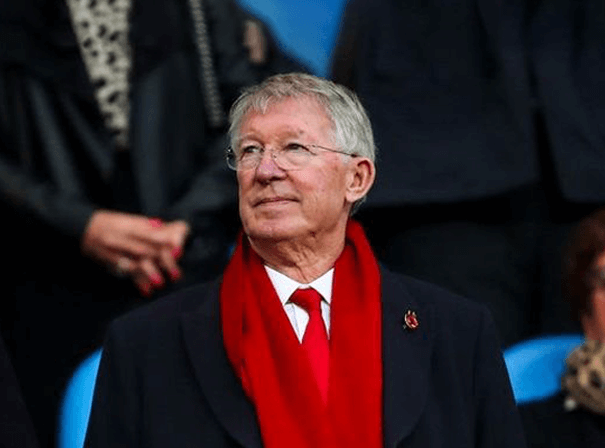
Sir Alex Ferguson, widely considered the most successful football manager in British history, transitioned from a professional football player to an iconic managerial figure, leading Manchester United for nearly three decades.
Sponsors, including Nike, rallied to celebrate the achievements of Manchester United manager Sir Alex Ferguson's career.
Sponsors, including Umbro, rallied to celebrate the achievements of Manchester United manager Sir Alex Ferguson's career.
Sponsors, including DHL, rallied to celebrate the achievements of Manchester United manager Sir Alex Ferguson's career.
The Man United brand and Sir Alex has always been intrinsically linked. The legacy of success – like that of former manager Sir Matt Busby – will never be lost.
In 1983, while managing Aberdeen, Ferguson set up the company, called ACF Sports Promotions Ltd. It reportedly has £24.3 million in investments and made a profit last year of £2.7 million. Sir Alex Ferguson is winding down his business duties after handing his £24million empire to his sons, ahead of turning 83.
Manchester United new part-owner INEOS has continued its cost-cutting programme by ending a multi-million pound annual commitment to Sir Alex Ferguson.
Aon and Thomas Cook are among the Manchester United sponsors preparing to pay tributes to Sir Alex Ferguson.
Aon and Thomas Cook are among the Manchester United sponsors preparing to pay tributes to Sir Alex Ferguson.
Sir Alex Ferguson was born in Govan, Glasgow, on 31st December 1941. His playing career commenced as an amateur with Queen’s Park, followed by a period at St Johnstone starting in 1960. He advanced to professional football, signing with Dunfermline Athletic in 1964, where he recorded 66 goals in 98 appearances. In 1967, he joined Rangers for a record Scottish transfer fee of £65,000. Following a tenure at Falkirk from 1969, during which he gained initial experience as a player-coach, Ferguson concluded his playing career at Ayr United in 1974.
Ferguson initiated his managerial career at 32 with East Stirlingshire in a part-time capacity. He then took over as manager at St Mirren, where he gained a reputation for his disciplined approach. Between 1974 and 1978, he significantly improved the club, guiding them from the lower half of the Second Division to First Division League Champions. In 1978, he became manager of Aberdeen, achieving European success. His management style, though firm, yielded results, including league and cup victories in the early 1980s. Notably, Aberdeen, under Ferguson, became only the third Scottish team to win European silverware by lifting the Cup Winners’ Cup in 1983. He was awarded an OBE in 1984 before his move to Manchester United in 1986.
His tenure at Manchester United spanned almost 27 years, beginning in 1986. After an initial period without trophies, culminating in an FA Cup win in 1990, Ferguson established an unprecedented era of success. He secured 2 Champions League titles, 13 Premier League titles, 5 FA Cups, 4 League Cups, and 1 European Cup Winners’ Cup during his time at the club. He was known for his ability to develop successful teams by integrating both academy prospects and international talent, consistently achieving success despite player departures such as Paul Ince, David Beckham, and Cristiano Ronaldo. Upon his retirement on 8th May 2013, he had accumulated 49 major trophies. He received Manager of The Year 10 times and Manager of the Month 27 times. Ferguson is now Vice-President of the National Football Museum, which inducted him into its Hall of Fame in 2002. There is a stand at Old Trafford and a statue outside the ground named in his honor.

Curious about our offerings or have inquiries? We're eager to assist!
Just complete the form, and we'll respond promptly.