



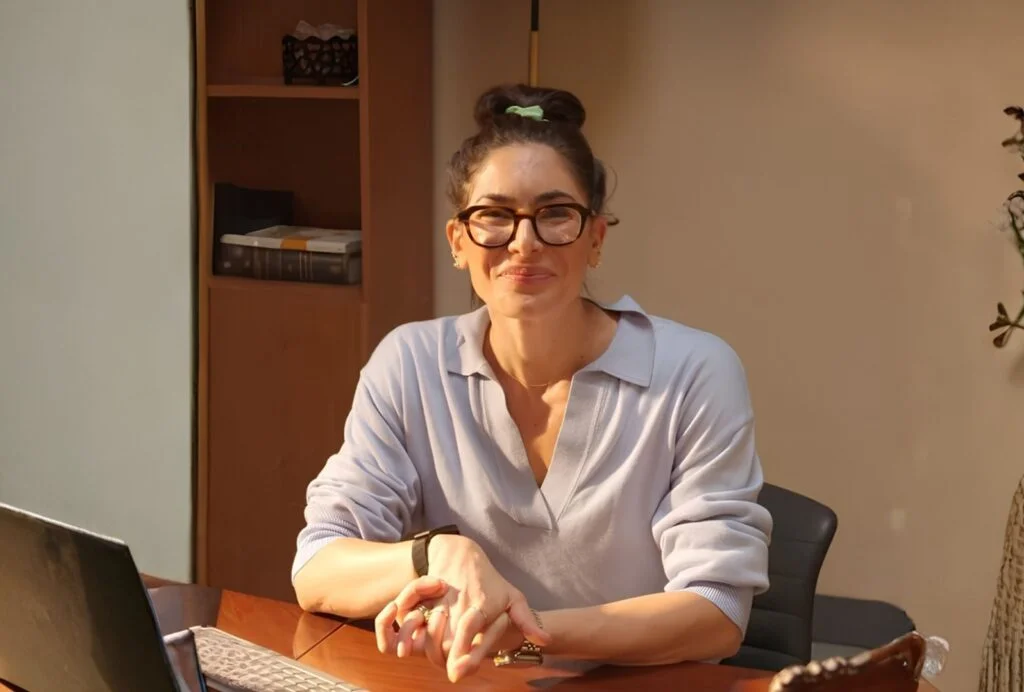
Comedy creator Nikki Howard channels the workplace overachiever everyone recognises, turning Synthesia’s translation, training video, and survey tools into the engine of one very relatable joke.
Every office has one. The colleague who turns a routine Tuesday into a personal highlight reel, translating a meeting into more languages than anyone asked for, then sending round a survey to find out exactly how appreciated they are. That very specific, very recognisable kind of workplace energy is the engine behind Nikki Howard and Synthesia‘s new collaboration.
Rather than a straight software walkthrough, the campaign hands Howard a character: the self-declared office overachiever who insists she’s “not, like, annoying about it” while doing exactly the kind of over-the-top, slightly oblivious things that make her impossible to ignore. It is a funnier, far more memorable way to show what Synthesia’s tools can actually do.
The Talent: Nikki Howard
Nikki Howard built her following on sketch comedy and lifestyle storytelling, with a delivery style that feels more like catching up with a funny friend than watching produced content. Her YouTube channel releases new sketches weekly, while her Instagram following sits at roughly 448,000, built almost entirely on comedic timing and relatable lifestyle moments. She also co-hosts the Sorry Mom podcast and stays active on TikTok, where her short-form sketches regularly travel well beyond her core following.
That mix matters for brand partnerships. Howard’s content already blends entertainment with everyday observation, the kind of “this happened to me too” tone that makes branded content feel native rather than bolted on. For Synthesia, a B2B software platform trying to reach a wider, less technical audience, that accessible delivery is exactly the bridge a product demo usually lacks.
The Brand: Synthesia
Synthesia is an AI video platform built for businesses, letting teams turn scripts, documents, or slide decks into finished videos using AI avatars and synthetic voiceovers. The platform offers over 240 avatars across more than 160 languages, and enterprise teams use it widely for training, onboarding, marketing, and internal communications. Synthesia states it is trusted by 90% of Fortune 100 companies, with more than a million users on the platform.
Localisation is where Synthesia distinguishes itself in a crowded AI video market. A single script can be translated and re-voiced across dozens of languages while keeping the same on-screen avatar, removing the cost and delay of reshooting content for every region. That combination of speed and consistency is the platform’s core appeal to business buyers. However, explaining that value to a wider, non-technical audience in under thirty seconds is a much harder brief. That is precisely the gap this campaign was built to close.
Inside the Campaign
The Reel is built entirely around a single comic voice rather than a traditional split-screen demo. Howard plays a hyper-productive employee who walks through her week, every achievement narrated with the breezy confidence of someone who has no idea how much she’s revealing about herself.
In under a minute, she works through three real Synthesia use cases without ever sounding like a feature list. She mentions translating that day’s team meeting into 29 different languages, including Swahili, name-drops Oprah as a productivity benchmark (with a pointed joke about working at a company that sells orthopedic supplies instead of running a media empire), references a short onboarding video she made for the office’s new coffee machine, and reveals she had Synthesia build and send a workplace satisfaction survey to her colleagues. The sketch closes on a coworker’s blunt, unimpressed reply, which Howard’s character happily misreads as a compliment. It’s a very amusing and relatable sketch, of that one colleague who has started using AI.
That closing beat does more work than it looks like. It reframes everything before it as character comedy rather than a product pitch, while still leaving viewers with a clear sense of what Synthesia can produce: instant multilingual translation, training and onboarding videos, and survey content, all generated quickly enough for one very enthusiastic employee to ship in a single day.
Why the Talent Fit Works
The “overachiever nobody asked for” is one of the most reliable characters in workplace comedy, because almost everyone has worked alongside one. By building the sketch around that archetype rather than around Synthesia directly, Howard gets the audience laughing before they register how much product information they have just absorbed.
That structure also solves a real problem for B2B software brands. Features like one-click translation into dozens of languages or fast onboarding video creation are easy to describe and hard to make interesting. Wrapping them inside a character who is almost aggressively pleased with her own productivity gives each feature a punchline, so the information lands as part of the joke rather than a list of capabilities.
AI Is Already Reshaping the Modern Workplace
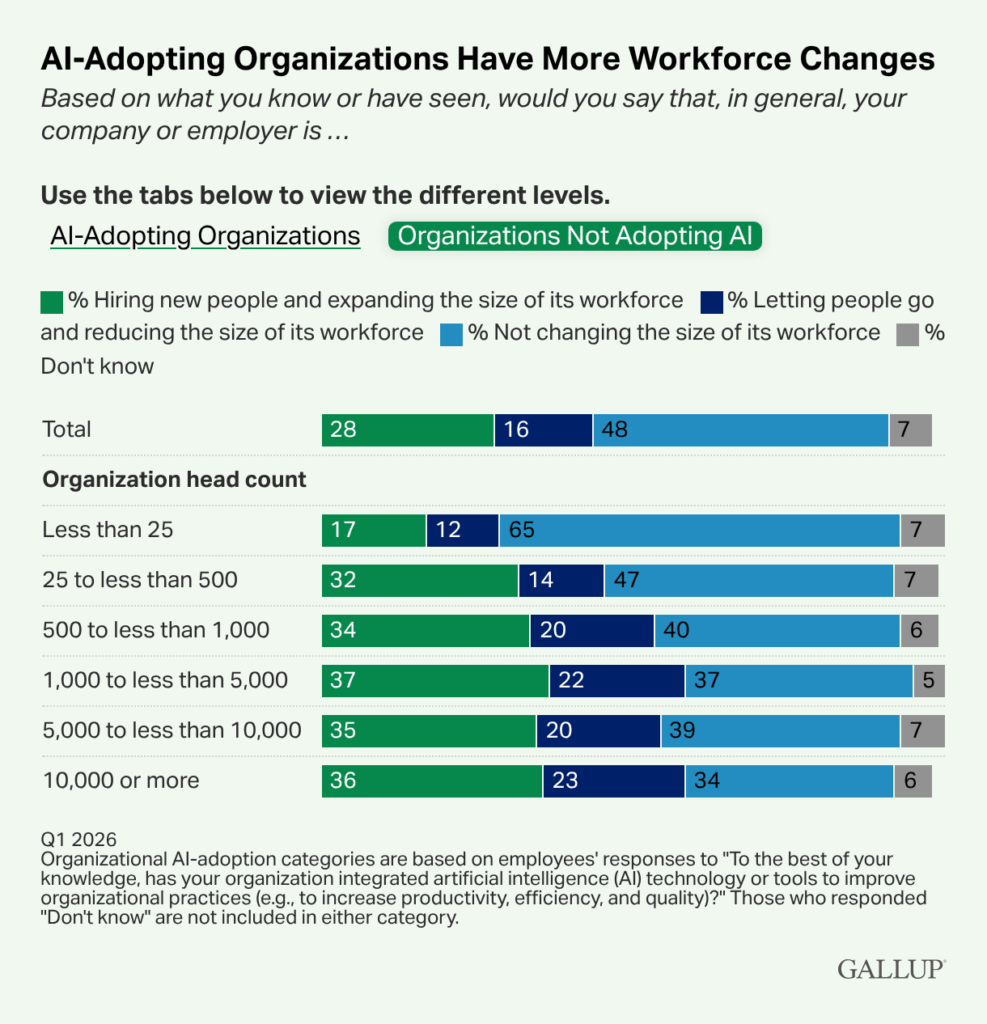
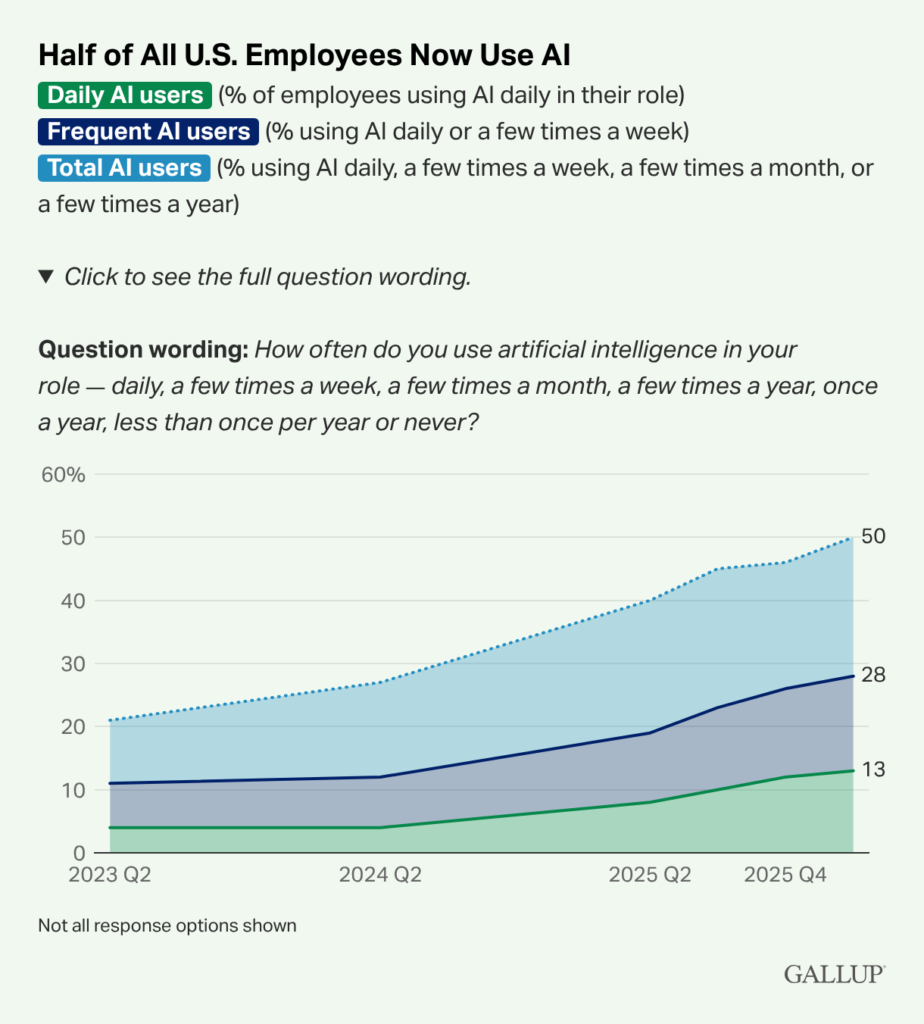
Howard’s character is an exaggeration, but the trend underneath her is not invented at all. According to Gallup’s most recent workplace survey, half of US employees now report using artificial intelligence at work at least a few times a year, and organisational adoption is climbing too, with 41% of employees saying their company has formally integrated AI tools into how it operates, up several points in a single quarter.
The productivity story behind those numbers supports the joke rather than undercutting it. Among employees at companies that have adopted AI, 65% say it has improved their productivity and efficiency, and a meaningful share describe the effect as strongly positive rather than marginal. Globally, most employers now expect AI adoption to become standard within their organisations over the next few years, rather than an experimental side project.
That backdrop changes how the Synthesia campaign lands. A few years ago, a sketch about an employee using AI to translate meetings or build onboarding videos would have needed real set-up. Today, it plays as instantly familiar, because most viewers either know someone doing something close to it, or are quietly doing it themselves.
For Synthesia, that shift changes the job a brand awareness campaign needs to do. The platform no longer has to convince people that AI video tools exist, or explain why a business might want one. Instead, the task becomes standing out inside a workplace AI conversation that is already loud, and a recognisable comedic character does that more efficiently than another statistics-led explainer ever could.
A Wider Trend: B2B Brands Borrowing From Creator Culture
Enterprise software brands have historically relied on case studies, webinars, and trade press to reach buyers. Increasingly, though, platforms like Synthesia recognise that the people researching a tool, and the people who eventually decide whether to adopt it inside a business, are scrolling the same social platforms as everyone else.
Creator-led comedy offers something traditional B2B marketing struggles to deliver: proof that a product fits into a normal, relatable life rather than only a boardroom. As more software companies compete on similar core features, that relatability becomes a genuine differentiator. A character viewers recognise from their own office builds a different kind of trust than a polished, generic explainer ever could.
Industry Implications
This campaign also points to a broader opportunity: reusing creator-led demos as long-term marketing assets. Content built around a single, clear use case can be repurposed well beyond its original post, whether as a paid social cutdown, a sales enablement clip, or part of a wider case study showing how creator marketing translates into product understanding. The important takeaway, is that Synthesia didn’t use AI to promote it’s AI they understand the importance of human connection and talent.
For brands weighing where AI tools sit in everyday culture, partnerships like this show a workable middle ground between credibility and entertainment. Howard did not need to pretend to be a software reviewer. She built a character familiar from any office, then let that character’s enthusiasm carry the product message for her.
MN2S facilitated this partnership between Nikki Howard and Synthesia, connecting a sketch-comedy creator with a B2B software brand looking for a more human way to demonstrate its product.
Check out the MN2S talent roster to discover more creators and influencers available for brand campaigns.