



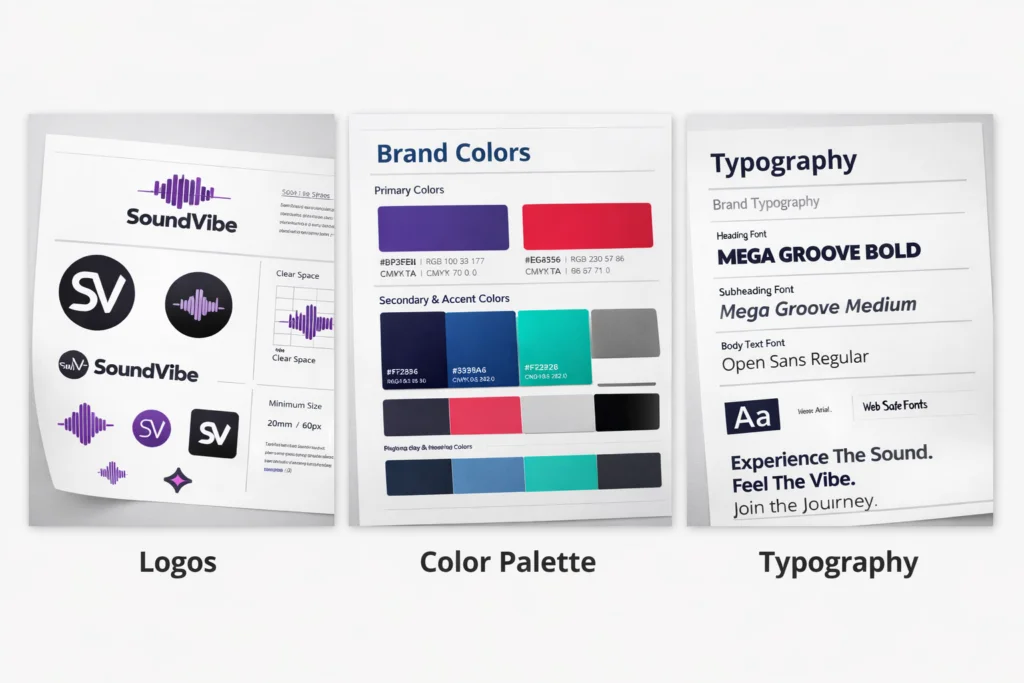
Step by Step Guide for artists and labels
If you’re building a music brand that needs to be seen, shared, and remembered consistently across platforms, campaigns, and collaborations, you need more than just a logo and a moodboard.
You need a brand kit.
For artists and record labels, a brand kit acts as the central system for your visual identity, messaging, and marketing assets. It helps ensure your artwork, social media content, press materials, and releases all feel cohesive.
In a competitive industry where new music is released every day, consistency helps fans recognise and connect with your work instantly. A clear brand identity builds stronger relationships with listeners and helps you stand out from the noise. Learn more about building your music brand.
This guide explains how to build a complete brand kit, from brand strategy to asset organisation.
What is a brand kit?
A brand kit is a centralised collection of the visual, verbal, and strategic elements that define your brand, plus the assets and guidelines required to use them correctly.
A comprehensive brand kit usually includes:
- Brand strategy and positioning
- Logos and visual guidelines
- Colour palettes and typography
- Photography and artwork
- Video assets
- Messaging and tone of voice
- Marketing templates and brand materials
Think of it as the operating system for your brand. For musicians, this means everything from album artwork and press photos to logos, social graphics, and marketing copy should live in one organised system.
Why artists and labels need a brand kit
Consistency across releases
Fans often discover music visually first, through cover art, social media, or press photos. Your visuals should reinforce your identity and reflect your sound. See examples of music release artwork.
Faster marketing workflows
When artwork, logos, and templates are easily accessible, it becomes much faster to produce posters, social posts, or promotional campaigns.
Stronger collaboration
PR teams, designers, promoters, and collaborators can quickly access the correct assets.
Brand control
You maintain oversight of how your logo, artwork, and messaging are used.
Step by Step: How to Build Your Brand Kit
Step 1: Define your brand strategy
Before you design visuals, you need to understand what your brand represents. In music, branding is about creating an emotional connection with your audience and communicating your personality through every touchpoint. Learn more about music brand strategy.
Your strategy should include:
- Mission statement: Why you create music
- Vision statement: Where your project is heading
- Brand values: What your project stands for
- Audience personas: Who your music is for
- Positioning statement: What makes your sound unique
- Brand personality: How you want fans to perceive you
Document these in a Brand Strategy section of your brand kit so collaborators can understand your creative direction.
Step 2: Create brand guidelines
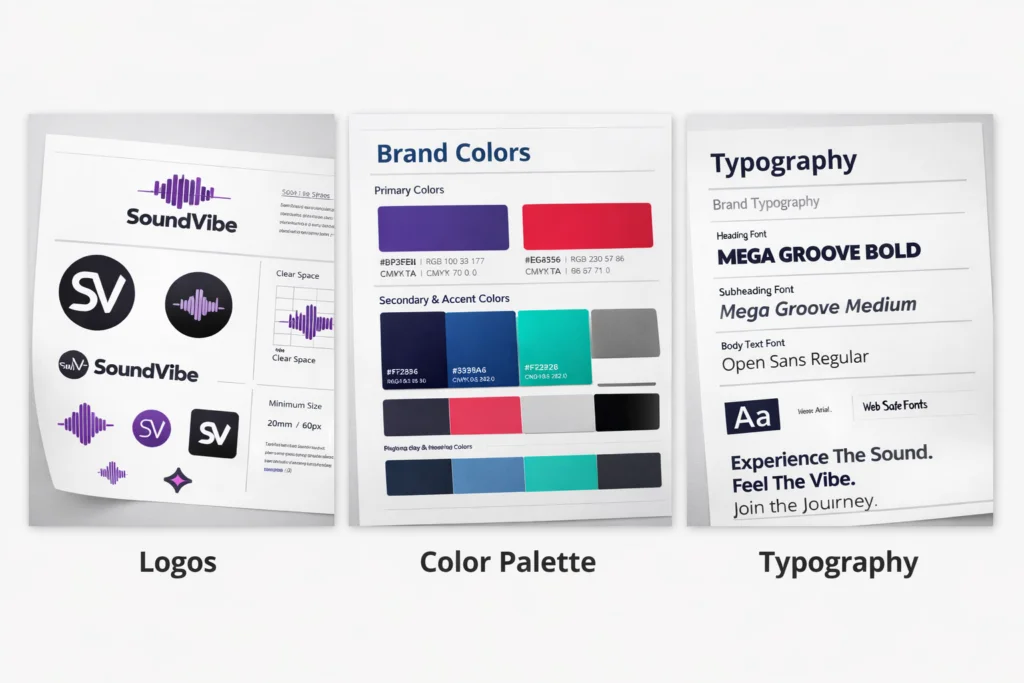
Brand guidelines define how your brand appears visually. This ensures every piece of content, from album covers to social media graphics, remains consistent.
Logos
A well-designed logo is a core part of your identity as an artist or label. It acts as a symbol that connects audiences to your music and reinforces recognition across merchandise, artwork, and marketing materials. Learn how to build a music logo.
Include:
- Primary logo
- Alternate logos
- Icons or favicons
- Colour variations
Also document:
- Minimum logo sizes
- Clear space rules
- Approved placements
Your logo should be versatile enough to work across album covers, merchandise, posters, and social media graphics.
Colour palette
Your brand colours help audiences recognise your visuals instantly. Include primary, secondary, and accent colours, with codes for HEX, RGB, CMYK, and Pantone formats. Consistent colour use helps create a unified visual identity across platforms.
Typography
Typography helps define the visual tone of your brand. Include heading fonts, subheading fonts, body text fonts, web-safe alternatives, and usage examples. Typography is particularly important for posters, artwork, and social graphics.
Iconography
If your brand uses icons, specify style, approved icon sets, and usage guidelines to maintain consistency.
Design examples
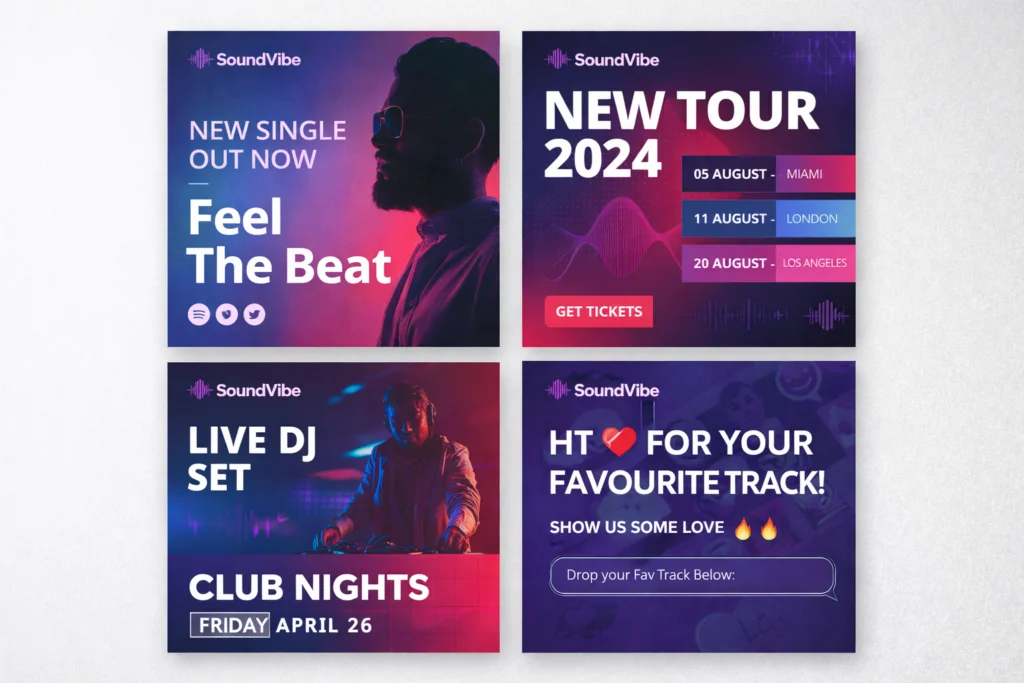
Show real applications to help teams understand how everything fits together. Examples include social media posts, advertising banners, website layouts, and packaging designs. Deliver these in a PDF and include visual references in your brand kit.
Step 3: Curate brand imagery
Press Images are one of the most powerful tools in music branding. Include press photos, lifestyle or studio shots, performance photography, and textures. Guidelines should cover lighting style, composition, colour grading, styling, and wardrobe. Learn about press photo guidelines.
Step 4: Organise artwork and release visuals
Album covers are often the first visual interaction listeners have with a release. Include album and single artwork, promotional graphics, social media visuals, and merchandise designs. Styles include photographic artwork, illustrations, abstract designs, typography-focused covers, and collage artwork. Explore types of music release artwork.
Step 5: Upload video assets
Include music videos, promo clips, social media reels, visualisers, and logo animations. Document licensing rights, raw files, and optimised versions. Tag videos clearly for easy searching.
Step 6: Define messaging and brand voice
Your brand has a distinct voice. Include tone of voice, brand story, artist biography, taglines, press descriptions, and social media messaging examples.
Step 7: Provide templates and marketing collateral
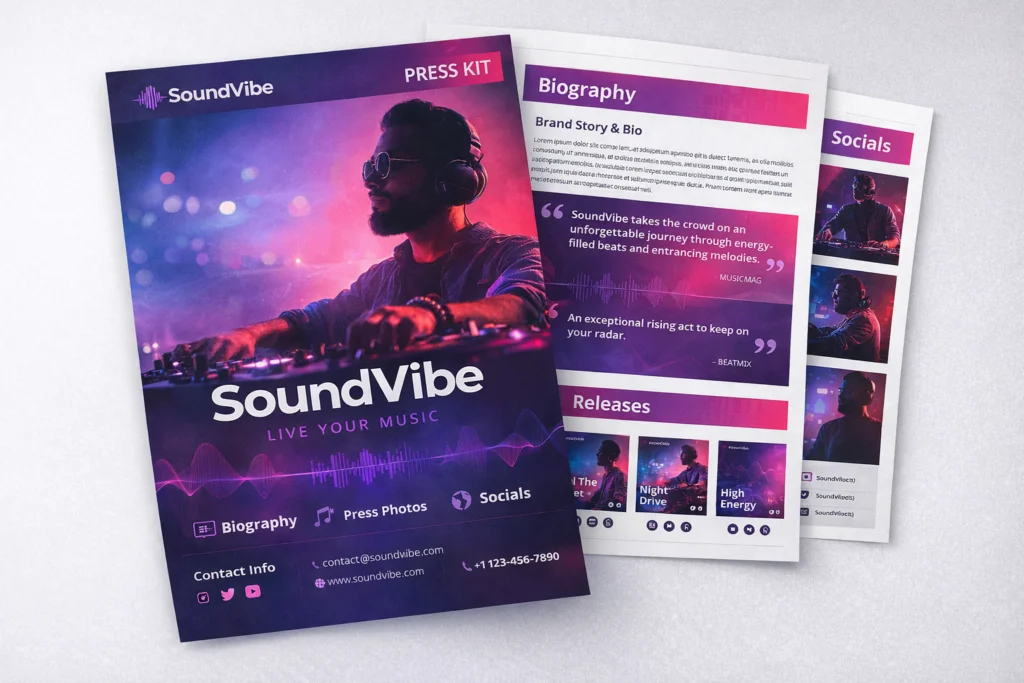
Templates make it easier to produce branded content quickly. Examples include social media templates, email newsletters, press kit documents, presentation decks, and merchandise mockups. Tools include Figma, Adobe Creative Cloud, Canva, or Adobe Express. You will need to make sure that your EPK aligns with your brand guidelines.
Step 8: Store your brand kit in a central platform
Use a cloud-based platform that provides centralised asset storage, user permissions, search and tagging, version control, and download options.
Step 9: Maintain and evolve your brand kit
Update regularly with new releases, press photos, merchandise, campaign visuals, and rebrands. Consistency ensures fans continue to recognise your identity. Learn more about building your music brand.
Final thoughts
A successful music brand is built through consistent storytelling, visuals, and messaging. Your brand kit acts as the infrastructure that supports that process. A well-structured brand kit allows every collaborator, from designers to PR teams, to represent your project accurately.
For artists and labels looking to grow their presence, investing time in a strong brand kit is one of the most effective ways to ensure your music, visuals, and messaging all work together to build a recognisable identity.