



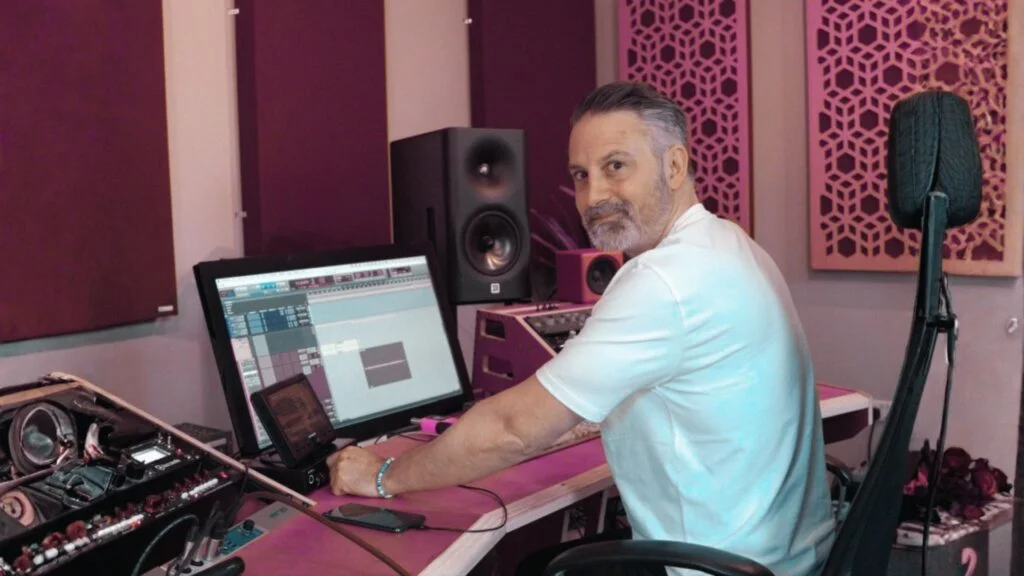
Producer, mixing and mastering engineer and label owner
Christian Ballard, also known as DJ Christian B, is a music producer, mixing and mastering engineer and label owner whose career spans decades of working at the intersection of artistry and technical craft. Having started out as a songwriter who had to learn the engineering side out of necessity, Ballard has since built a reputation for mixing and mastering that draws on deep musical instinct as much as technical skill. We caught up with him to talk process, the realities of the modern music industry, and what it really takes to get a track sounding like a record.
You describe yourself as a music lover first. How did that lead you into mixing and mastering?
When I became a songwriter I had to become a mixing engineer at the same time, because artists and labels need to hear tracks that sound like records, so it was a necessity in the beginning. But it quickly grew into a passion. I come at it from an artistic perspective, being an artist myself, and I also use certain pieces of equipment which gives me my sound.
What do you think separates a good mix from a chart-level record?
A chart-level track needs all the ingredients. A great mix is part of a great record, but a great mix with a mediocre song won’t make a hit. You ideally need both. A great song will always do well, that’s the foundation everything else is built on.
Can you usually tell when a track has something special?
Yes, normally. There are songs that can grow on you, but ideally you want to feel something straight away. That’s when it’s undeniable.
Was there a key moment in your career that changed how you work?
When I had my studio properly acoustically treated and could truly hear what was happening, that was the “aha” moment. It changed my whole process. Everything before that, I was working without the full picture.
What does your process look like from getting a track to finishing a master?
When making music for myself it can take anywhere from four hours to three days. I’m always agonising over the final mix and I often end up with three or four final versions and am rarely 100 percent happy. The song and performance are the most important things by far, but a great mix makes it extra special. There have been plenty of hits with bad mixes in the past, but there’s no excuse for that nowadays.
Is there something you do in your mixes that most people might not realise?
I don’t think I do anything special, honestly. It’s mainly experience, knowing what to do when things aren’t quite working. A great track and arrangement will almost mix itself, and that should really be the aim from the production stage. If you get that right, the mix becomes much more straightforward.
How do you balance loudness and clarity with streaming in mind?
I could open a whole can of worms with the loudness debate. I always try to get masters loud enough to be competitive, but I make sure the song always stands up. Some tracks work better than others at being very loud and it always depends on the arrangement and the mix.
How do you know when a track is actually finished?
Do you ever? Sometimes I have to say “this is it” and put it down. As long as you get a great feeling, that’s all you need.
What’s the most common mistake artists make before sending you music?
When I’m mastering, I can often hear that they don’t have a great room to mix in, so sometimes I’m having to rescue a mix rather than simply polish one. I think more artists should invest in a great set of headphones before anything else.
If an independent artist has a tight budget, where should they spend it first?
If they have a great song, they’re already halfway there. If they want to mix their own music, spend on room treatment first. Good acoustic treatment will transform what you hear far more than any piece of gear.
What can artists do to improve their sound before it even gets to mixing?
Focus on the arrangement. The best mixes always start with the best arrangements. Always pick the right sound for the job and don’t be afraid to leave things out. Sometimes what you remove creates more room for a better mix.
How important are marketing and distribution compared to just having a great track?
It’s everything. You can have a great song, but if you want the world to hear it you need great marketing and a good distribution company. Working with MN2S has been brilliant, they’re very well respected and they can make things happen that I couldn’t myself. I’m very happy to have them on my side.
Do you think artists underestimate branding and content nowadays?
Massively. It’s at a point where content is as important as the music. You have to do it and you have to have great branding. As an artist you’re a product, and that product needs a strong brand. You have to post more on socials than you realise, the loudest people get heard. You mustn’t be scared to get on people’s nerves.
How do you see the role of a mixing and mastering engineer changing right now?
The biggest shift is AI. The truth is it can get you so far, but it won’t be like having a human with a soul listening to your music, not for a long time anyway.