



Why DJ download stores still deserve your attention
Streaming dominates the conversation, but in dance music the download stores are still where reputations are made. Beatport and Traxsource are where working DJs buy the music they play, and a strong chart position remains one of the clearest signals that a track is connecting. Promoters check the charts before booking; labels check them before signing. Yet most artists upload their music, hope for the best, and never learn how these platforms decide what gets seen.
The good news is that both stores publish clear guidance on what they reward, and both run systems built to help smaller labels break through. Here are the mechanics that matter and the moves that genuinely push a track up the charts.
How the charts actually work
Unlike streaming playlists, the main charts on both stores are driven by sales. Every genre page has its own Top 100, refreshed as purchases come in, alongside an overall store chart. Two things follow. First, a focused burst of purchases in your first week counts for far more than the same sales spread over three months: chart position is about velocity, not volume. Second, you only compete against other tracks in your genre category, which makes genre selection a strategic decision rather than an admin task.
Both platforms also run curated sections above the charts: banners, featured release slots and editorial lists such as Traxsource’s What’s Hot, Essentials, Hype Chart and Weekend Weapons. These placements are chosen by human A&R teams, and they are where chart runs usually begin.
Get your genre and your files right
DJ stores serve professionals, so the basics are non negotiable. Submit the highest quality audio you have, professionally mastered, with accurate artwork, artist names and mix names. BPM and key data help DJs find and mix your track, so never treat metadata as an afterthought.
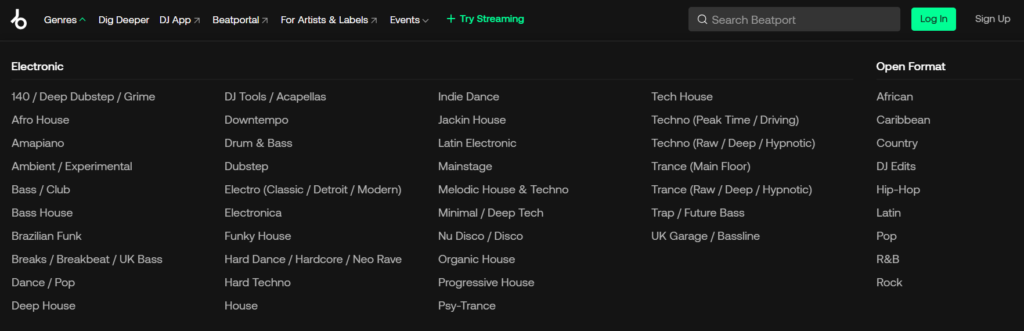
Then choose your genre honestly. A soulful house record buried in the tech house category will not reach the DJs who would actually buy it. On Beatport especially, where genre pages are the primary browsing route, the right category is the difference between being discovered and being invisible. If your sound sits between categories, look at where comparable artists chart and follow the audience.
Deliver early or miss the features
This is the single most common mistake independent labels make. The curated placements on both stores are planned well in advance, and late deliveries simply are not considered. Traxsource asks labels to deliver a full two weeks before the live date, and states that anything received less than ten days out is not eligible for featured positions at all. Beatport’s curation team works around two weeks ahead of the store’s Friday update, so pitches need to be with them three to four weeks before release.
Build your release calendar around those deadlines. A track that arrives early with a proper pitch is competing for banners and editorial lists. The same track delivered a week out is competing for nothing.
Use pre-orders and release on a Friday
Traxsource’s pre-order function lets customers buy your track before the official live date, and those sales count towards your chart position on day one. You walk into release day with momentum already banked, so push your pre-order link hard across your channels in the fortnight before release.
Timing matters too. Traxsource runs its main site update on Monday mornings and a Friday mini update called Weekend Weapons, and recommends choosing Friday as your release day so your track can be considered for it. Since Friday is also the international release date, it should be your default.
Beatport Hype: the chart built for smaller labels
If you run an independent label, Beatport Hype is the most important tool on this list. Hype is a subscription programme open to labels that have made less than 25,000 dollars in Beatport sales over the past twelve months and that release in eligible genres. Subscribed labels compete in dedicated Hype Top 100 charts, away from the established names, and gain access to reserved feature slots on the home and genre pages.
Crucially, Hype is a ladder rather than a silo. A track can appear in the Hype chart and the main genre Top 100 at the same time, and Hype placements are designed to generate the early sales velocity that pushes a release into the global charts. Labels that outgrow the sales threshold graduate out of the programme, which is exactly the outcome you want.
Pitch for features, do not wait to be noticed
Neither store expects you to sit quietly and hope. Traxsource runs a Feature Request system inside its Label and Content System, which puts your pitch directly into the A&R team’s workflow for banners, Essentials, Weekend Weapons, the Hype Chart and social features. Beatport feature pitches go through your distributor, which is one reason your choice of distribution partner matters so much in dance music. A distributor with a direct line to the curation teams gets pitches read.
Keep pitches short and concrete: who the artist is, what support the track already has, which DJs are playing it and why it fits the store’s audience.
Exclusives are your strongest bargaining chip
Both stores give priority to releases they get first. Traxsource is explicit that exclusives receive extra consideration across every featured position it offers, and can decide a close call between two tracks competing for the same slot. It even encourages labels to keep streaming platforms live alongside a Traxsource exclusive. Beatport supports exclusivity windows of two, four or eight weeks before a release goes wide to other stores.
Used selectively, a short exclusive window on your priority release is often the trade that unlocks the placement your campaign is built around. Your distributor can advise where an exclusive will earn the most in return.
Rally DJ support in release week
DJ charts are the underrated lever on both platforms. Every DJ Top 10 featuring your track drives visibility and sales, and store A&R teams notice which releases the DJ community is backing. Service your promos early, make charting easy by sending direct store links, and ask every artist and remixer on the release to publish a chart in release week. On Beatport, charts can only include tracks that are on sale, so time them for when the release is live.
Then concentrate everything into that first window: switch pre-order links to buy links the moment the release drops, point your email list and socials at the store pages, and check the charts daily so you can shout about every position. Momentum compounds.
Ready to take on the charts?
Breaking a track on the DJ stores is a repeatable process: deliver early, pitch properly, use the tools built for independent labels and concentrate your firepower into release week. The hardest part is access, and that is where the right partner changes everything. MN2S Label Services has spent over two decades building direct relationships with Beatport and Traxsource, securing banners, features and chart runs for independent dance labels. If you want your next release pitched to the people who decide what gets featured, get in touch with the team today.
MN2S works with over 500 independent labels on supporting their creative vision. Get in touch today to find out more.
Related articles
 Music Business Advice: Event Ideas to Boost Streams on Beatport & Tracksource13 Apr 2026
 Music Business Advice: How to Build Real DJ Support for Your Label15 Apr 2026
 Afro House, Amapiano or African? How to Choose the Right Beatport Genre for Crossover Releases20 Oct 2026
 How to Pitch Your Music to Dance and Electronic Press Outlets Worth Targeting22 Sep 2026
 How to Pitch Your Music to Spotify Editorial Playlists12 Sep 2026
 What Does a Record Label Actually Do? And Where Does Distribution Fit In?30 Sep 2026