




Most independent artists spend weeks perfecting a mix and minutes on the information that travels with it.
That imbalance has a cost. Metadata is the data attached to your music that tells streaming platforms, collection societies, sync supervisors, and royalty systems who made it, who owns it, and how to pay for it. Get it wrong, and the money that should come to you goes somewhere else or disappears entirely.
Metadata is not just a song title and an artist name. It covers three interconnected layers, each affecting a different part of your income and visibility.
The first layer is identifiers. Every sound recording needs an ISRC (International Standard Recording Code), a unique 12-character code that acts as a permanent fingerprint for that specific recording. Every version of a track (studio, remix, live, remaster) needs its own ISRC. The album or release as a whole needs a UPC (Universal Product Code). If you write and publish your own songs, you also need an ISWC (International Standard Musical Work Code) for the underlying composition. These codes are how platforms report usage back to collection societies, and how collection societies know who to pay.
The second layer is credits and ownership. This means the full, accurate names of everyone who wrote, performed, and produced the track, along with their PRO (Performing Rights Organisation) affiliations, their IPI/CAE numbers, and the agreed ownership splits. In the UK, PRS for Music handles publishing royalties and PPL handles neighbouring rights for recorded music. Both organisations rely on the data you provide to match performances to the right people and send money in the right direction.
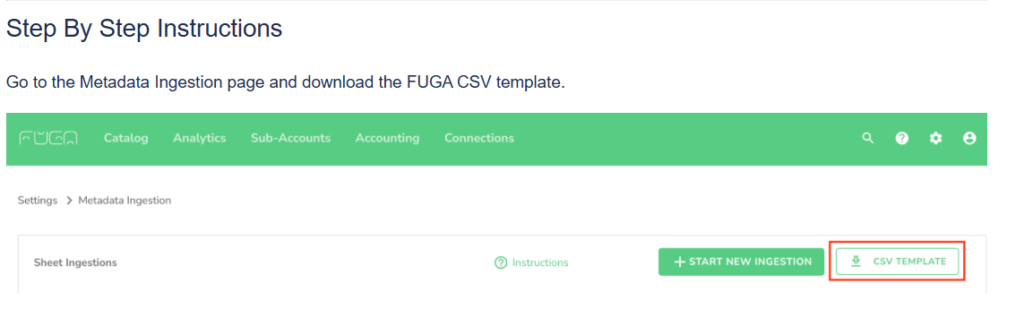
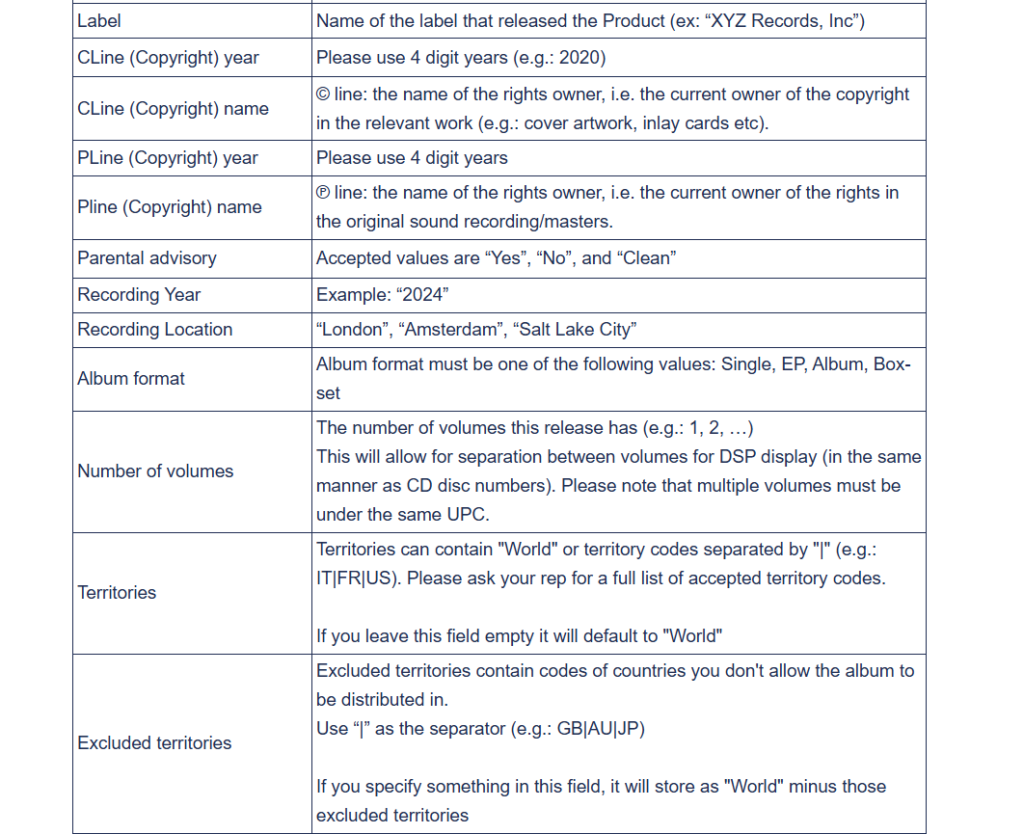
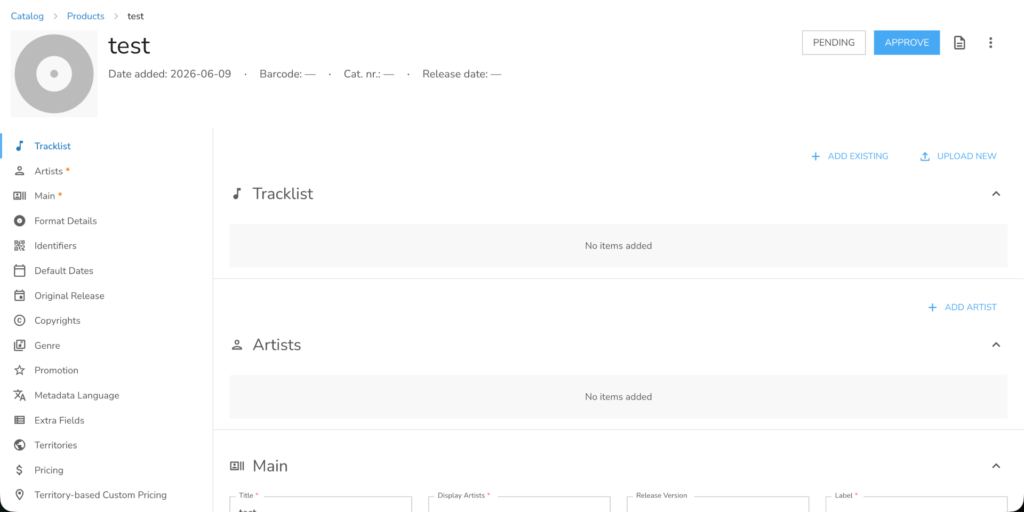
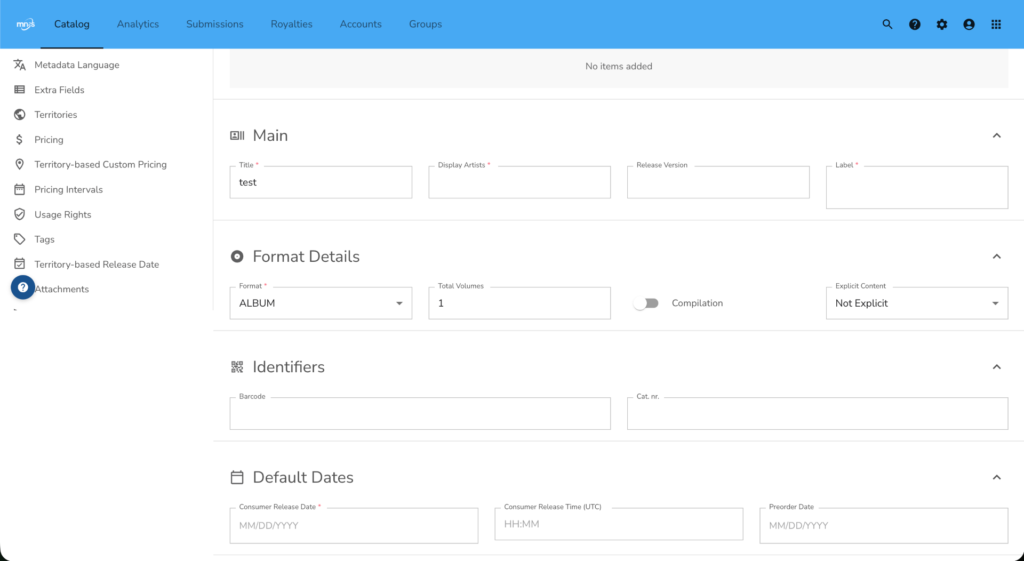
The third layer is descriptive tags. Genre, mood, BPM, key, instrumentation, and language fields. These do not affect royalty collection directly, but they affect discovery. Streaming platforms use this data to feed recommendation algorithms, build editorial playlists, and surface your music to new listeners. Missing or inaccurate tags are one of the quietest ways an independent release fails to find its audience. Fuga is just one of the platforms that show the need for metadata when releasing tracks.
What goes wrong, and what it costs
The music industry is estimated to hold around $2.5 billion in unclaimed royalties, a significant portion of which is tied up because metadata errors prevent collection societies from matching payments to the right rights holders. A typo in your name, a missing ISRC, a PRO affiliation left blank: any of these can send your royalties into what the industry calls a “black box”: funds held by collection societies that cannot be distributed because ownership cannot be confirmed. After a period of time, that money is redistributed to the artists with the largest market share. That means your unclaimed royalties effectively subsidise major label artists.
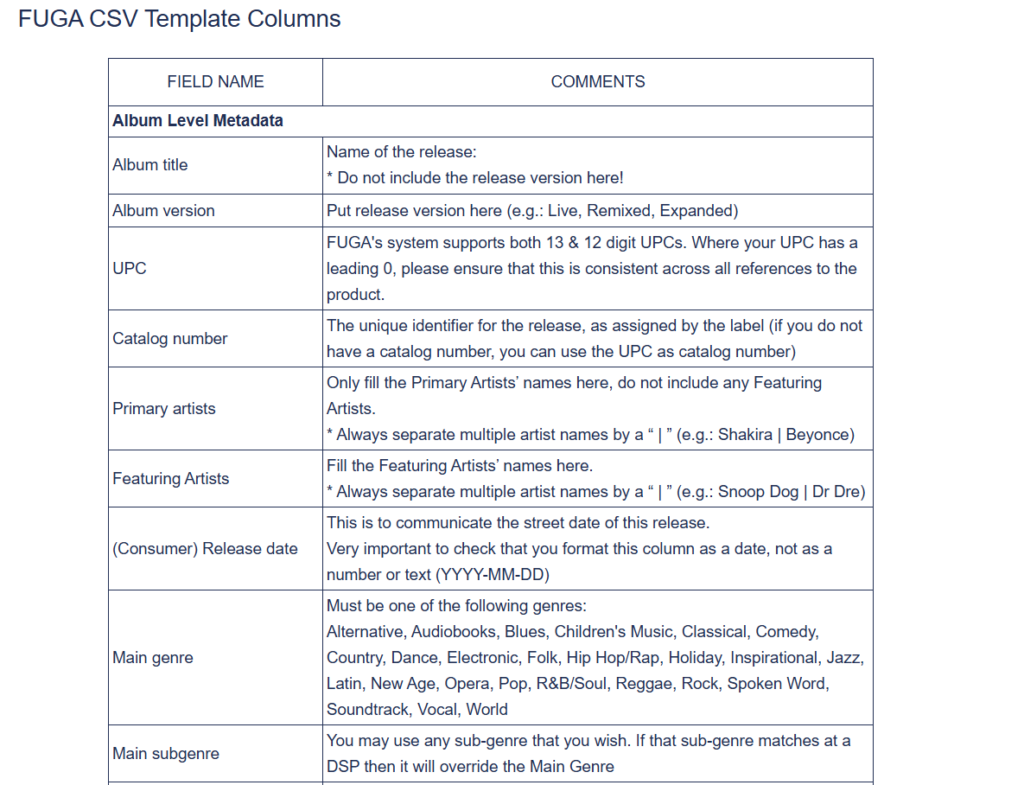
Metadata errors also create practical problems at the point of upload. Each DSP (digital streaming platform) has its own technical requirements, and tracks submitted with incomplete or inconsistent metadata can be rejected outright or delivered incorrectly. Duplicate ISRCs are a particular problem: when the same code gets attached to different recordings, stream counts and royalty reports become fragmented and unreliable.
How metadata affects streaming discovery
Beyond royalties, metadata is how streaming platforms build a picture of your music before a single person has listened to it. Spotify’s systems scan playlist descriptions, blog mentions, and artist bios alongside your track’s metadata fields to build a profile of what your music sounds like and who it is for. Accurate genre and mood tags, a properly formatted featured artist credit, and a correctly tagged explicit content marker all contribute to how confidently the algorithm can recommend your music to the right listeners.
The practical implication: a track with clean, complete metadata has a significantly better chance of appearing in algorithmic playlists like Discover Weekly and Release Radar than an identical track with blank or generic tags. You cannot control the algorithm, but you can give it the information it needs to work in your favour.
Metadata and sync: the standard most artists miss
Sync licensing (placing your music in TV, film, advertising, video games, and online content) is one of the most significant revenue opportunities available to independent artists. A single TV placement can generate fees that outperform years of streaming. But most tracks get passed over before a music supervisor ever judges the music itself. They are rejected on preparation.
To be considered for sync, your music needs to meet a specific standard. Every track should have documented ownership splits signed by all collaborators, confirming who controls both the master recording and the underlying composition. Any uncleared samples disqualify a track entirely: supervisors will not take on the legal risk. You should have multiple audio versions available: a full mix, a vocal-free instrumental, a clean edit if the original contains explicit content, and ideally stems (the individual components of the recording: drums, bass, vocals, and so on) for higher-value placements where an editor may need to adjust the mix for a scene.
Your metadata for sync purposes also goes beyond the technical. Music supervisors search libraries by mood, tempo, theme, and instrumentation. Accurate descriptive tags are how your track gets found. A song that sounds exactly right for a brief will not surface if it is tagged incorrectly or not at all.
What to check before your next release
Before you distribute any track, work through this list:
Every recording has its own unique ISRC. Do not reuse codes across different versions of the same track.
Your artist name is spelled identically across every platform and registration. Even minor inconsistencies (capitalisation, punctuation, abbreviations) can break royalty matching.
All writers and producers are credited with their full legal name, not a stage name, and their IPI/CAE number is included where required.
Your PRO affiliation is registered and your songs are registered with them. In the UK that means PRS for Music for publishing and PPL for neighbouring rights on your recordings.
Ownership splits are documented in writing and agreed by all collaborators before the track is released, not after.
Genre and mood tags are filled in specifically, not generically. “Electronic” as your only genre tag tells an algorithm very little. “Electronic, Ambient, Instrumental” gives it something to work with.
Getting this right is not a one-time task
Metadata is not something you do once at upload and forget. When you register with a new PRO, when you switch distributor, when you release a new version of a track, when you start pursuing sync: each of these is a moment to audit what you have and fix what is missing. Artists who treat their catalogue as a business asset and maintain clean, accurate metadata consistently collect more of what they are owed and open more doors than those who do not.
If you want support managing this across your catalogue: from distribution and rights registration to sync readiness: the team at MN2S Label Services is here to help. Get in touch and tell us where you are with your music.