



The industry’s biggest stage just picked a side
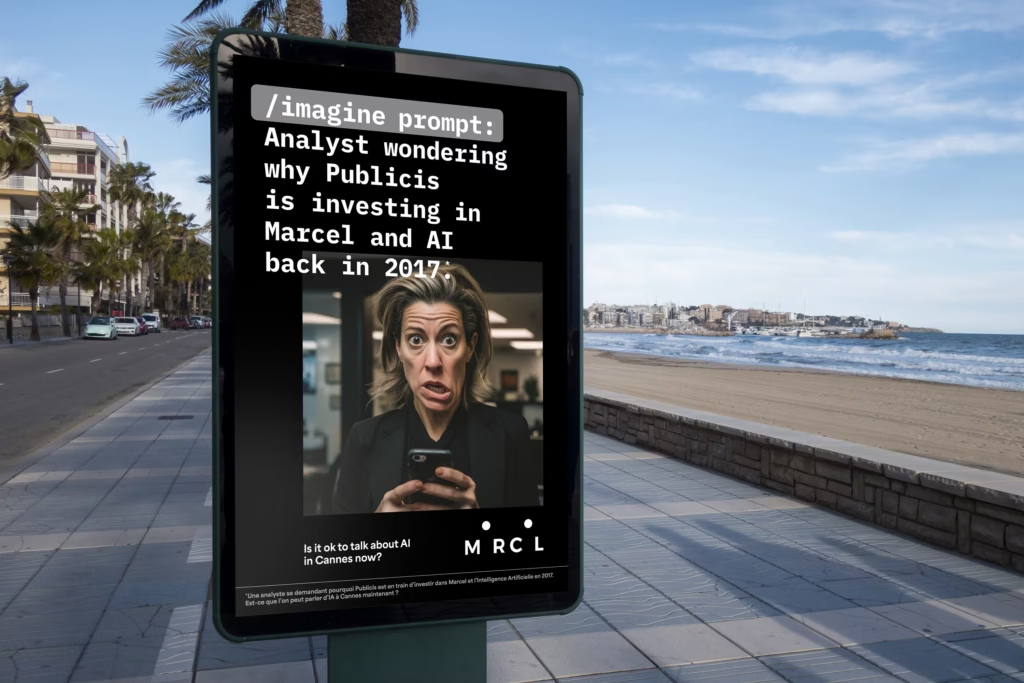
This month, the ad industry’s most-watched festival opened on the French Riviera, and the real headline isn’t a new ad format or a record media buy. It’s a position. Cannes Lions 2026 has built much of its programme around one uncomfortable question: in a year when AI touches almost every brief, what’s actually still human? P&G’s chief brand officer delivered a keynote titled “Robots can’t build brands.” Oprah Winfrey is collecting the festival’s LionHeart award on the main stage. When the industry’s most influential voices line up behind the same idea at the same event, that’s not a coincidence. That’s a signal.
The backlash isn’t theoretical, it already happened
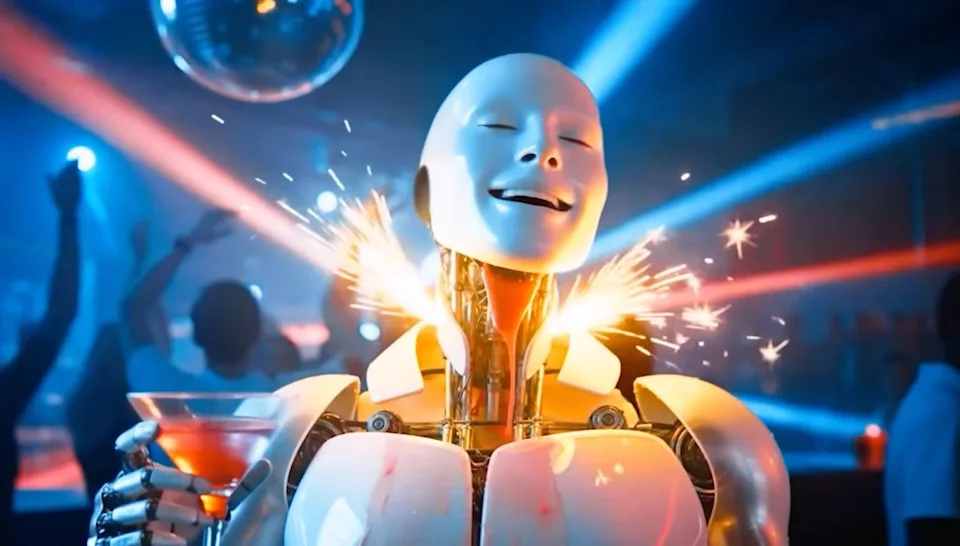
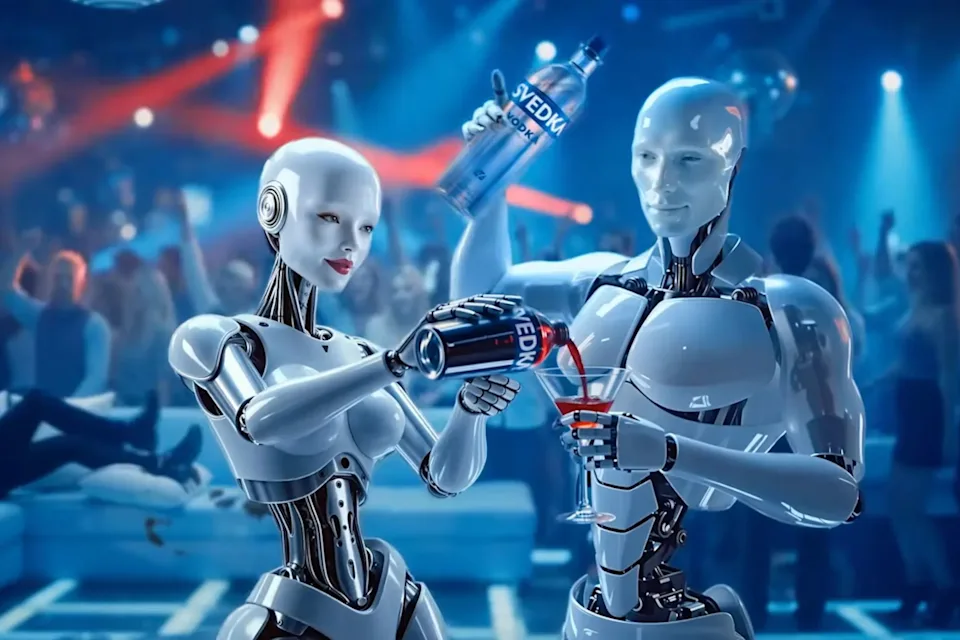
Cannes is reacting to something concrete. Four months earlier, Super Bowl LX delivered the cautionary tale every marketer has since referenced. Svedka’s “Shake Your Bots Off” spot, an almost entirely AI generated ad featuring two uncanny robot mascots dancing to a remixed Rick James track, was widely mocked the moment it aired and quickly labelled one of the worst Super Bowl ads in years. The brand framed it as bold innovation. Viewers heard something else: a brand choosing efficiency over craft, and they noticed instantly.
Consumers were already telling brands this
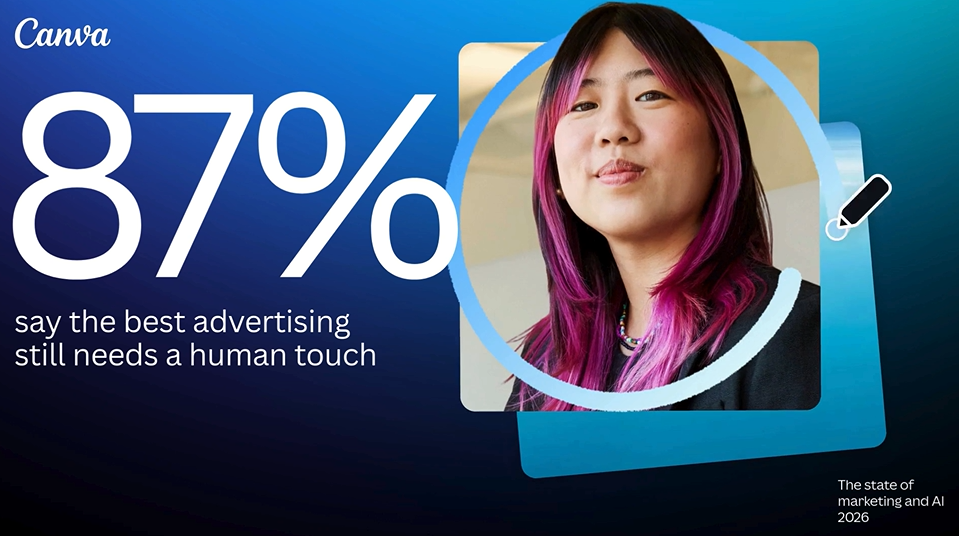
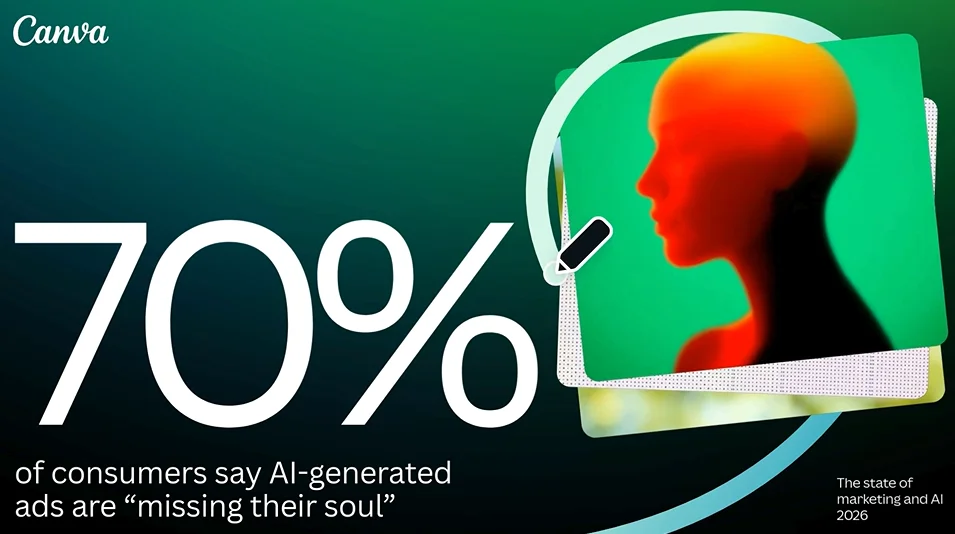
The data backs up the discomfort. Canva’s 2026 marketing AI report found that even though AI is now standard in daily marketing work, 78% of consumers say they’d still rather see ads made by people, even if AI could technically do a better job. 87% believe the best advertising still requires a human touch, and 70% say they can usually spot an AI generated ad because something about it feels missing. Marketers have spent two years chasing AI efficiency. Audiences have spent that same time quietly building resistance to it. Cannes just turned that gap into the headline story of 2026.
Real talent is the trust signal AI can’t fake
The brands navigating this well aren’t rejecting AI outright, they’re pairing it with human talent that does the part a generated face never can: prove the brand is real. Vinnie Jones’ partnership with World of Tanks is a clean example. His casting works because decades of on-screen persona, the unmistakable hard man swagger, can’t be convincingly synthesised. That recognisability is the entire value of the booking.
Chevy Chase’s holiday campaign for smart lighting brand Twinkly runs the same play from a different angle. Comic timing built over five decades, deadpan delivery audiences already trust on sight, casting that signals authenticity before a single line is spoken.
Suki Waterhouse’s role as brand ambassador for Authentic Beauty Concept takes the logic furthest, because authenticity is the entire product story, not just her casting. She’s spoken about authenticity as knowing precisely what you stand for and being able to say so clearly, exactly the quality a generated spokesperson cannot manufacture. When the brand name has the word “authentic” in it, who fronts the campaign stops being a styling choice and becomes the argument itself.
The debate is already moving past generative AI, and that’s the point
The backlash narrative is only half of what’s happening at Cannes this year. The festival’s AI conversation is shifting again, from generative AI as a content tool toward agentic AI, systems built to plan, personalise and run marketing rather than just produce a script or a visual. Sessions featuring OpenAI and Google DeepMind are framing this as a move from a media operating model to an intelligence operating model, where brands compete for relevance inside AI-mediated conversations, not just attention in a feed.
That shift should sharpen the case for human talent, not soften it. As AI moves from tool to infrastructure, the harder question stops being whether a system can generate an asset and becomes who decides what these systems should actually do. The teams that win this next phase won’t simply be the ones producing the most content with AI. They’ll be the ones with the judgement to brief, govern and challenge it properly, and that kind of judgement has always been a talent problem before it’s a technology one.
Cannes Lions is the cue to move, not just watch
Every major shift in marketing gets its Cannes moment, the point where an idea stops being a conference panel and starts showing up in briefs. This year, that moment belongs to human-led creative. The festival’s keynote slots, its jury categories and its headline award are all pointing in the same direction at once. Brands that act on it now get to look like they called it early. Brands that wait will be copying a move their competitors already made.
The smartest read of Cannes Lions 2026 isn’t “avoid AI.” It’s “make sure a real, unmistakable human is doing the part AI can’t.” That’s a casting decision, and casting decisions are exactly where a specialist talent partner earns its place, matching the right face, voice or persona to the brand truth a generated alternative could never carry.
If Cannes just told the industry what’s coming next, the brands worth watching this year are the ones who already booked the talent to prove they got there first.
Get in touch with MN2S’s brand partnerships team to build a talent partnership while the moment is still fresh.