



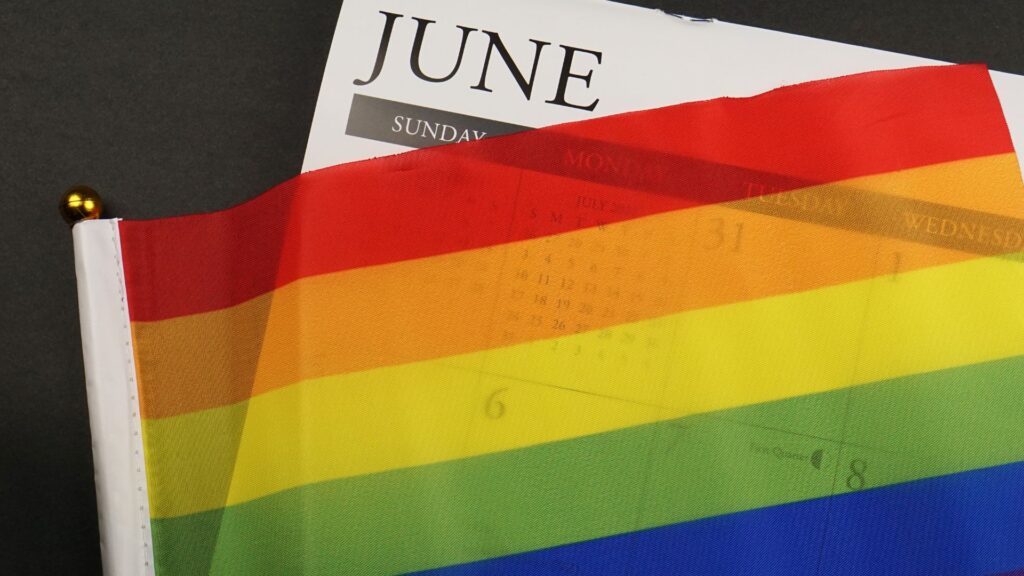
Pride Month arrives every June with a familiar rhythm. Logos get a rainbow tint. Limited-edition products appear. Campaigns go live. And then, by July, most of it disappears until the following year.
LGBTQ+ consumers notice. They have been noticing for a long time.
Nielsen research found that only three advertising categories consistently included LGBTQ+ content across both February and June: wedding services, streaming services and pharmaceuticals. Every other category concentrates its spend and representation into Pride Month, then goes quiet. As Nielsen’s SVP of Diverse Insights, Stacie de Armas, put it: “It tells us that brands are concentrating their dollars and commitment within Pride month, leaving this void in the other months.”
That void is where authenticity is won or lost. And it is where the smartest talent strategies are being built.
Consistency Is the Credential
The brands with the deepest loyalty among LGBTQ+ audiences are not the ones with the biggest June activations. They are the ones that have shown up consistently, across the year and across years. Absolut Vodka first advertised in LGBTQ+ publications in 1981, at a time when no other mainstream brand was doing so. That four-decade track record is not something that can be replicated with a campaign. It is the compound interest of sustained presence.
Most brands cannot write that particular history. But the principle translates at any scale: credibility with this audience is built incrementally, through consistent action rather than concentrated intensity. A talent partnership that runs across the year, through content series, community conversations, product launches and live moments reads entirely differently to one that appears in June and vanishes.
Nielsen data shows that 63% of LGBTQ+ audiences in the US feel misrepresented across media, and 60% want more representation when consuming content. That gap is not closed by a single campaign moment. It is closed by ongoing presence from talent whose voice and identity are part of the conversation all year round.
What Year-Round Talent Strategy Actually Looks Like
This is not about volume. It is about integration. Weaving LGBTQ+ talent into the wider brand calendar rather than ring-fencing them inside a June activation changes how the partnership reads to the audience receiving it.
A creator known for LGBTQ+ advocacy appearing in a brand’s back-to-school campaign, or a winter product launch, or a sports sponsorship moment, signals something fundamentally different to the same creator appearing only during Pride. It says the relationship exists because of shared values, not because of the calendar. That signal is exactly what LGBTQ+ audiences are looking for. A 2026 Omnisend study found that 25% of consumers expect year-round LGBTQ+ support from brands, while changing logos to rainbow colors only in June is widely viewed as performative.
It also changes what Pride Month itself can be. Rather than being the moment when a brand has to establish its credentials from scratch, it becomes the amplification of something already in place. The campaign in June lands differently when there is genuine history behind it. The audience already knows the brand. The trust is already there.
The Talent That Makes This Work
The most effective year-round LGBTQ+ talent strategies are built around performers and personalities with genuine community roots people whose public presence is interwoven with the culture they represent. Pride Month activations land differently when the talent involved has a real relationship with that audience, not just a seasonal one.
Aqua, the group behind one of the most recognisable pop singles of all time, brought that energy to Pride! Barcelona the city’s largest LGBTQ+ celebration performing to an audience gathered specifically to celebrate community, diversity and identity. That is not a brand placement. It is cultural participation. And cultural participation, repeated and sustained, is what builds the kind of credibility a June logo change never can.
Sasha Colby, winner of RuPaul’s Drag Race Season 15, headlined NYC PrideFest in front of over 100,000 people. A talent with that kind of presence and community authority does not just make a Pride activation bigger. They make it mean something. The same talent, woven into brand content and campaigns across the rest of the year, carries that meaning forward long after June ends.
Pride as Payoff, Not Starting Point
The brands getting the most from Pride Month are not treating it as a campaign to be executed. They are treating it as a moment of celebration within a relationship that already exists. The difference is visible to the audience, and it is the difference between a brand that earns loyalty and one that is tolerated for a month.
Year-round engagement does not require larger budgets. It requires sustained presence — showing up across platforms, supporting creators, participating in community conversations and aligning messaging with real-world values. Talent is the mechanism that makes that presence feel human rather than corporate.
June is still the moment when LGBTQ+ culture comes into sharpest focus. It is worth showing up for. But the brands that show up most effectively are the ones that have been building towards it since July of the previous year.
If you want to build that kind of strategy around the right talent, get in touch with MN2S.