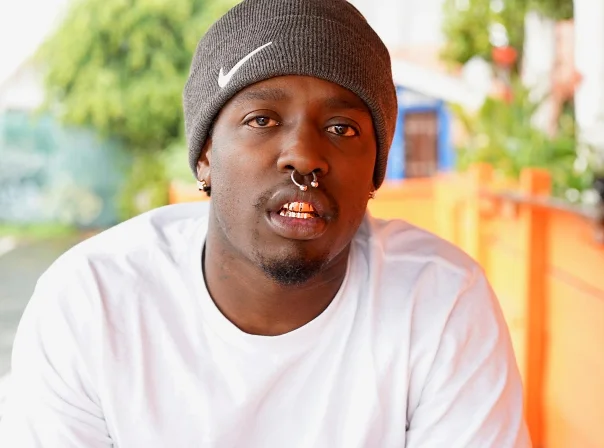


Bimini Headlines Fulham Pier for Hammersmith & Fulham’s Youth Arts Festival
16 hours ago


 United Kingdom
Sisters Of Mercy transitioned from an underground sensation to a commercially successful rock band, influencing dark culture while steadfastly maintaining their identity as a rock act.
Interested in booking Sisters Of Mercy?
Request A ShowCollaborated with Chris Harms of Lord of the Lost on the song 'In...'.
Chris Harms of Lord of the Lost collaborated on The Sisters of Mercy's work.
Ben Christo, a member of The Sisters of Mercy, also leads his band Diamond Black and discusses collaborations. This implies a relationship or crossover in creative circles.
In talks for a potential new album release.
Andrew Eldritch remixed two songs for the German group Die Krupps.
Andrew Eldritch appeared on Sarah Brightman's single "A Question of Honour".
Kai, a musician from Esprit D'Air, was recruited as The Sisters of Mercy's new guitarist.
Released 'BBC sessions 1982-1984' on vinyl and CD for RSD, containing Peel Sessions and David 'Kid' Jensen session.
Released 'BBC sessions 1982-1984' on vinyl and CD. Warner Music also reissued three Sisters of Mercy albums ('First and Last and Always', 'Floodland', and 'Vision Thing') in 2006.
The fashion designer Rick Owens entitled his retrospective exhibition at Palais Galliera Paris 'Temple of Love' in reference to The Sisters of Mercy song 'Temple of Love'.
The Sisters of Mercy formed in Leeds, England, in 1980, founded by Gary Marx and Andrew Eldritch with the intention of gaining radio recognition. The band’s early years saw several line-up changes, with Eldritch eventually focusing on vocals while incorporating a drum machine, ‘Doktor Avalanche,’ a constant member throughout the band’s history. Early singles like ‘Damage Done’ (1980) and ‘Body Electric’ (1982) garnered underground fame and regularly appeared in UK independent charts. Their live performances became known for unique cover versions, including medleys of songs by The Velvet Underground, Suicide, and Richard Berry. In late 1983, after the success of their single ‘Temple of Love,’ The Sisters of Mercy signed with WEA, a major record label.
The period from 1984 to 1985 saw the release of their debut full-length album, ‘First and Last and Always,’ in collaboration with producer David M. Allen. This album solidified their cult status, despite growing internal tensions that led to Gary Marx’s departure mid-tour. The band concluded this phase with a final performance at London’s Royal Albert Hall. Following a dispute over the band name with former members who formed ‘The Mission,’ Eldritch released ‘Floodland’ (1987) and ‘Vision Thing’ (1990), both recorded with different line-ups. These albums featured tracks like ‘This Corrosion,’ produced by Jim Steinman, and ‘More,’ which continued their commercial success and showcased an evolution in their sound from atmospheric rock to guitar-oriented rock. A controversial North American tour in 1991 with Public Enemy was canceled, further straining Eldritch’s relationship with their record company, EastWest.
From 1993 onwards, The Sisters of Mercy entered a period Eldritch termed a ‘strike against EastWest,’ halting new record releases due to contractual disputes. The contract was eventually terminated in 1997 after Eldritch submitted unreleased material under the name SSV. Despite the lack of new studio albums, the band has maintained an active touring schedule, performing new and unreleased music live. Guitarists Chris Catalyst and Ben Christo joined in 2005 and 2006, respectively, contributing to extensive world tours. Recent years have seen further lineup changes and a continued focus on live performances and the development of new songs, reinforcing their enduring presence in the music scene without formal studio releases.

Curious about our offerings or have inquiries? We're eager to assist!
Just complete the form, and we'll respond promptly.