

Wanderlust Partners with Wim Hof for the Wellspring Wanderlust x Wim Hof Experience 2025
12 months ago


 Netherlands
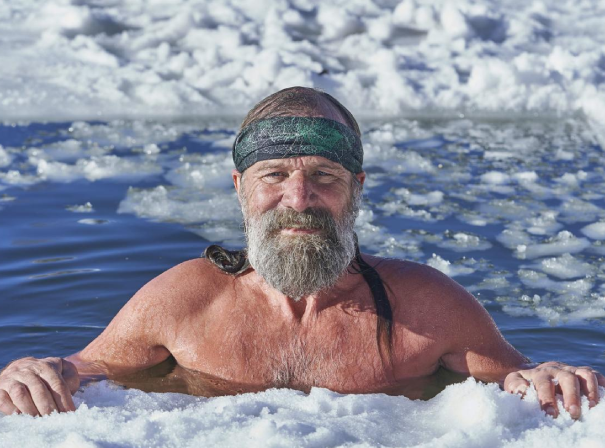
Wim Hof, also known as "The Iceman," is a Dutch extreme athlete and motivational speaker recognized for his ability to endure low temperatures and his proprietary Wim Hof Method (WHM), a combination of cold exposure, breathing techniques, and meditation.
Article 'Behind the Brand with Wim Hof' discussing Hof's role as a Dutch motivational speaker, author, and extreme athlete known for his ability to withstand freezing temperatures.
Article 'Why Wim Hof's method fascinates me, and how it pushed my personal brand further?' analyzes Wim Hof's personal brand and the rise of 'The Iceman', and how his method (ice, breathing) connects to business.
A YouTube video collaboration titled 'BECOMING SUPERHUMAN WITH ICE MAN - Wim Hof' which documents experiences with Wim Hof and his method.
The Wim Hof Method is listed as an affiliate program, described as a course to master breathing and cold therapy for energy, stress reduction, and immune system strengthening.
Press release detailing Wim Hof's unveiling of 'Freedom' - a soul-stirring anthem, and his six-year partnership with Tahir, which began at London's Roundhouse.
Wim Hof was born on April 20, 1959, in Sittard, Limburg, Netherlands. He gained recognition for his unusual feats of enduring extreme cold, earning him the nickname “The Iceman.” His method, the Wim Hof Method (WHM), is centered around three pillars: controlled breathing, cold exposure, and commitment/mindset. He began exploring his abilities to withstand cold at age 17, driven by a sudden urge to jump into freezing canal water. These early experiences laid the groundwork for his future work and the development of his method, which he later began to share publicly.
Throughout his career, Hof has achieved multiple world records, demonstrating human body’s potential to adapt to extreme conditions. His feats include holding a Guinness World Record for the fastest half-marathon run barefoot on ice and snow in 2007 (2 hours, 16 minutes, 34 seconds), swimming 57.5 meters under ice in 2000, and prolonged full-body contact with ice for 44 minutes in 2010. Beyond these records, Hof has undertaken significant physical challenges, such as climbing to an altitude of 7,400 meters on Mount Everest in shorts and shoes in 2007, and reaching Gilman’s Point on Mount Kilimanjaro in 28 hours in 2016. These achievements have brought attention to his methods, leading to scientific scrutiny and the establishment of the Wim Hof Method as a structured practice for health and well-being.
Hof’s work has been the subject of scientific studies, notably starting with research at Radboud University in 2011, which investigated the physiological effects of his method. He now offers various platforms for learning the WHM, including online courses, workshops, and expeditions, and has published several books detailing his techniques and experiences. His efforts have led to a global community of practitioners and certified instructors, furthering the reach and influence of the Wim Hof Method. However, his method has also drawn cautions from medical organizations regarding the risks associated with cold exposure.

Curious about our offerings or have inquiries? We're eager to assist!
Just complete the form, and we'll respond promptly.