



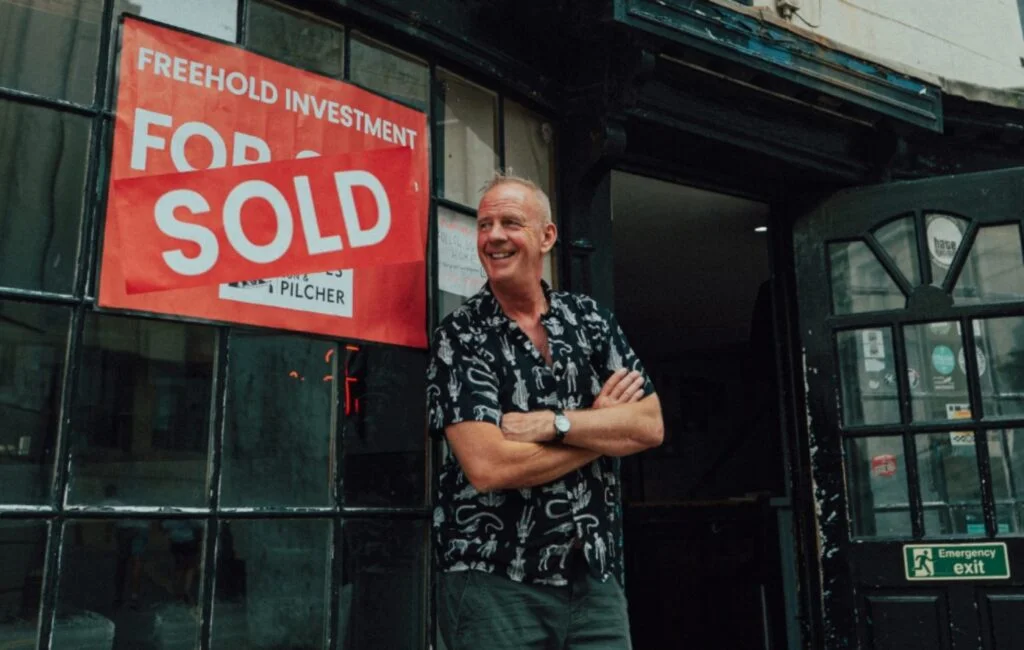
Fatboy Slim backs grassroots venue scheme as hundreds face closure by purchasing venue in Brighton
Andy Burnham and Fatboy Slim have both put money into Music Venue Properties, a scheme that buys the buildings housing grassroots music venues so operators are no longer at the mercy of landlords and property developers.
The investment lands at a moment when the grassroots circuit is under some of the heaviest pressure it has faced in a decade, and it puts two well known names behind a growing industry push to fix the problem before it gets worse.
The investment
Norman Cook, better known as Fatboy Slim, has invested in Music Venue Properties and is encouraging other musicians, fans and investors to back the organisation. Burnham is one of more than 2,500 people who have invested in Music Venue Properties, which acquires buildings housing grassroots venues, giving operators long term security and protecting the spaces for their communities. MVP has purchased ten grassroots venues so far, including The Snug Coffee House in Atherton.
Burnham has said the music business needs grassroots venues because the next generation of major artists needs somewhere to hone their craft and find an audience, and that venues are constantly struggling in the current financial climate with landlords not always on their side. He argues community ownership means fair rent and real security rather than the constant threat of a building being turned into flats, and has described his own investment as substantial.
MVP was set up by Music Venue Trust and operates as a charity aiming to give venues long term security through community and investor ownership. Its most recent acquisition, The Pipeline in Brighton, secured permanent community ownership for a venue known for championing emerging artists. Another recent MVP success story is The Booking Hall in Dover, which was secured through a similar takeover deal after being put up for sale.
Fatboy Slim’s support goes beyond an investment. He once played a sold out fundraising gig for free at Hot Box Live in Chelmsford, a venue that was around eighty thousand pounds in debt after the pandemic, and has described grassroots venues as the lifeblood of the music industry, the breeding ground where every major artist cuts their teeth. He has also played a House of Commons gig in support of grassroots music initiatives, and a 35th anniversary show at Hull’s New Adelphi Club, the venue where he played his first ever gig as part of The Housemartins. Earlier this year he also joined the Everywhere At Once festival, a nationwide event supporting small venues.
Burnham and Fatboy Slim are not acting alone. A growing list of major artists have built a contribution to grassroots venues into their own touring, adding roughly a pound to every ticket sold at arena and stadium level under what has become known as the Grassroots Music Venues Levy. Acts including Coldplay, Ed Sheeran, Katy Perry, Radiohead, Lorde, Pulp, Gorillaz, Mumford & Sons and Stereophonics have all adopted the model, and Sam Fender went further by donating his Mercury Prize winnings directly to Music Venue Trust.
Venues under pressure
The UK currently has 835 grassroots music venues, and the Music Venue Trust now warns that more than a third of them are at serious risk of closure.
Last year alone saw thirty grassroots venues lost for good, with more than half of those still open making no profit, and over six thousand jobs disappeared from the sector. The knock on effect goes beyond the venues that close. Music Venue Trust has found that 175 UK towns and cities, home to an estimated 25 million people, no longer receive regular touring shows from professional artists at all, with once reliable stops including Leicester, Hull, Portsmouth, Plymouth and Stoke dropping off the national circuit.
Other reporting has tracked the same decline. Music Week has covered venues placed at immediate risk of closure following business rates changes, NME reported on the complete collapse of touring facing the sector, and the Big Issue has made the case for why we cannot afford to lose these venues. UK Parliament has also opened its own inquiry into grassroots music venues.
Money remains the core issue. The grassroots sector subsidised UK live music by an estimated £76.6 million in 2025, even as arena and stadium level shows contributed a record breaking £8 billion to the economy in the same period. The £1 ticket levy was designed to close some of that gap by channelling a small voluntary contribution from big shows back into grassroots venues, artist development and infrastructure, but so far only around 8.8 per cent of eligible arena and stadium shows have signed up. Music Venue Trust has set a June 2026 deadline for the industry to show real progress before it pushes for the levy to become mandatory rather than voluntary.
Why this matters for Labels and Artists
Grassroots venues are where emerging artists turn into stadium headliners, one small room and one hard won crowd at a time. Every act on our roster started somewhere small, and the health of that first stage of the pipeline shapes who labels get to sign in years to come. The scale of that pipeline is easy to underestimate. Analysis of the 2024 Glastonbury line up found that 88 of the 96 artists booked, 92 per cent of the bill, started their careers performing at grassroots venues. Take those rooms away and the talent pool major festivals and labels draw from shrinks with them.
Lower stakes, closer connection
Smaller venues are cheaper to put on than a mid size or arena show, which means lower stakes for an artist still working things out. There is no barrier between performer and crowd, no distance created by a big stage or a security line. An artist can talk to the room, see faces, read a reaction in real time and adjust. That closeness is exactly what builds a genuine fan base rather than a passive audience, and it is hard to replace once it is gone.
Why in-person still matters
Live music only works because people can see other people. A packed room, a shared reaction, a crowd singing something back at the stage, none of that transfers to a screen. That in-person experience is the actual product grassroots venues sell, and it is a large part of why an artist’s early fan base sticks around once the venues get bigger. It is also exactly the kind of show our Live Roster helps get booked in the first place.
From the room to the royalties
Every artist and every label starts small. These venues are essential to a growing artist’s career. It is where they meet their audience, and often the place where a listener discovers them in the first place. Think about how many times you have seen an artist live and gone straight to check them out on socials, Spotify or Apple Music afterwards. It does not take a genius to work out the chain reaction that follows. Fewer venues means fewer people going out to hear live music. Fewer people hearing live music means fewer people discovering that music online. Fewer discoveries mean fewer streams, and fewer streams mean, you guessed it, less royalties.
What labels can actually do
Supporting grassroots venues does not have to mean writing a cheque to a national scheme. It can mean encouraging an artist to route a tour through smaller rooms even after they no longer strictly need to, building a levy style contribution into ticket pricing on bigger shows, or simply prioritising bookings in towns that have fallen off the wider touring circuit. Every one of those choices keeps a room open a little longer, and keeps the pipeline that produces a label’s next signing intact.
For labels and the artists they work with, the reminder is simple. Time spent playing small rooms and mixing with fans face to face is not a step to rush past on the way to bigger stages. It is where the connection that carries an artist’s career gets built in the first place.