


The genre you pick decides which chart, which DJs and which buyers find your release
You have a record with an Afro House groove, an Afrobeats vocal and a hook that open-format DJs would happily drop between hip-hop and pop. When you deliver it to Beatport, you have to choose one genre. A few years ago that choice was simple because there were only a few sensible options. Now there are several credible homes for the same track, and each one puts it in front of a different audience.
For labels releasing Afro, Latin or R&B-leaning dance music, genre selection has become one of the most important release decisions you make. This guide explains what has changed, why it matters and how to choose with confidence.
What has changed on Beatport
Beatport’s genre list has expanded quickly, and crossover releases are the ones most affected.
In May 2022, Beatport gave amapiano its own genre after tracks had been scattered across Afro House, Deep House and Dance Pop. In June 2024, Afro House became a Hype genre, opening it up to Beatport’s programme for smaller labels, at a time when Beatport described it as its fastest-growing genre.
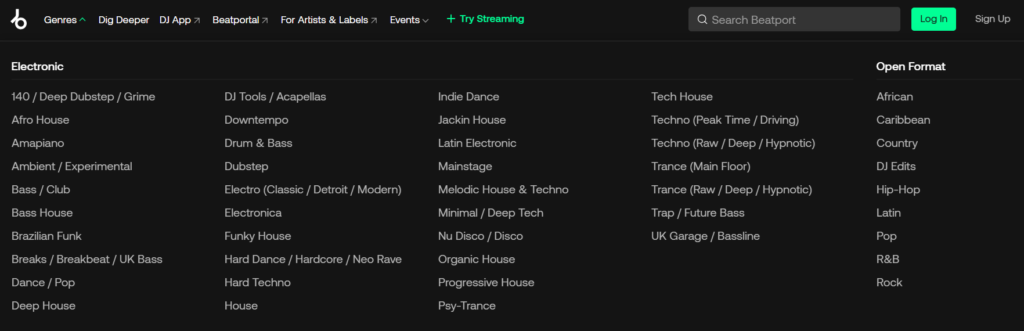
Then in September 2025, Beatport added open-format genres including Hip-Hop, R&B, Pop, Latin, Caribbean and African. In March 2026, it began merging Beatsource into Beatport, bringing open-format DJs onto the same platform as electronic DJs.
The result is that a single crossover record could now reasonably sit in Afro House, Amapiano or African, and each option leads somewhere different.
Why the choice matters more than it looks
Genre on Beatport is not just a label. It decides which chart you compete on, which curators hear your music and which DJs find it when they browse.
Competition varies hugely between genres. As iMusician’s guide to Beatport genres puts it, a miscategorised track “essentially becomes invisible to your target audience.”
Chart access also differs. When it launched the new genres, Beatport said open-format genres would not appear in its Global Top 100 or Hype charts. Afro House, by contrast, is part of Hype, so labels in the programme can be picked up by Afro House curators for homepage and genre page features.
Finally, the choice is hard to undo. Beatport’s genre documentation states that its system will not update genres through a metadata redelivery. Changes have to be requested, and Beatport says labels should contact their distributor if a track has been miscategorised. Getting it right before delivery saves time and lost sales in release week.
Know your main options
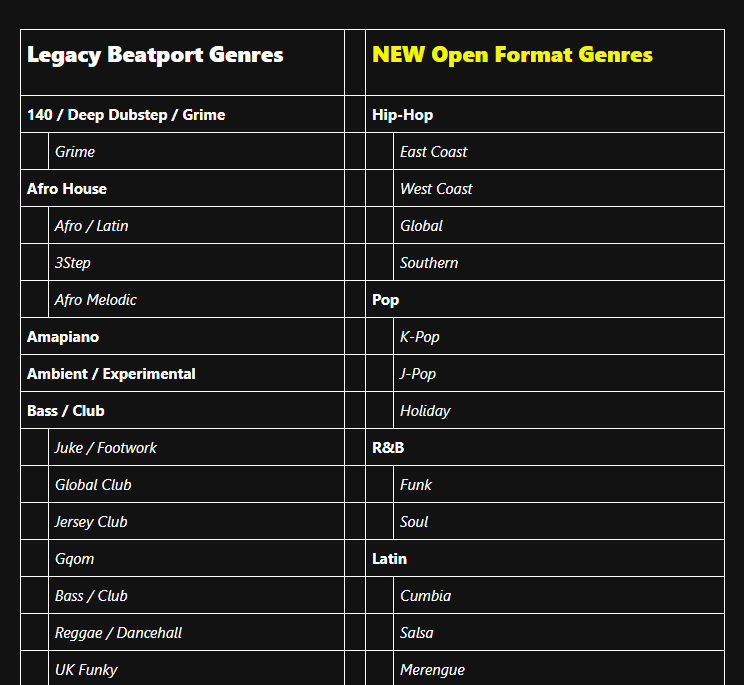
Afro House is an electronic genre built for DJs playing four to the floor sets. Beatport describes it as music with African-inspired rhythms, polyrhythmic drums and organic instruments. It also has sub-genres, including Afro Melodic, 3Step and a category for Afro and Latin crossovers, which help you narrow the audience further.
Amapiano has been a standalone genre since 2022. It is a distinct South African sound with its own DJs and buyers, rather than a subset of Afro House. If your track is amapiano at its core, tagging it as Afro House puts it in front of the wrong crowd.
African is one of the new open-format genres. Its sub-genres include Afrobeats, Afropop, Afro R&B and Alte. It suits song-led, vocal records that open-format DJs would play alongside hip-hop, R&B and pop.
The same logic applies to Latin crossovers. Beatport’s open-format Latin genre covers styles such as reggaeton, dembow and Latin pop, while Afro House includes a sub-genre for Afro and Latin blends aimed at electronic DJs.
How to decide, step by step
Start with the DJ who will play it. Picture the set your track belongs in. If it sits comfortably in a four to the floor house set, it probably belongs in Afro House. If it works best between Afrobeats, hip-hop and R&B, African is likely the better fit.
Listen to the chart you are considering. Beatport provides audio examples of how it defines each genre, and a curation team reviews genre allocation. Play the current top tracks in your chosen genre next to yours. If your release would stand out as the odd one out, reconsider.
Look at where your audience already buys. If your label has built a following in Afro House, moving a crossover release into an open-format genre may take it away from the DJs who already support you. That can be the right call, but make it deliberately.
Weigh competition against audience. A smaller genre can make it easier to chart, but only if the buyers there actually want your record. Choosing the least crowded chart for a track that does not fit it rarely pays off.
Check your delivery route. Not every distribution platform handles open-format genres the same way. Label Engine, for example, notes that its open-format releases cannot currently be delivered to Traxsource or Juno Download. Ask your distributor how an open-format genre choice affects delivery to other stores before you commit.
Practical tips for crossover labels
Be consistent. Curators and regular buyers learn where to find your label. If every release lands in a different genre, you make that harder. Use sub-genres. They are an easy way to signal exactly what a track is, especially within a busy genre like Afro House.
Match your metadata across stores. Traxsource uses its own categories, such as Afro House and Afro, Latin and Brazilian. Decide on the closest equivalent for each store at the same time, and record it in your release sheet. Plan the rest of the campaign around the chart you choose. Once your genre is set, your promo, DJ support and timing should all point towards that chart. Our guide on how to break a track on Beatport and Traxsource covers the next steps.
Get the details right before release day
Genre is one of many small release decisions that shape how your music is found. If you want a distribution partner who helps you get those details right and delivers your releases to Beatport, Traxsource and streaming services with real people behind it, MN2S Label Services can help. Get in touch to talk about your next release.