

The Brand New Heavies’ “These Walls” remixed by Rick Wade
7 years ago


 Japan
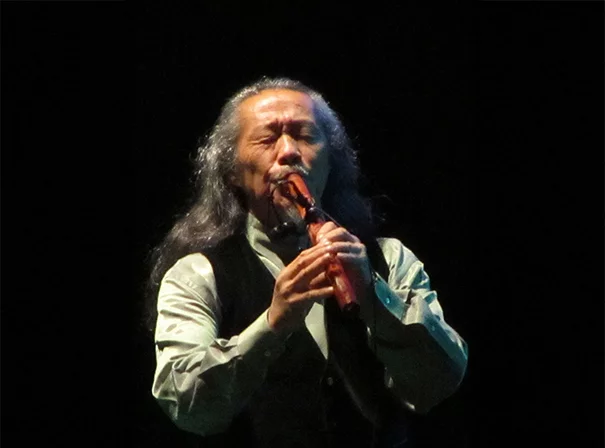
Japan Kitaro is a Grammy and Golden Globe award-winning Japanese musician, composer, record producer, and arranger known for his pioneering work in electronic-instrumental and new-age music.
Kitaro has partnered with Domo Music Group, his record label since 1994, which releases his albums and acts as his official representative. The label also manages his blog and promotes his music and collaborations, including a blog post detailing Kitaro's revolutionary fusion of electronic artistry, traditional Japanese music, and song forms.
Kitaro entered a worldwide distribution arrangement with Geffen Records between 1985–1986. This partnership led to the re-release of six of his earlier albums and the creation of new material, increasing his international presence.
Kitaro achieved international renown through his collaboration with NHK for their documentary series 'The Silk Road: The Rise And Fall Of Civilizations' (1980). He composed the original soundtrack, which contributed significantly to the series' success and brought Kitaro global recognition.
Cristofori is promoting Kitaro’s 2024 World Tour, highlighting his collaborations with artists like Mickey Hart and Jon Anderson, which have enriched his musical legacy. This partnership involves promoting tour dates and Kitaro’s musical contributions.
Masanori Takahashi, known professionally as Kitaro, was born in Toyohashi, Aichi, Japan, on February 4, 1953. His early musical interests involved playing electric guitar in a high school band that covered American rhythm and blues and The Beatles. After graduating, he moved to Tokyo, learning drums and bass, and discovered the synthesizer, which became a primary instrument in his later career. In the early 1970s, Kitaro joined the Japanese progressive rock band Far East Family Band, releasing four albums with them. During this period, he encountered German electronic musician Klaus Schulze, who influenced his approach to synthesizers.
Kitaro launched his solo career in 1977, releasing his first albums “Ten Kai” and “Daichi” in 1978 and 1979, respectively. A significant turning point came in 1980 with his work on the NHK documentary series “The Silk Road: The Rise And Fall Of Civilizations.” His compositions for the series, primarily using synthesizers, garnered critical acclaim, including a Galaxy Award, and sold millions of copies, bringing him international recognition. In 1985–1986, Kitaro signed a worldwide distribution deal with Geffen Records, leading to the re-release of six of his earlier albums and new material. Throughout the late 1980s and early 1990s, he collaborated with artists such as Mickey Hart of the Grateful Dead on “The Light of the Spirit” (1987) and Jon Anderson of Yes on “Dream” (1992). His soundtrack for the 1993 film “Heaven & Earth” earned him a Golden Globe Award for Best Original Score, and his album “Kojiki” (1990) achieved commercial success, reaching number one on Billboard’s New Age chart.
Since 1994, Kitaro has continued his prolific career with Domo Records, receiving multiple Grammy nominations and winning the Grammy Award for Best New Age Album for “Thinking of You” in 1999. His “Sacred Journey of Ku-Kai” series, beginning in 2003, is a collection of peace-themed albums inspired by the Shikoku Henro Pilgrimage, incorporating samples from ancient Japanese temple bells. In 2007, he composed the music for “Impression West Lake,” a large-scale opera directed by Zhang Yimou, which later received a Grammy nomination for its soundtrack. Kitaro’s commitment to peace and nature is evident in his “Love and Peace World Tour” (2007-2009) and later albums like “Final Call” (2013) and “Symphony Live in Istanbul” (2014), both of which garnered Grammy nominations. His recent reissues of albums like “Kojiki” (2015) and “Tenku” (2016) attest to his enduring legacy.

Curious about our offerings or have inquiries? We're eager to assist!
Just complete the form, and we'll respond promptly.