









News  17th February 2026
17th February 2026 

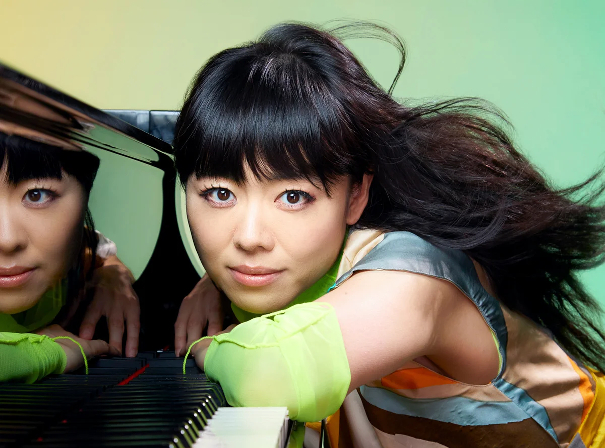
Hiromi Uehara, known simply as Hiromi, was born in Hamamatsu, Japan, on March 26, 1979, into a musical home that set the stage for her extraordinary journey. She began playing piano at six, encouraged by her energetic teacher Noriko Hikida. At eight, jazz entered her life through Hikida, who would color her interpretations with emotional depth—”Play red” for passion, “play blue” for serenity. By fourteen, she was sharing stages with orchestras, a sign of the prodigious talent that would shape her future.
In 1999, she took a leap across the Pacific to study at Berklee College of Music. Here, the vibrant Boston scene widened her horizons, revealing a world of musical fusion. She was mentored by icons like Ahmad Jamal, who saw the spark in her early compositions. By 2003, her debut album, “Another Mind,” turned both heads and charts, shipping gold in Japan and winning accolades.
Hiromi’s career is peppered with critical triumphs—Grammy wins, innovative albums like “Voice” and “Spark,” and collaborations with legends such as Chick Corea. Yet, she remains grounded, reflecting on the essence of her music as an exploration of the human experience, capturing unspoken emotions through melody. Enthusiasts debate whether her style leans more toward jazz or classical, but perhaps that’s the very point; it’s a beautiful blur that defies easy classification.
Personal stories intermingle with her public persona; she married fashion designer Mihara Yasuhiro after their paths crossed in Milan over a performance. It’s an exasperating thought—did it happen as serendipitously as it seems? Yet, this layered complexity is the very pulse of Hiromi’s life and art, drawing listeners into a world where precision dances with raw emotion, leaving them yearning for more.
Interested in booking Hiromi?
Request A Show
Looking for a different kind of talent? Browse our other talent rosters below to find the right talent to fit.