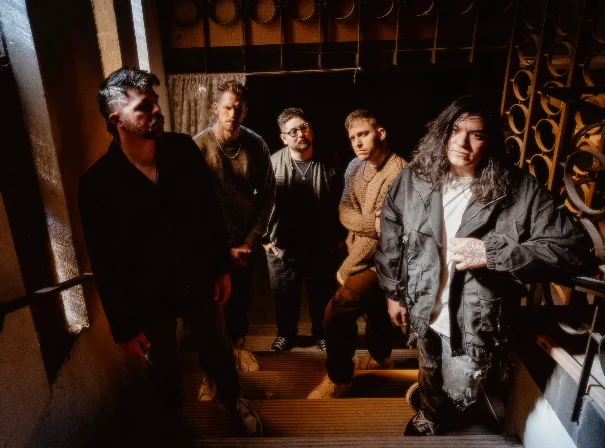


Bimini Headlines Fulham Pier for Hammersmith & Fulham’s Youth Arts Festival
15 hours ago


 Ethiopia
Mulatu Astatke is an Ethiopian musician and arranger recognized as the creator of Ethio-jazz, influencing music globally.
Exclusive booking agency for Mulatu Astatke, handles brand partnerships.
Representation for Mulatu Astatke, describing him as the father of Ethio-jazz.
Featured Mulatu Astatke for an event, highlighting his role in creating Ethio-jazz, blending western funk, soul, and jazz with East-African melodies.
Released 'Mulatu Steps Ahead' with the Either/Orchestra (2010), 'Mulatu of Ethiopia' (2017), and 'Mulatu Plays Mulatu' (2025).
Released 'Sketches of Ethiopia' (2013).
Released 'Tension' (2024).
Mulatu Astatke was born on December 19, 1943, in Jimma, Ethiopia. His early education took an unexpected turn when his family sent him to Wales in the late 1950s to study engineering. Instead, Mulatu pursued music, first at Lindisfarne College and then earning a degree from the Trinity College of Music in London. His musical journey continued in the United States, where he enrolled at Berklee College of Music in Boston, focusing on vibraphone and percussion. During his time in the U.S., Mulatu developed an interest in Latin jazz, leading him to record his debut albums, “Afro-Latin Soul, Volumes 1 & 2,” in New York City in 1966. These instrumental records showcased his vibraphone playing, supported by piano and congas, integrating Latin rhythms.
In the early 1970s, Mulatu brought his distinctive sound, which he termed Ethio-jazz, back to Ethiopia while maintaining his work in the U.S. This new genre merged traditional Ethiopian music with jazz and Latin influences. A significant milestone was his collaboration with Duke Ellington and his band during their 1973 tour of Ethiopia. Mulatu recorded “Mulatu of Ethiopia” in New York in 1972, and his subsequent work, including the album “Yekatit Ethio Jazz” (1974), was often released through Amha Eshete’s Amha Records in Addis Ababa. His music profoundly impacted the Ethiopian Golden Age of Music before Amha Records ceased production in 1975 due to political changes. Mulatu continued to perform, including with Hailu Mergia and the Walias Band for their 1977 album “Tche Belew,” before the band also toured internationally.
The 1990s saw a resurgence in interest in Mulatu’s music, particularly with the reissue of his 1970s recordings by the Parisian label Buda Musique as part of the “Éthiopiques” series. “Éthiopiques Volume 4: Ethio Jazz & Musique Instrumentale, 1969–1974” introduced his work to a broader international audience. His compositions gained further global recognition through their inclusion in Jim Jarmusch’s 2005 film “Broken Flowers” and through samples used by artists like Nas, Damian Marley, and Kanye West. Mulatu has engaged in notable collaborations, including with the Either/Orchestra, performing across Europe and North America in 2006 and 2008. In 2008, he completed a Radcliffe Institute Fellowship at Harvard University, working on modernizing traditional Ethiopian instruments and premiering a portion of “The Yared Opera.” He continued to contribute to music education as an Abramowitz Artist-in-Residence at MIT, advising on creating a modern krar. In recognition of his contributions, Berklee College of Music awarded him an honorary doctorate of music in 2012. As of 2025, Mulatu continues to tour internationally, performing his unique blend of Ethio-jazz.

Curious about our offerings or have inquiries? We're eager to assist!
Just complete the form, and we'll respond promptly.