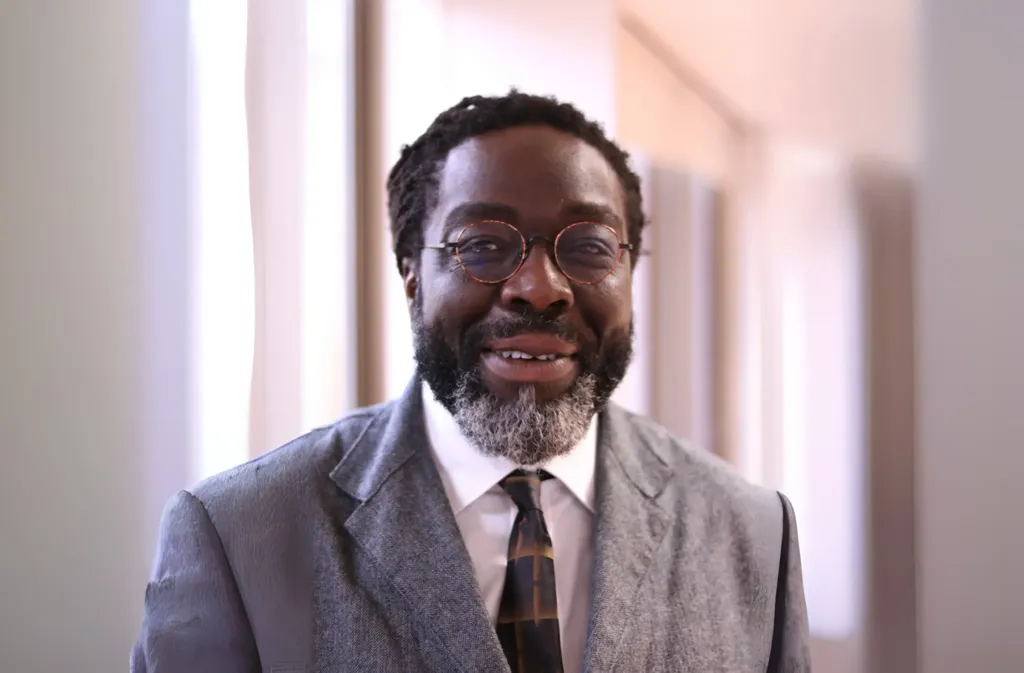


Bernard Kouchner to speak at Words Matter! Conference
3 years ago


 France
Bernard Kouchner is a French politician and physician known for co-founding Médecins Sans Frontières (Doctors Without Borders) and Médecins du Monde (Doctors of the World), organizations dedicated to providing humanitarian medical aid globally. His career spans extensive field work in conflict zones and holding governmental ministerial positions in France, advocating for humanitarian causes and international intervention.
Co-founder of the Nobel Prize-winning Médecins Sans Frontières. He worked as a physician for the Red Cross in Biafra in 1968, an experience that led to his co-founding of MSF in 1971. MSF is an international humanitarian non-governmental organization best known for its projects in conflict zones and countries affected by endemic diseases.
Founder of Médecins du Monde in 1980. This organization also focuses on providing humanitarian medical aid globally. He formed this group after a conflict of opinion with MSF chairman Claude Malhuret.
Appointed by UN Secretary General Kofi Annan as the second UN Special Representative and Head of UNMIK from 1999 to 2001. He led efforts to create a new civil administration and political system in Kosovo and to rebuild the economy after the Kosovo War.
Worked as a physician for the Red Cross in Biafra in 1968 during the Nigerian Civil War.
Co-established the International Bureau for Children's Rights (IBCR), an NGO based in Montreal, in 1994, together with Judge Andrée Ruffo.
Since 2015, Kouchner has served as a workstream leader for the AMU, contributing his expertise in healthcare.
Member of the Board of Trustees after leaving politics, contributing to the development of higher education in the region.
Member of the Selection Committee for the Aurora Prize for Awakening Humanity since 2017, an award recognizing individuals who have demonstrated exceptional courage in their humanitarian work.
Member of the Board of Advisors for Devex, a social enterprise community for international development professionals.
Member of the International Board of Advisors, supporting the foundation's work.
Member of the ECFR, a pan-European think-tank focused on foreign policy issues.
Member of the Board for FACE, an organization working to combat exclusion and promote social cohesion.
Member of the International Council of Advisors for ICT, an organization advocating for human rights and self-determination for the Tibetan people.
Member of the Advisory Council for CITpax, an independent organization dedicated to promoting peace and conflict resolution.
Bernard Kouchner was born on November 1, 1939, in Avignon, France, to a Jewish father and a Protestant mother. His paternal grandparents, Russian-born Jews, perished in Auschwitz, an event that later influenced his humanitarian work. He grew up in the suburbs of Paris, where his father was a physician. Kouchner initially pursued a medical career, receiving his MD degree in 1964 and subsequently becoming a certified gastroenterologist. His early political engagement included a period as a member of the French Communist Party, from which he was expelled in 1966.
Kouchner’s commitment to humanitarian action began during the Nigerian Civil War. In 1968, he worked as a physician with the Red Cross in Biafra, observing critical gaps in aid delivery and medical neutrality. This experience led him to co-found Médecins Sans Frontières (MSF) in 1971, based on the principles of providing medical assistance independently of political, religious, or military considerations. Following a disagreement over MSF’s direction, he co-founded Médecins du Monde (Doctors of the World) in 1980, furthering the mission of independent humanitarian intervention. His field operations included assisting victims of an earthquake in Peru in 1970, massacres in Jordan in 1970, and during the Lebanese Civil War in 1975, working closely with local leaders.
His career later transitioned into government, holding various ministerial roles in France. From 1988, he served in Socialist governments, notably as Secretary of State for Humanitarian Action and later as Minister of Health multiple times. He also served as a Member of the European Parliament from 1994 to 1997, chairing the Committee on Development and Cooperation. A significant international role was his appointment as the UN Special Representative and Head of the United Nations Interim Administration Mission in Kosovo (UNMIK) from 1999 to 2001, where he led efforts to establish a civil administration and political system after the Kosovo War. He culminated his political career as the French Minister of Foreign and European Affairs from 2007 to 2010, advocating for humanitarian intervention and a pro-European stance.

Curious about our offerings or have inquiries? We're eager to assist!
Just complete the form, and we'll respond promptly.