

Bimini Headlines Fulham Pier for Hammersmith & Fulham’s Youth Arts Festival
12 hours ago


 United States
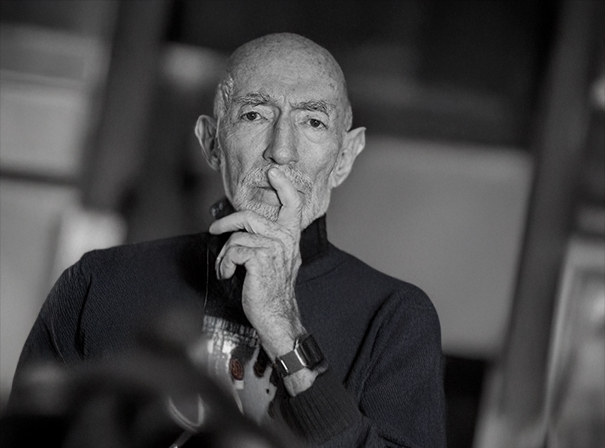
Kip Thorne is an American theoretical physicist and Nobel laureate, renowned for his pivotal contributions to gravitational-wave astronomy and the LIGO detector, which led to the first observation of gravitational waves. He also provides scientific consulting for major film productions.
Chapman University Associate Professor Lia Halloran and physicist Kip Thorne shared the story behind their unique collaboration during a keynote speech.
Kip Thorne worked closely with the visual effects team at Double Negative, particularly with lead person Paul Franklin, during the production of the film 'Interstellar'.
He brought complex physics to a global audience through his collaboration with Christopher Nolan on the Hollywood movie Interstellar and Kip's accompanying book.
His presentations on subjects such as black holes, gravitational radiation, relativity, time travel, and wormholes have been included in PBS shows in the U.S.
His presentations on subjects such as black holes, gravitational radiation, relativity, time travel, and wormholes have been included ... on the BBC in the United Kingdom.
The elected Spokespersons of the LIGO Scientific Collaboration, Peter Saulson, David Reitze and now Gabriela Gonzalez, were essential to the success.
Thorne played himself in the episode of 'The Big Bang Theory' entitled 'The Laureate Accumulation'.
Thorne contributed ideas on wormhole travel to Carl Sagan for use in his novel 'Contact'.
Thorne and his friend, producer Lynda Obst, also developed the concept for the Christopher Nolan film 'Interstellar'.
Thorne advised Cillian Murphy on his portrayal of J. Robert Oppenheimer in Nolan's film 'Oppenheimer'.
In the 2023 book The Warped Side of Our Universe, Thorne use poetry, and illustrations by Lia Halloran, to explain scientific concepts for the reader.
Kip S. Thorne was born on June 1, 1940, in Logan, Utah, into an academic family; his father was an agronomist and his mother an economist. He demonstrated early academic promise, winning recognition in the Westinghouse Science Talent Search. He pursued his higher education at the California Institute of Technology (Caltech), earning his bachelor’s degree in physics in 1962. He then completed his master’s and Ph.D. in physics at Princeton University in 1964 and 1965, respectively, under the guidance of John Archibald Wheeler. Following a postdoctoral fellowship at Princeton, Thorne returned to Caltech in 1966, where he has remained since, eventually becoming the Feynman Professor of Theoretical Physics in 1991, a position from which he retired as professor emeritus in 2009. His work has significantly advanced the understanding of relativistic astrophysics, black holes, and gravitational waves.
Thorne’s most influential contribution centers on gravitational waves, a key prediction of Einstein’s general theory of relativity. Beginning in the 1970s, he made crucial theoretical and engineering contributions to the development of the Laser Interferometer Gravitational-Wave Observatory (LIGO). He co-founded the LIGO Project in 1984, which became the largest project ever funded by the National Science Foundation. LIGO’s goal was to detect the subtle ripples in spacetime caused by accelerating massive objects, such as colliding black holes. His research involved predicting gravitational wave strengths and their temporal signatures, developing mathematical analysis tools, and advising on detector design and data analysis algorithms. These efforts culminated in the historic direct detection of gravitational waves in 2015, affirming Einstein’s theory and opening a new era of astronomy.
Beyond his groundbreaking work with LIGO, Thorne has explored various complex topics in theoretical physics. He is recognized for his research into black hole cosmology, including the “hoop conjecture” which describes the conditions under which an imploding star forms a black hole. He also significantly contributed to the understanding of traversable wormholes and the theoretical possibility of time travel within the laws of physics. His work has extended to collaborations with artists and filmmakers, notably serving as a scientific consultant for Christopher Nolan’s film *Interstellar*, which helped bring complex astrophysical concepts to a broader audience. He mentored many physicists, shaping subsequent generations of scientists in general relativity and astrophysics.

Curious about our offerings or have inquiries? We're eager to assist!
Just complete the form, and we'll respond promptly.