



Brand Partnerships  17th July 2025
17th July 2025 

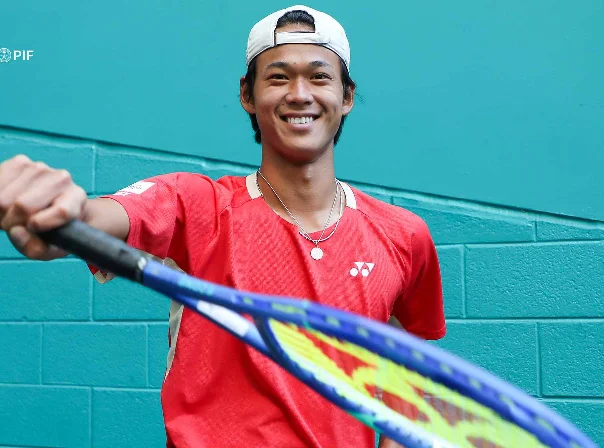
Rei Sakamoto is navigating the terrain of professional tennis with a mix of youthful exuberance and a samurai’s spirit. Born in 2006, he picked up the sport fairly late compared to others, yet something clicked the moment he gripped a racquet. Growing up in a family of volleyball players, he could have followed a different path—baseball, swimming—but tennis whispered promises of talent and destiny. At just 18, he has already etched his name into the ATP landscape, becoming the second youngest Japanese player ever to win an ATP Challenger title, a feat reminiscent of his precursor, Kei Nishikori.
His on-court celebration—a samurai sword unsheathing from his racquet—reflects not just a flair for performance, but a deeply entrenched mindset. Sakamoto views each match as a battle to be fought with determination and focus. “Samurais… they have to go to battle and then they have to kill people to be alive,” he remarks, striking a balance between jest and the seriousness of competition. It seems that this mentality has propelled him through the ranks, from an unassuming junior performer to a budding star on the professional circuit.
Under the tutelage of coach Federico Ricci, his game has sharpened significantly; Sakamoto’s ball speed is noted even among the seasoned players of the Top 100. However, he grapples with the notion of growth in other areas of his game too—his forehand, his touch. This mix of insecurity and aspiration is palpable. A competitive spirit burns in him, yet the complexity of teenage life adds a sprinkle of humor to his encounters, revealing a lighthearted side amid the intensity.
As he moves through tournaments in the ATP Challenger circuit, the pressure weighs heavy. Will he seize the moment and continue to climb the ranks? Or will the burden of expectations slow his ascent? For now, Sakamoto doesn’t just play tennis—he embodies it, infusing his matches with a unique blend of tradition and modern competition, leaving fans to wonder what’s next for this samurai of the court.

Looking for a different kind of talent? Browse our other talent rosters below to find the right talent to fit.