



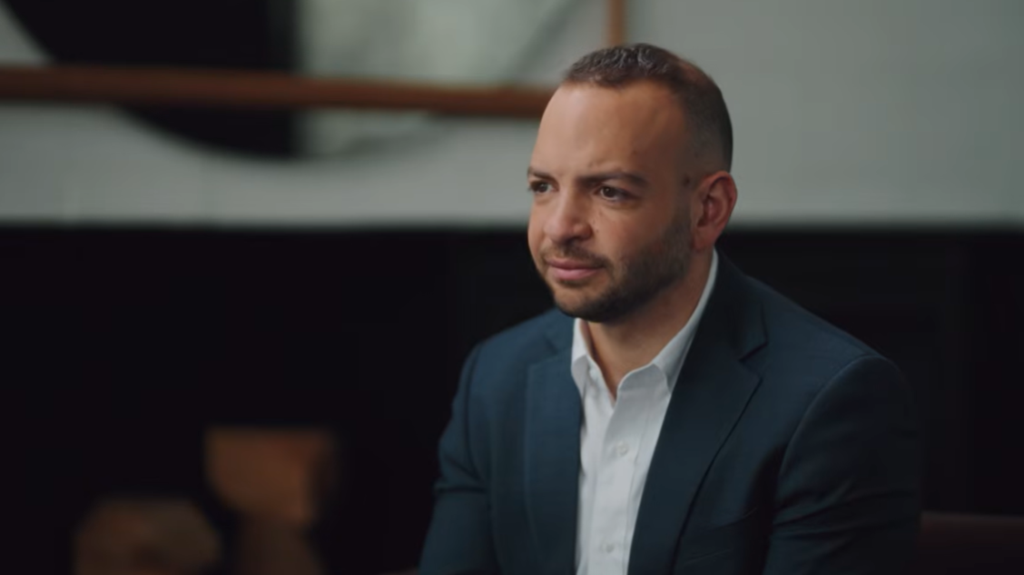
Big Technology founder Alex Kantrowitz lent his journalistic credibility to Gravitee’s new documentary, helping the enterprise software brand turn a complex AI governance problem into essential viewing for the tech industry.
AI agents are multiplying faster than most enterprises can govern them. Gravitee decided the best way to make that point wasn’t a whitepaper. It was a documentary, fronted by one of the most trusted voices in tech journalism.
The API management and AI governance company teamed up with Alex Kantrowitz, founder of the Big Technology newsletter and podcast, to host AI Agents: How Do We Take Back Control? The film premiered in San Francisco in June 2026 and quickly became one of the more talked-about pieces of B2B content marketing in the enterprise software space this year.
For MN2S, the partnership is a sharp example of how brands are increasingly turning to respected media figures, alongside traditional celebrity ambassadors, to lend authority to technical subjects that audiences might otherwise scroll past and using talent and expertise over AI-generated content.
Why Alex Kantrowitz Was the Right Fit
Kantrowitz has spent years building a reputation as an independent voice in tech journalism. He writes the Big Technology newsletter, hosts the accompanying podcast, contributes to CNBC, and wrote Always Day One, a book examining how the biggest tech companies stay competitive.
His newsletter has grown into one of the most-read publications covering big tech, with a subscriber base in the hundreds of thousands. That audience skews toward senior technology and business decision-makers, which made him a natural fit for a brand trying to reach exactly that group.
Crucially, Kantrowitz isn’t a spokesperson for hire. He is known for asking difficult questions of tech leaders, not softballing them. That editorial reputation is precisely what gave the Gravitee documentary credibility that a branded video alone could never achieve.
Inside the Documentary
AI Agents: How Do We Take Back Control? tackles a problem most businesses are only beginning to grapple with. AI agents are already embedded across enterprise workflows, yet visibility and accountability have struggled to keep pace with adoption.
The film features Kantrowitz interviewing a strong lineup of researchers and industry leaders, including Ramesh Raskar of the MIT Media Lab, Theresa Payton, former Chief Information Officer at the White House, and Sharon Gai, a former Alibaba executive. Ambica Rajagopal, Group Chief Data and AI Officer at Michelin, and Gravitee CEO Rory Blundell also appear.
Gravitee hosted an exclusive San Francisco premiere on 16 June 2026 for senior AI and security leaders. The screening was followed by a live Q&A featuring Kantrowitz alongside Blundell and Gravitee CPTO Linus Hakansson. The conversation moved beyond the film itself, covering how quickly organisations are deploying AI agents and how few genuinely feel in control of them.
A second premiere followed in New York on 23 June, before the documentary launched publicly and became free to watch on YouTube on 24 June 2026.
The Numbers Behind the Narrative
The documentary leans on research that makes the governance gap difficult to ignore. According to the film, more than seven million AI agents are already operating across US and UK workforces, a figure that now exceeds the combined number of teachers, doctors, and lawyers in America.
Despite that scale, the research found that 80% of organisations feel pressure to deploy AI agents quickly, often without adequate security in place. Only 10% feel they genuinely have control over what those agents are doing. That gap between adoption speed and oversight is the entire premise of the campaign, and it gives Gravitee’s messaging a clear, urgent hook rather than a generic security pitch.
A Smart Piece of Thought Leadership Strategy
Enterprise software brands often struggle to make governance and security topics feel relevant outside a compliance team. Gravitee avoided that trap by pairing a specialist subject with a mainstream storytelling format and a host with genuine journalistic standing.
This approach reflects a wider shift in B2B marketing. Rather than relying purely on paid media or branded whitepapers, more companies are investing in talent-led editorial content that borrows credibility from an independent voice. Kantrowitz’s involvement gave the film a tone that felt investigative rather than promotional, which is exactly what a security-conscious, sceptical enterprise audience responds to.
“This just felt like the right fit. Alex has built a reputation for cutting through the AI hype and asking the questions that actually matter, while Gravitee is helping solve some of the biggest challenges around AI security. Bringing those two perspectives together makes for a genuinely compelling documentary,” says Petter Tangen, who facilitated the partnership at MN2S.
The activation also extended well beyond the screenings themselves. Deliverables spanned launch-day social copy, trailer and video asset coordination, and LinkedIn amplification tied to the release, giving the campaign a multi-channel footprint rather than a single premiere moment.
Why This Matters for Brand and Talent Partnerships
The Kantrowitz and Gravitee collaboration is a useful case study for any B2B brand considering talent-led content. It shows that credibility, not follower count, is often the deciding factor in whether an audience trusts a piece of branded content.
It also highlights a growing opportunity for journalists, analysts, and podcast hosts to work directly with brands on premium content formats, provided the editorial integrity of the collaboration is protected throughout. Audiences in technical, sceptical sectors can tell the difference between a paid endorsement and a genuinely informed conversation.
For Gravitee, the campaign positions the company as a credible voice in the AI agent governance conversation at a moment when the topic is becoming unavoidable for enterprise leaders. For Kantrowitz, it reinforces his standing as one of the more trusted interpreters of big tech for a business audience.
Expect to see more of this model. As AI, security, and enterprise software brands compete for attention, talent-led documentary and interview formats offer a way to say something substantive, rather than simply loud.