




The metrics that got you here won’t get you recommended
Impressions are easy to buy. Trust is not. And that difference is starting to decide which brands get recommended and which quietly disappear.
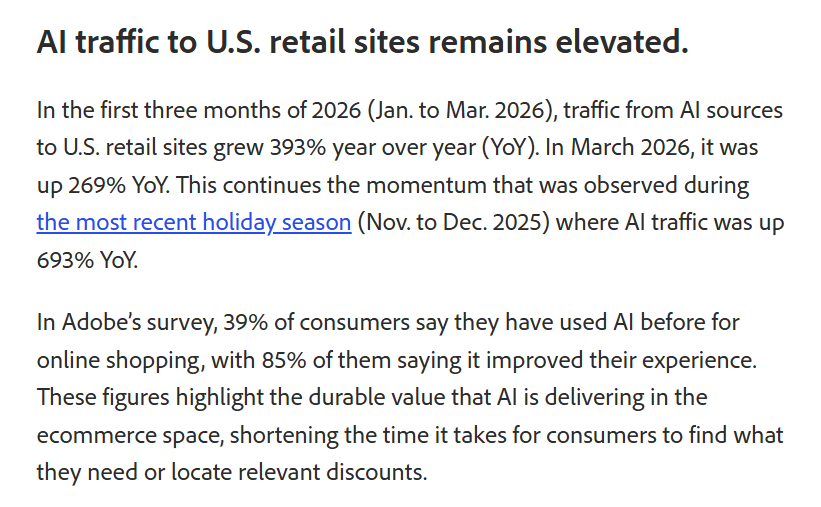
A growing share of discovery now happens inside AI assistants, not on search results pages. Adobe reported that traffic from generative AI sources to US retail sites grew 393% year on year in the first quarter of 2026, and that by March it was converting 42% better than non-AI traffic. The people arriving that way have already been handed a shortlist. The question for marketers is how to make it.
What the machines are reading
So far, the answer is not ads. Muck Rack’s May 2026 What Is AI Reading? study analysed more than 25 million links cited by AI models and found earned media accounted for 84% of citations. Paid and advertorial content accounted for 0.3%.
The mechanism suggests a simple rule: AI systems appear to favour what credible third parties say about you, consistently and over time. Click-through rates and impressions still tell you whether a campaign was seen. They say far less about whether your brand will be recommended when a buyer asks an assistant who to trust.
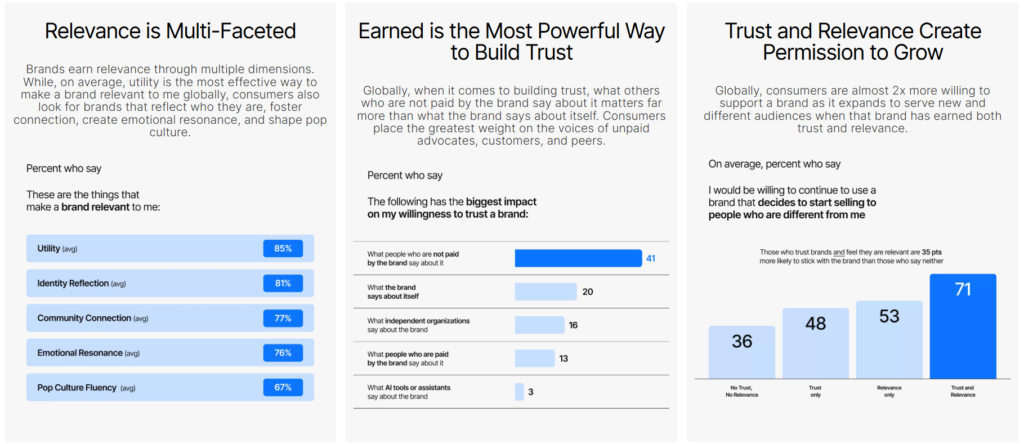
People are running the same filter. Edelman’s 2026 Trust Barometer special report on brands found that 88% of consumers rate trusting a brand as an important or critical purchase criterion, level with value and just behind quality. It also found that what people who are not paid by a brand say about it carries far more weight than what the brand says about itself.
From buying attention to engineering reputation
This is the shift: from buying attention to engineering reputation. For consumer brands, that means leaning back into values people can check, from transparent sourcing to genuine communities. For B2B brands, credibility becomes a gate. A thin reputation risks leaving you off the AI shortlist altogether.
The warning signs were there early. When Gartner predicted in 2024 that AI chatbots would eat into traditional search, its advice was that content “should continue to demonstrate search quality-rater elements such as expertise, experience, authoritativeness and trustworthiness.” Two years on, that reads less like SEO guidance and more like brand strategy.
Content is still king. But for whom?
It is no longer only people doing the searching. AI agents now research, compare and shortlist on their behalf. That means content has two readers.
The human reader wants emotion, story and meaning. The machine reader wants structured, authoritative, reference-grade material it can confidently cite. Adobe’s own checks found retail product pages scored just 66% for AI readability. Brands that only write for one audience will underperform with both.
Talent is one of the few assets that serves both at once.
Why talent earns trust at both ends
A credible name creates the story people remember and the coverage machines read. Meltwater’s April 2026 analysis of AI citations found YouTube in the top five sources for six of the eight models tracked. Talent-led video, press and long-form storytelling land exactly where these systems appear to look.
Three partnerships secured by MN2S show how it plays out.
Specsavers skipped the straight endorsement. It teamed up with Harry Redknapp to take on Cwm Albion, a Welsh club on a 22-game losing streak the brand had dubbed the country’s “best worst team”. The result was a web series, There’s More To Cwm, and a club that won its first match in three years. Emotion for the audience. A documented, reportable story for everyone else.
Expertise works the same way. When Borealis Foods brought in Gordon Ramsay, he joined as advisor, strategic partner and brand ambassador, not just a face on the pack. That depth of involvement signals long-term reliability, exactly the quality trust-led discovery rewards.
In B2B, the logic is sharper still. Mel Robbins’ LinkedIn campaign for Upwork worked because she spoke as a business owner who actually uses the platform. A credible voice showing real use is customer proof, delivered at scale.
The challenger brand problem
Smaller brands feel this shift most. Without years of coverage behind them, many will find themselves spending more on advertising just to be seen, while AI recommendations lean towards names that are already trusted. The right talent partnership compresses that timeline, generating the stories, coverage and third-party validation that would otherwise take years to build.
Build trust before you need it
The brands that make next year’s shortlists will not be the loudest. They will be the ones most consistently vouched for by credible voices, in formats both people and machines can use. That work starts now, and it starts with choosing the right talent. Start the conversation with our team.