




Most brands are using speakers at about 20% of their commercial potential.
They book a name for the annual conference. The room fills up. The talk lands well. Everyone agrees it was “a great event.” The speaker goes home. And that’s it. The moment is gone, the content is forgotten, and the brand has extracted almost nothing from what could have been a genuinely powerful strategic asset.
The smartest brands in 2026 have figured out something different. The thought leader is not just an event booking. They are a brand strategy.
The Trust Problem Every Brand Has Right Now
There is a structural problem sitting underneath most marketing budgets. Your audience doesn’t fully trust your marketing.
They know your ads are paid for. They know your product pages are written to sell. They know your white papers exist to generate leads. According to the 2024 Edelman-LinkedIn B2B Thought Leadership Impact Report, which surveyed nearly 3,500 management-level professionals across seven countries, 73% of decision-makers say an organisation’s thought leadership content is a more trustworthy basis for assessing its capabilities than its marketing materials and product sheets. Nearly three quarters. The gap between “we said it” and “an expert said it” is enormous, and most brands are leaving it entirely unexploited.
The same research found that 75% of decision-makers said a piece of thought leadership had led them to research a product or service they were not previously considering. Not an ad. Not a sales call. A piece of credible expertise from a credible voice. And 60% said good thought leadership makes them willing to pay a premium to a supplier.
This isn’t soft brand sentiment. This is pipeline.
The Conference Is the Smallest Part of the Opportunity
Here is where most brands get it wrong. They put the speaker in the events budget. They measure success in room satisfaction scores and post-event surveys. They treat the keynote as a finished product.
It isn’t. It’s a starting point.
A well-chosen thought leader appearing at your industry conference is a media moment. The talk generates video content. The content generates social posts. The social posts generate coverage. The coverage reaches an audience many times larger than the room. The speaker’s own platforms amplify further. What looked like a one-hour engagement can run for weeks if it is structured correctly from the start.
That means the brief has to change. Instead of asking “who would make a good keynote for our annual summit?”, the brands winning right now are asking: “which thought leader, deployed as an external brand asset across multiple touchpoints over six months, would most credibly shift how our target audience thinks about us?”
Those are very different questions. They lead to very different results.
From Event Booking to Brand Architecture
The shift is from transaction to strategy. The proof is already happening across every sector.
This month, MN2S placed Andrew McAfee, principal research scientist at MIT Sloan School of Management and one of the world’s leading authorities on AI and the future of work, as the headline speaker at Patria Day New York & AGM 2026 at the St. Regis New York. The audience: approximately 200 senior institutional investors and global business executives. The format: a 45-minute fireside chat followed by a 40-minute VIP session. The purpose: to elevate Patria Finance’s intellectual positioning among exactly the decision-makers they need to influence most. That is not an event booking. That is brand architecture.
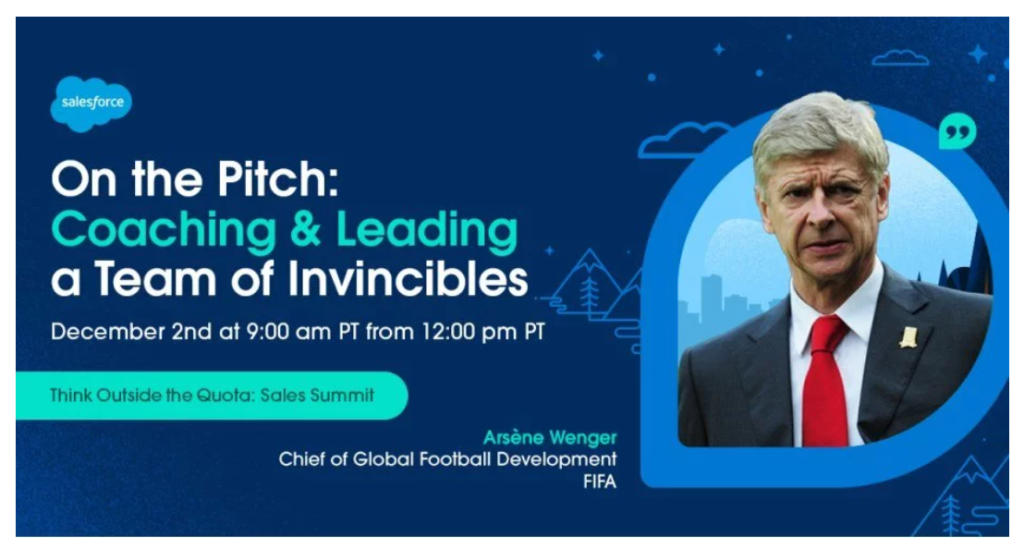
The same logic runs through every category. When MN2S placed Arsène Wenger as keynote speaker for Salesforce’s Think Outside The Quota sales summit, the booking wasn’t about football. It was about what Wenger represents: the art of building high-performance teams, sustaining excellence over time, and leading people through change. Salesforce got a session on coaching and leadership that no in-house speaker could have delivered with the same authority. The brand got the cultural credibility that comes with being the company that brought Wenger to its stage.
When gaming company Riot Games needed a speaker to anchor an internal event around diversity and inclusion, MN2S placed Dani Bowman, animator, entrepreneur, and autism advocate who founded DaniMation Entertainment at age 11. The virtual employee event signalled something specific about what Riot stands for, using a speaker whose story made that signal impossible to dismiss as corporate messaging.
When L’Oréal and TikTok co-hosted a creator panel at TikTok’s Times Square offices, MN2S placed Dr. Kate Biberdorf, known as Kate the Chemist, as a panel member. A scientist with nearly 5 million TikTok likes and a professorship at the University of Notre Dame, her presence told the room and everyone who heard about it afterwards that L’Oréal understands the new shape of scientific credibility. Not a white coat in a lab. A scientist building communities on the same platforms their customers use.
And when MN2S arranged for Sheryl Lee Ralph to address General Mills employees as part of their NXT Speaker Series in collaboration with the company’s Black Champions Network, the event wasn’t a perk or a morale exercise. It was a signal about what General Mills stands for. The speaker was the message.
Across finance, technology, gaming, beauty and food, the pattern holds. The right speaker, in the right context, tells your audience something about your brand that your marketing cannot. MN2S represents a wide bench of speakers across business, technology, sport and culture, including futurist and technology advisor Sophie Hackford, Skype co-creator and digital transformation speaker Jonas Kjellberg, and Charles Tyrwhitt founder Nick Wheeler OBE. The roster is built for exactly this kind of strategic deployment.
The External-Facing Opportunity Most Brands Miss
Internal conferences and leadership away-days are only one context. The brands extracting the most value from thought leader partnerships are deploying them externally.
Industry summits and trade association events. Panel appearances at competitor-adjacent conferences. Podcast partnerships and media collaborations. Brand advisory positions that generate ongoing content. Spokesperson roles for campaigns anchored in a genuine point of view.
Each of these takes the credibility of a known expert and attaches it, by association, to a brand. The Edelman research is clear on the commercial effect: 7 in 10 decision-makers say they are very likely to think more positively about organisations that consistently produce high-quality thought leadership. Consistently. Not once. The brands that treat speaker and thought leader partnerships as ongoing strategic relationships, rather than individual event bookings, compound that benefit over time.
And with more than 40% of B2B deals stalling due to internal misalignment within buying groups, the value of thought leadership that reaches beyond the obvious decision-maker and persuades the whole room has never been higher.
The Brief Has to Get Smarter
A speaker brief that says “45-minute keynote, 200 people, afternoon session, topic: innovation” is not a strategic brief. It is a logistics request.
A strategic brief asks: what does this speaker stand for that our brand wants to be associated with? What audience do they have beyond the room we are putting them in? What content could we co-create before and after the event that extends the partnership’s reach? What is the six-month plan that starts with the keynote and ends with measurable brand perception shift?
The difference between a £5,000 event booking and a genuinely transformative brand partnership often comes down to that brief. The talent exists to do either. Most brands, by default, choose the former.
The ones that choose the latter tend to find the results difficult to replicate through any other channel.
The Window Is Real
Demand for the most commercially credible thought leaders is growing faster than supply. The speakers who combine genuine domain expertise with media presence, established audiences and brand partnership experience are a relatively finite pool, and the brands moving toward longer-term strategic relationships with them are narrowing the options for those still thinking transaction by transaction.
The moment to rethink how your brand uses speakers is not the week before your next conference. It is now, before the brief is written and the budget is allocated in ways that limit what is actually possible.
If you want to explore what a thought leader partnership could do for your brand, start the conversation here.