



The Format Question Every Independent Artist Faces
You have finished a batch of new music and now you are staring at a decision that feels bigger than it should. Do you release one song at a time, group a few tracks into an EP, or hold everything back for a full album? There is no universal right answer. The right format depends on your career stage, your budget, and how you want streaming platforms to treat your music once it is live.
Why This Decision Matters More Than It Used To
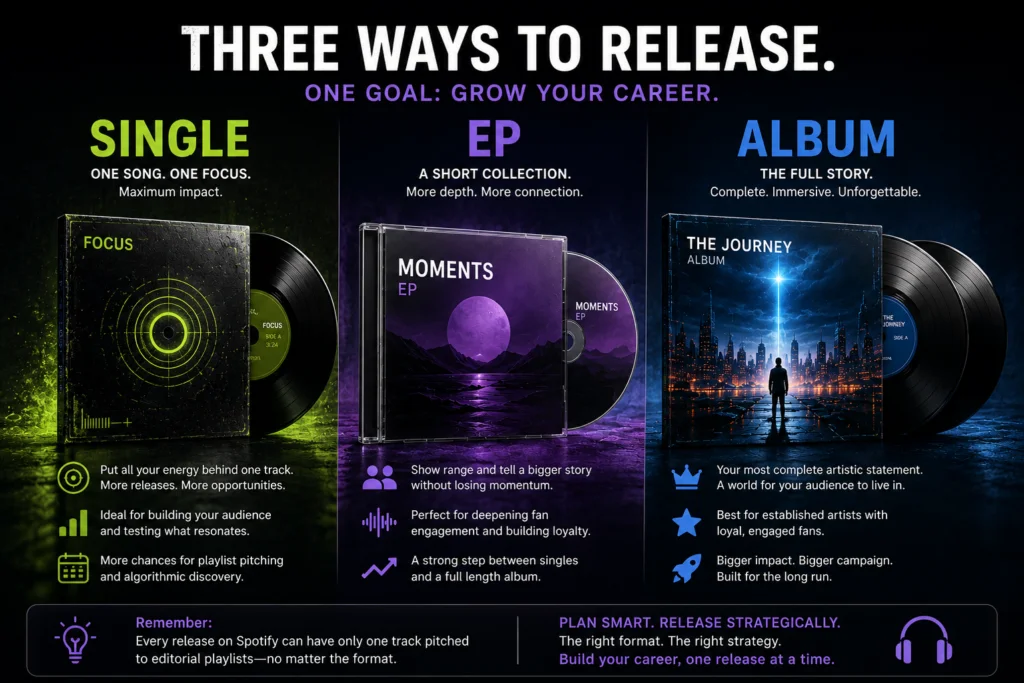
In the album era, format was rarely a choice. You recorded a full length record and that was the release. Streaming changed the incentives. Platforms reward frequent releases with more chances to land on algorithmic playlists like Release Radar and Discover Weekly, and every release only gets one shot at editorial playlist consideration regardless of how many tracks it contains. That single fact changes how independent artists should think about format from the very first decision.
How Streaming Platforms Actually Classify Your Release
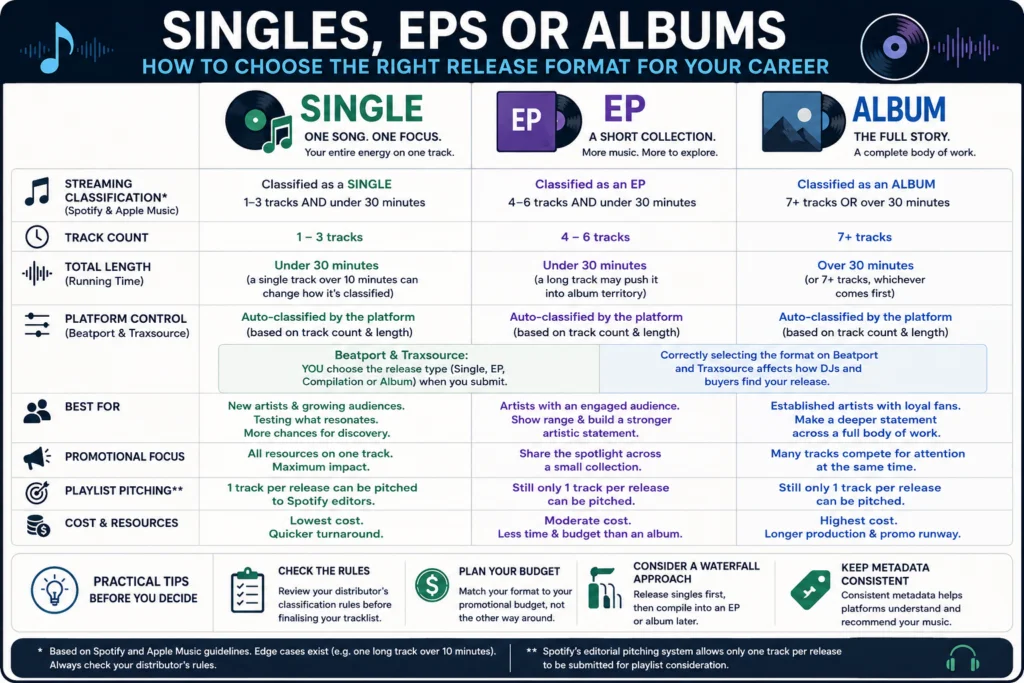
Spotify and Apple Music do not let you simply label a release as a single, EP or album. The platforms classify it automatically based on track count and total running time. A release with one to three tracks and a total running time under 30 minutes is treated as a single. Four to six tracks under 30 minutes is classified as an EP. Seven or more tracks, or a total running time over 30 minutes, becomes an album. There are edge cases, a single long track over 10 minutes can push a short release into EP or album territory, so it is worth checking your distributor’s classification rules before you finalise a tracklist.
Beatport and Traxsource Work Differently
If you release house, techno, drum and bass or other dance genres, Beatport and Traxsource matter as much as Spotify or Apple Music, and they handle format in a different way. Rather than the platform auto-classifying your release by track count and running time, you select the release type yourself when you submit, choosing Single, EP, Compilation or Album directly on the release information page for Traxsource, and through a similar release type field when you set up a release for delivery to Beatport. This gives you more control over how the release is labelled, but it also means the format decision carries more weight on these stores. A four track EP misfiled as a single, or an album submitted without the right catalogue and label metadata, can affect how DJs and buyers find it in charts and search.
Singles: When They Make Sense
Singles are the default format for a reason. They concentrate your entire promotional effort, your ad spend, your playlist pitch, your social content, on one song. For new artists still building an audience, this focus matters. A single also gives you more releases across a year, and more releases mean more opportunities to enter the discovery ecosystem through algorithmic playlists. If you are earlier in your career or working with a limited promotional budget, leading with singles lets you test what resonates before committing resources to a bigger project.
EPs: When They Make Sense
An EP works well once you have a small but engaged audience and want to present a more complete artistic statement without the cost and lead time of a full album. EPs let you show range across four to six songs while still keeping the release tight enough to hold listener attention through to the end. They also work well for building toward a compilation later. Many artists now release singles individually first, then group them into an EP once they have built some momentum, effectively getting two promotional moments out of the same body of work.
Albums: When They Make Sense
Albums make the most sense once you have an established audience that already listens across your catalogue, not just to your most recent single. Because every track in an album competes for attention at once, weak engagement on several songs can drag down how the platform reads your overall release, even if your best tracks are performing well. Albums also mean a longer promotional runway and higher production costs, since you are mastering, sequencing and marketing far more material in one go. For artists with a loyal following and the budget to support a sustained campaign, an album can create a deeper artistic statement that singles simply cannot.
The One Track Per Release Rule
Whichever format you choose, Spotify’s editorial pitching system only allows one track per release to be submitted for playlist consideration through Spotify for Artists, whether that release is a single, an EP or a full album. This means that releasing an album does not give you seven chances at editorial placement. It gives you one, for whichever track you choose to pitch. If playlist placement is central to your strategy, this is often the strongest argument for releasing more singles rather than fewer larger projects, since more releases mean more pitch opportunities across the year.
Matching Format to Your Career Stage and Budget
Start by being honest about where you are right now. If you are still building your first audience, singles released every few weeks give you the most chances to be discovered and the lowest financial risk per release. If you have a small but consistent listener base and want to make a stronger statement, an EP is a natural next step. If you have an established fan base that already engages across your back catalogue, and the budget to support months of promotion, an album can work in your favour. Trying to skip stages, releasing an album before you have the audience to support it, is one of the most common and costly mistakes independent artists make.
Practical Tips Before You Decide
Check your distributor’s classification rules before you finalise a tracklist, since track count and running time decide how the platform labels your release, not the label you give it yourself. Plan your promotional budget around the format, not the other way round, since albums require a longer campaign and more assets. Consider a waterfall approach if you are unsure, release singles individually over a few months, then compile them into an EP or album once you can see which tracks are actually connecting. And keep your metadata consistent across every track in a release, since inconsistent metadata can affect how accurately the platform reads and recommends your music.
Getting the Format Right From the Start
Choosing between a single, an EP and an album is a strategic decision, not just a creative one. Getting it wrong can mean missed playlist opportunities, an overstretched budget, or a release that underperforms simply because it launched in the wrong shape for where you are in your career. That is where a label services partner earns its keep, helping you plan release formats and distribution strategy around what actually fits your stage and your goals. If you want a second opinion on your next release, get in touch with MN2S Label Services.