



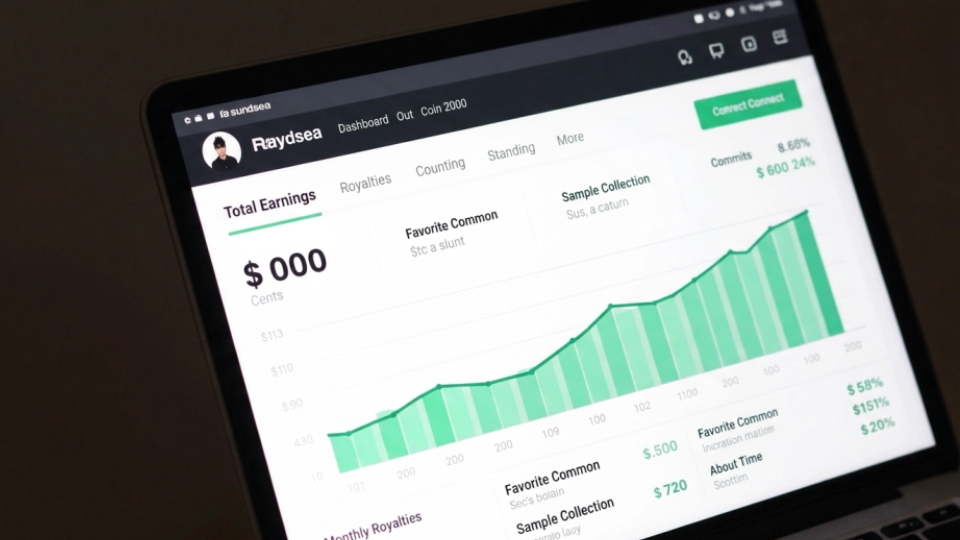
Your royalties are not automatically finding their way to you
Releasing music generates royalties the moment it is streamed, downloaded, performed, or placed in someone else’s content. What it does not do is guarantee that money reaches you. Royalty collection runs through a handful of separate organisations, each responsible for a different type of income, and if you are not registered correctly with every one of them, your share sits unclaimed until someone comes looking for it.
Most independent artists and labels set up their distributor once and assume the rest happens automatically. It does not. A yearly audit of where your royalties should be coming from, and where they are actually landing, is one of the simplest ways to recover income you have already earned.
Why this matters more as your catalogue grows
A single unregistered track might only cost you a small amount. A catalogue of fifty or a hundred releases, built up over several years across multiple platforms and territories, is a different problem. Gaps compound. Every new release adds another point where registration can be missed, metadata can be entered incorrectly, or a placement can go unreported. The longer a gap goes unnoticed, the more royalty periods pass without payment, and some collection windows do eventually close.
This is also a bigger issue for growing catalogues than it looks on paper, because the money does not vanish. It sits with a collection body, unmatched, waiting for the right rights holder to claim it.
Where royalties typically go missing
Performance royalties for the composition
If you write your own music, you are owed performance royalties whenever the composition itself is played, broadcast, or streamed. In the UK this is collected by PRS for Music, which pays out only on works that have been formally registered by the writer or their publisher. Joining as a writer member and registering every release individually is a separate step from signing up with a distributor, and it is the one most self-released artists skip.
Recording royalties for the master
Separate from the composition is the recording itself. In the UK this side is collected by PPL, on behalf of performers and rights owners of the master recording, whenever it is broadcast or played publicly. This runs alongside PRS rather than replacing it. Many artists register on one side and assume it covers both.
Mechanical royalties in the US
If your music streams in the United States, you are generating mechanical royalties on the songwriting side, collected by the Mechanical Licensing Collective. Registration is free, and self-published songwriters can register their works directly if they are not already assigned to a publisher or administrator. Your distributor collects your recording royalties from US streams, but it does not automatically register you for this separate mechanical income unless you have specifically opted into a publishing administration service.
Sync placements that were never reported
If your music has been placed in a TV show, advert, film, or brand campaign, a performance royalty is also owed on top of any upfront sync fee. That royalty only reaches you if a cue sheet detailing the usage is filed with your PRO. Independent artists working without dedicated sync support often collect the initial fee and never see the performance income that should follow it, simply because no one filed the paperwork.
YouTube Content ID
Content ID identifies your music whenever it appears on YouTube, including in videos you did not upload yourself, and can route ad revenue back to you. It has to be actively registered through a distributor or a certified partner. Without it, uses of your music on the platform generate no income for you at all.
How to run the audit yourself
Set aside an afternoon once a year and work through each of these in order.
Start with your PRO account, whichever applies in your territory, and check that every release you have put out is registered under the correct writer shares. Cross reference against your release history rather than your memory. Then check your recording rights registration and confirm it covers the same catalogue. Next, if any of your streams count in the US market, confirm your mechanical registration status directly with the collecting body rather than assuming your distributor has handled it. Review any sync placements from the past year and confirm a cue sheet was actually filed for each one. Finally, check that Content ID is active across your full catalogue, not just your most recent releases.
Keep a simple spreadsheet listing every release, every registration type, and the date you last confirmed it. This turns a stressful annual scramble into a five minute check the following year.
Make it a habit, not a one off fix
The value of this audit is not just the money you recover this year. It is catching the gap before three or four release cycles pass with the same registration missing. Building it into your yearly schedule, alongside things like release planning and metadata checks, protects income you have already earned rather than leaving it to chance.
Running this properly across a full catalogue takes time, and it only gets more complex as your release schedule grows and your music reaches new territories. A label services partner can handle rights registration and royalty collection continuously, rather than leaving it to a once a year scramble. If you want a second set of eyes on your catalogue, get in touch with MN2S Label Services.
MN2S works with over 500 independent labels on supporting their creative vision. Get in touch today to find out more.
Related articles
 How to Make Your Back Catalogue Earn Again: A Practical Guide for Independent Labels22 Oct 2026
 What Is Music Metadata and Why Does Getting It Wrong Cost You Money?9 Jun 2026
 How to Collect Neighboring Rights as an Independent Artist (Step-by-Step Guide for 2026)29 Jun 2026
 What Does a Record Label Actually Do? And Where Does Distribution Fit In?30 Sep 2026
 Why Your Song Credits Now Matter to Fans, Not Just Collection Societies15 Oct 2026
 Does AI Involvement Affect Your Royalties? What PRS and PPL Actually Say24 Jun 2026