



Your press release is competing for about six seconds of attention
Most independent artists write a press release the way they would write an announcement to fans. That is the first mistake. A journalist is not a fan reading your update. They are someone with an overflowing inbox, a beat to cover, and almost no patience for anything that does not immediately explain why it matters to them. Your press release is not a formality you send because the release calendar says you should. It is a pitch to a busy, skeptical human, and it will be judged in the first few seconds.
Why this matters right now
Journalists are getting harder to reach, not easier. According to Muck Rack’s State of Journalism 2024 report, which surveyed more than 1,100 journalists, 49 percent say they seldom or never respond to pitches at all. The same report found that 83 percent of journalists want personalized pitches rather than mass distribution, and 73 percent say the top reason they reject a pitch is that it is not relevant to what they cover. Relevance and personalization are not nice extras. They are the two things standing between your email and the delete key.
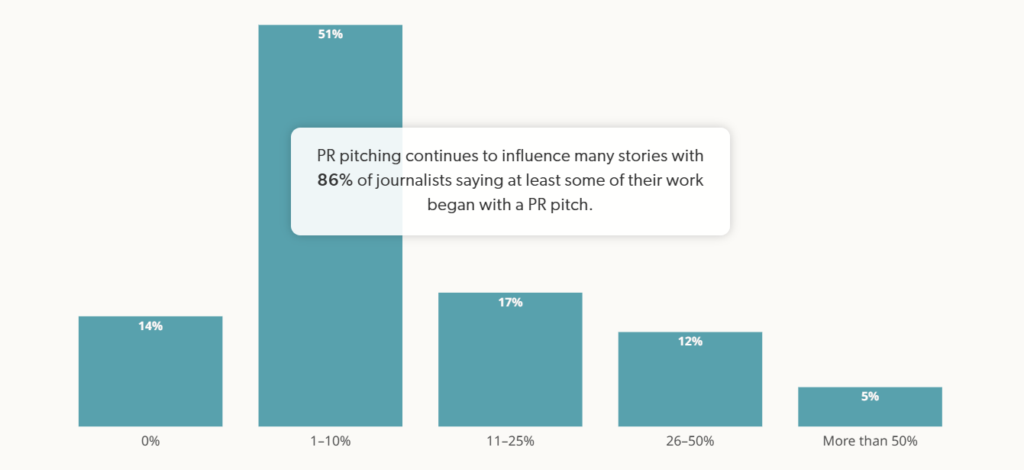
The good news is that press releases still work when they are done properly. Muck Rack’s 2026 State of Journalism findings show that 86 percent of journalists say at least some of their stories start from a PR pitch. Coverage is not disappearing. It is just going to the artists and labels who understand what a journalist actually needs to say yes.
What gets a press release opened
A journalist opens an email because it looks like it was written for them, not for a list. That means a subject line that states exactly what the pitch is, not a vague teaser. It means the first line proves you know their beat, whether that is a reference to something they recently covered or a reason the release fits their audience. It means the music is one click away, through a streaming link rather than an attachment, because nobody wants to download a file to find out if they like a song.
What gets a press release deleted
The fastest way to lose a journalist is to send something that reads like a form letter. A wrong name, a generic “hey” with no context, or a pitch that clearly went to fifty other inboxes at once will get ignored before the first sentence is finished. Long attachments, unclear asks, and a release with no obvious story angle all do the same damage. Journalists are not being precious about this. They simply do not have time to work out what you want from an email that has not worked it out itself.
The structure that actually holds up
Strip a good music press release down and it usually has five parts. A clear, specific subject line. A one line hook that states the news. A short quote from the artist that adds a human angle rather than repeating the bio. A direct streaming link and any relevant assets, linked rather than attached. And a brief boilerplate at the bottom with the facts a writer needs if they decide to cover you. Everything above the boilerplate should be skimmable in under thirty seconds, because that is roughly how long you have before a decision gets made.
Practical habits that make the difference
Build a shortlist of writers and outlets who genuinely cover your kind of music, rather than blasting a generic list bought or scraped from somewhere else. A smaller list of the right people consistently outperforms a large list of the wrong ones. Read a few recent pieces from anyone you are pitching before you send anything, so your first line can prove it. If you do not hear back, one polite follow up after a week is reasonable. More than that starts to work against you.
None of this guarantees coverage. It does mean your release gets read instead of deleted, which is the only part of the process you can actually control.
Get your next release in front of the right people
Writing a press release that lands is one part of a bigger press strategy, and knowing which writers to approach and how to build those relationships over time is often the harder part. MN2S Label Services works with independent artists and labels on exactly this, building targeted press campaigns and managing outreach so your release gets in front of the people who can genuinely move the needle. Get in touch to talk through your next campaign.