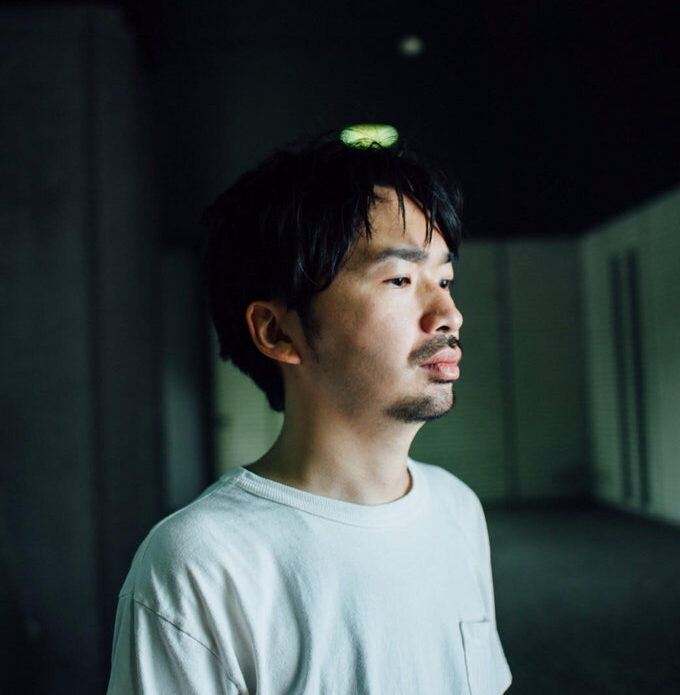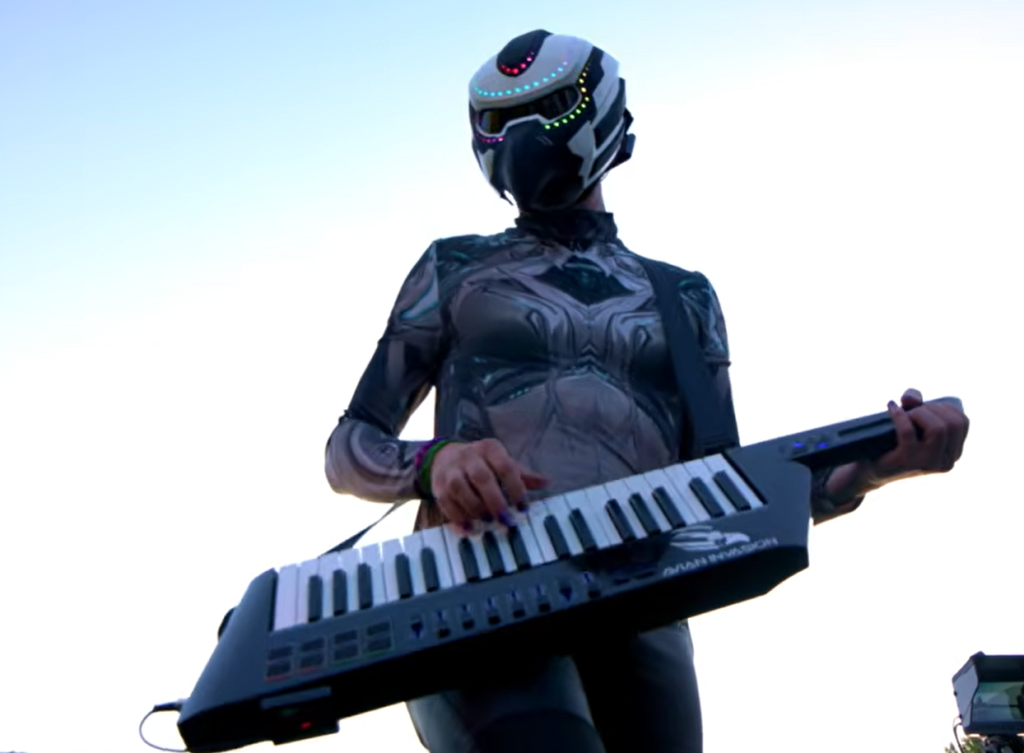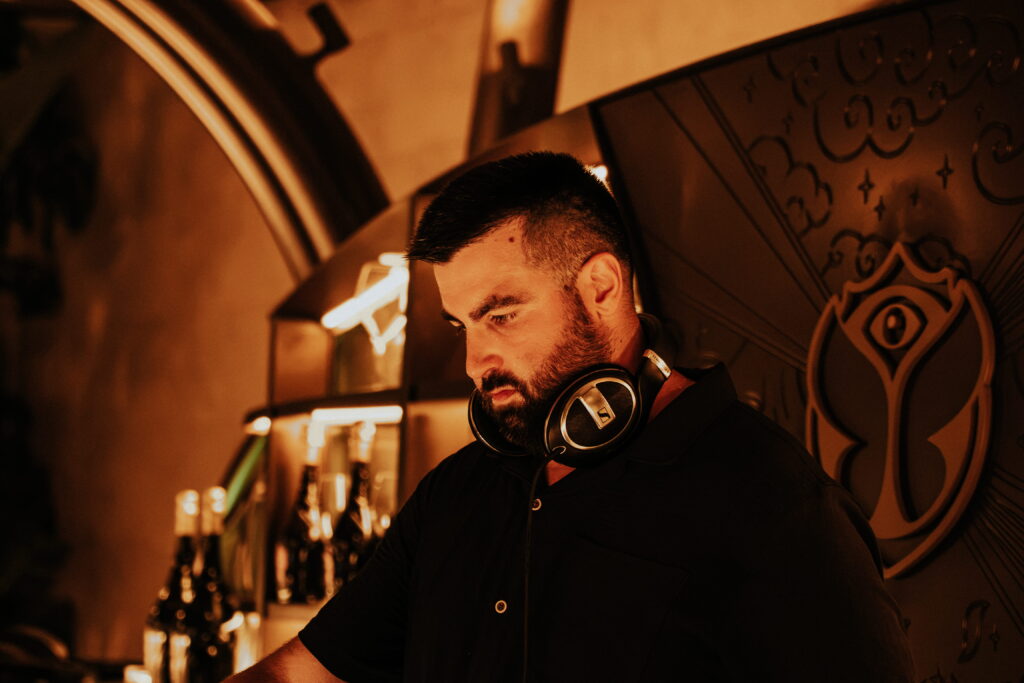


Arturo Angarita Berklee Masters Graduate produces house and techno, performs it live with visuals he designs himself, and runs his own label, Liquid Phases.
Arturo Angarita is a Colombian electronic music producer, DJ and live audiovisual performer, and the founder of independent label Liquid Phases, which he runs remotely between Madrid, where he’s currently based, and Bogotá. He trained first as an engineer before a 2017 course in electronic music production at SAE Bogotá led him into Ableton Live, DJing and, eventually, a Master’s at Berklee Valencia, where he began developing the real-time, audio-reactive visual systems now central to his live shows. His sound spans House, Minimal, Progressive, Trance and Techno, with releases built around a concept, as with the exoplanet-inspired K2-18 EP, “Funk Molecular” featuring Nikki Garden, and “La Casa del Placer” with pelo de hongo. He’s now finishing his debut album and audiovisual project, Onda Expansiva, and Arturo Angarita and Liquid Phases are working with MN2S Label Services for digital distribution.
How did you get into music? What is your musical background?
Early influences
Arturo says music was always the plan, even if the route there wasn’t a straight line. “Music was always something I wanted to do. When I was a kid, I wanted to be a rockstar. My house was always full of music, and I grew up playing guitar and piano, listening to my parents’ records, and being surrounded by Colombian and Latin music, as well as rock, funk, soul, jazz, and whatever else I could get my hands on.” When it came time to choose a career, he chose engineering instead. “While I was at university, I started getting deeper into electronic music. By that point I was pretty rusty on guitar and piano, so I felt like the rockstar ship had already sailed. Electronic music felt different. I could make music with a laptop, so I thought, ‘I can actually do this.'”
Learning to produce and DJ
That curiosity led him to a course in electronic music production at SAE Bogotá in 2017. “I absolutely loved it, although I completely underestimated how difficult it would be. I learned everything in Ableton Live and Push 2, and that was really the beginning of my journey as a producer.” His first original tracks followed around 2018. “Looking back, they were pretty terrible, but my friends were very encouraging, so I kept going.” He didn’t have enough material yet to play a full set of his own music, so he taught himself to DJ instead. “I ended up falling in love with DJing as well.”
His own productions, meanwhile, were hitting real roadblocks. “I was watching tutorials, practicing constantly, and learning as much as I could, but my own music still wasn’t at the level of the music I was DJing. That was ultimately what pushed me to leave engineering and formally study music production.”
Discovering live visuals
By then his production skills had reached a professional level, but he’d also started thinking harder about where he wanted to go as an artist. “I’ve always been interested in technology and the visual side of live music, particularly the lights and visuals you see at electronic music events. During my Master’s at Berklee Valencia, I became much more interested in that side of things and started working with real-time visual systems and audio-reactive visuals.”
That strand, he says, is now central to his identity as a performer. “That eventually became a major part of my artistic project. I find it fascinating to create visuals that respond to my own music, and I see the combination of music, technology, and visuals as an important way to distinguish my live performances from a traditional DJ set.” The process eventually led to his upcoming debut album and live audiovisual project, Onda Expansiva, “where the music and visuals were developed as part of the same artistic experience.”
Tell us about your first release and what was special about that one.
Looking For Greatness, 2019
Arturo’s first release was Looking For Greatness, a three-track EP from 2019. “Looking back, I’m only really proud of one of the tracks, Messed Up The Style. I honestly hate the other two now. They were still pretty amateur, and I would change so much about them if I had the chance.”
He signed the EP to a label called DTL Records, hoping for help with promotion and marketing. “Very little happened around the release. There wasn’t really a relationship behind it either, and it felt quite impersonal. I remember thinking, ‘I could have just released this myself and the results would have been exactly the same.'” That experience changed his approach going forward. “I decided that the next time I released something, it would either be through a label I really believed in, or I would release it myself.” He then paused releasing music for several years to focus on his undergraduate studies.
Starting Liquid Phases
His next release was K2-18 in 2024. “I sent it to the few labels I really liked that were accepting demos. Most of them replied and were very encouraging about my work, but said that the EP didn’t entirely fit their vision. That was when I decided to start Liquid Phases: a platform where I could release my own music while eventually creating a home for other artists with a similar vision.”
Releasing K2-18 through his own label felt entirely different to the DTL experience: “I organized a showcase for the launch of the label and the EP, created a concept for the event where people could draw on a board, and hired an artist to paint the EP artwork during the party.” He handled every part of the release himself, from the music to the marketing. “I was handling the distribution, artwork, showcases, and later on, contracts as well.” Looking back, he’s proud of what that taught him. “I was very proud of what I had created, and of learning how to manage all these different sides of releasing music.”
Two moments that stayed with him
Two memories from that period stand out. “One of my favorite memories from that period happened when I played a gig in Madrid in 2024. I played Nubecitas, my favorite track from K2-18, which was still unreleased at the time, and someone in the audience asked me for the track ID. The happiness and sense of pride I felt in that moment were indescribable.” A similar moment came more recently. “I experienced something similar again last May, when a friend invited me to play in Berlin and the DJ before me asked for the ID of a track from my forthcoming album. Those moments are a big part of why I make music in the first place. Hearing someone connect with something you created yourself is an incredible feeling.”
Tell us about the latest project you worked on.
“La Casa del Placer” is still Arturo’s most recent single release, but the bigger news is what’s coming next. “For the past year I’ve been working on my debut album, Onda Expansiva. The album is made up of seven tracks and runs for approximately 55 minutes. It represents my current direction as an artist and producer, as well as the direction I want to take Liquid Phases. It explores different emotions and genres, starting with an ambient introduction and moving through breakbeat, House with trance and progressive influences, and a bit of Techno.” The album isn’t a music-only project. “Alongside the album, I developed an audiovisual work combining the music with my own visuals, as well as a live audiovisual performance where I perform the music while manipulating the visuals in real time. The three formats are connected, but each offers a different way of experiencing the project.”
Could you describe your musical style and creative vision?
A visual way of hearing music
Arturo’s description of his creative process starts with a book: Susan Rogers and Ogi Ogas’s This Is What It Sounds Like, which explores what people picture in their mind when they listen to music. “Some people see themselves playing an instrument, others see themselves in the audience of a concert or a party, other people see landscapes, other people see themselves as the characters in a movie, and other people see abstract shapes and colors.”
Electronic music, he explains, makes this harder to pin down than genres built around vocals or a single instrument. “With rock or jazz or vocal music, it’s easy to see yourself playing the guitar or singing. But with electronic music, it’s much harder to associate a sound to a particular instrument, object, or picture. I myself always picture abstract shapes and colors that move dynamically according to the mood and sounds of the music. When I produce it’s exactly like that. So, when I am making a tune or designing a sound I associate different colors to my music.”
Naming K2-18
That instinct is what shaped K2-18. “By the time I was finishing K2-18, I’d been reading about a star called K2-18 that has potential for sustaining life. That became the inspiration that named the EP, although it had nothing to do with the production side of the music. The names Nubecitas [little clouds], Arrecifes [coral reefs], and Purpura [purple] were named like that because they resembled colors and geometry that I associated with the music.” Cover art followed the same brief. “The artwork came out exactly like that. I told the artist I wanted to work with about the concept and the color palette, and she painted what a planet orbiting K2-18 might look like.”
Writing lyrics for Funk Molecular and La Casa del Placer
“Funk Molecular” and “La Casa del Placer” are his only two tracks with lyrics, and he’s candid that lyric writing doesn’t come naturally to him as a producer. “As a producer, I cannot bring myself to write about love or come up with other cliché and corny themes for my lyrics. However, I really wanted to paint a surreal and mental picture for the listener.” He wrote “Funk Molecular” with his friend Juan Felipe Uriza. “The mood of the song was quite happy, so I didn’t want to write something deep. So we came up with scientific metaphors for the joy of partying, without making it obvious that it was about that specifically. The writing process was really all about the art of saying nothing, but painting a picture for the listener.” His friend Nikki Garden, described by Arturo as “the best singer that I know,” sings on the track.
“La Casa del Placer” takes the same idea somewhere darker, sung by María José, known as “pelo de hongo.” “The mood is a bit darker but explores the same theme from a different angle. This time the song talks about the addiction to the euphoria of partying and dancing, while feeling sad and empty in everyday life. But again, it does so in a bit of an abstract or metaphorical way.”
The track also marks his furthest departure from house so far. “This song is also the one that is the furthest away from House. I wanted to bring a bit of my latin heritage with Cumbia, and mix that with my passion for electronic music, in this case some kind of Downtempo. However, I am not making more of these experiments in the near future. I am more focused on underground club music at the moment.” Across all of it, the music always comes first for Arturo. “There was really no specific inspiration for making the music. The music came first and then it inspired the lyrics.”
What advice would you give to anyone thinking of entering the music industry?
Be patient and learn the business
Arturo has five pieces of advice, and he takes his time with each one. First, patience. “Be patient. The skills you need in this business don’t develop overnight. With production especially, it takes many, many years of practice to hone your skills and even longer to find your own sound. I started making music in 2017 and only started feeling genuinely proud of what I was doing around 2023. Even then, I still had my doubts.” Second, learn the business side as well as the craft. “Learn as much as you can about the different areas of the business: copyright, distribution, management, licensing, promotion, event planning, and so on. And obviously, learn as much as you can about the creative side too: music theory, sound design, arrangement, software, hardware, audio engineering, visuals, etc. Understanding how things work gives you much more control over your artistry and your career.”
Find your people and keep working
Third, build a community. “Surround yourself with like-minded and encouraging people. A career in music can be really lonely, and it often requires years of work before you see meaningful results. This is a business where you need help. It’s almost impossible to do everything on your own, and learning from other people is one of the best parts of the journey.”
Fourth, listen widely. “Listen to a lot of different music, not just electronic music. Go outside the genre you’re trying to make. I think that’s one of the best ways to nourish your creativity and develop a unique sound.” And finally, put in the hours. “Work a lot. Keep practicing, keep making music, and most importantly, keep finishing tracks. I still haven’t really ‘made it’ in the sense that I can’t pay my bills with my music yet. But I’m confident that I’ll get there eventually if I keep working hard. You just have to enjoy the journey.”
What are your plans for the rest of the year and beyond?
“For the remainder of the year, the plan is to release one or two singles from Onda Expansiva and then release the full album,” Arturo says. “I’m also looking for a place to host a release party and showcase for the album, although nothing is confirmed yet.” His plans stretch well into next year too. “For next year, I’m looking at putting together a remix EP around the track Onda Expansiva. I’m also currently working on my next EP, which is still untitled, and continuing to build relationships with artists who might eventually want to release their music through Liquid Phases.” The longer-term ambition hasn’t changed. “The long-term goal for the label is to grow beyond being primarily a home for my own music and develop it into a platform for other artists who share the label’s vision.”