



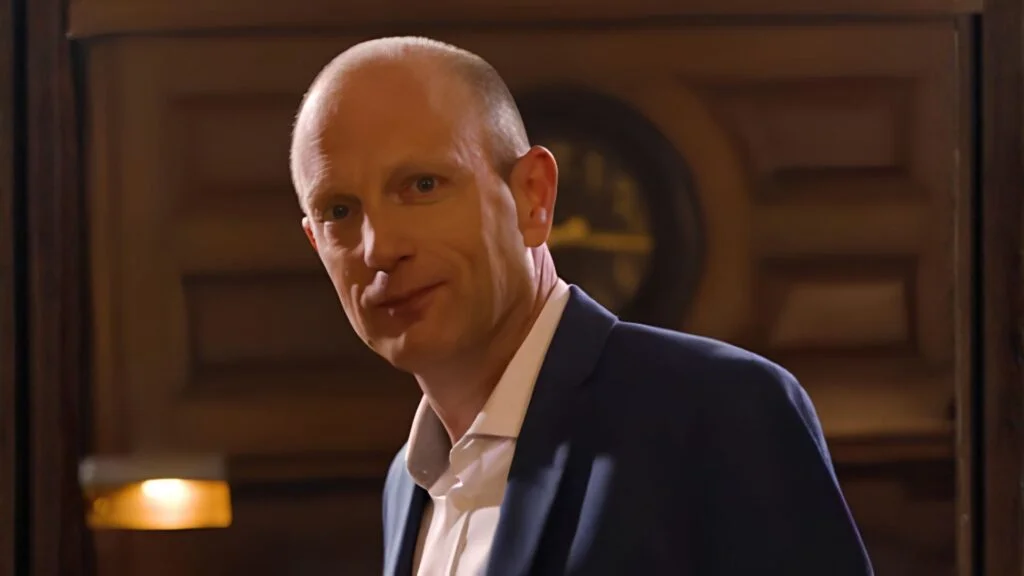
Peter Drury’s commentary on Max Dowman’s record-breaking goal licensed for Google Pixel’s Arsenal title campaign.
When 16-year-old Max Dowman sprinted the length of the pitch at the Emirates in the 97th minute against Everton, football held its breath. The teenager, who had only come on as a substitute, rolled the ball into an empty net to seal a 2-0 win and become the youngest goalscorer in Premier League history. The noise inside the ground was extraordinary. Over the top of it, Peter Drury delivered the line that instantly cut through:
“These are Arsenal’s points, now those are scenes.”
Within days, that commentary clip was everywhere. For Google Pixel, which has been Arsenal’s official mobile phone partner since 2023, it was a creative opportunity too compelling to pass up.
MN2S facilitated the voice licensing deal that placed Drury’s commentary at the centre of a short-form digital campaign, securing permission for audio usage across a 60-second film and a series of cutdowns for social media, apps, digital banners, and Arsenal’s own channels. The campaign went live on 18 May 2026, just one day before Arsenal were confirmed as Premier League champions for the first time in 22 years.
Why This Campaign Works
The creative logic here is worth unpacking, because it is not a conventional celebrity endorsement. Google Pixel did not pay for a footballer’s face or a star’s social reach. They licensed a voice. Specifically, they licensed nine words delivered at exactly the right moment.
That distinction matters commercially. Commentary talent represents a different category of brand asset: one built entirely on credibility, timing, and craft. Drury’s value is not celebrity in the traditional sense. His value is the ability to make a sporting moment feel larger than it already is, and to do so in language that sticks. Brands working with sports voice talent are essentially borrowing that narrative authority and emotion. Additionally, because a memorable line exists independently of the broadcaster’s face or persona, it can be repurposed and distributed in ways that feel native to social-first content rather than forced.
The line itself is also perfectly structured for short-form. Seven seconds long. Two contrasting clauses. A pivot from collective achievement to individual chaos. It sits inside a 6-second cutdown without needing any context, because football audiences already carry the context with them as part of their collective memory.
Peter Drury: The Right Voice at the Right Moment
Peter Drury is a British sports commentator who currently works for Sky Sports in the United Kingdom and NBC Sports in the United States as the lead commentator for their Premier League coverage. His career has spanned ITV Sport, BT Sport, Amazon Prime Video, and the UEFA Champions League, accumulating decades of elite football commentary experience across every major competition.
What sets Drury apart is not just his longevity, but his style. He approaches commentary as a writer approaches prose: with structure, rhythm, and a deliberate economy of language that makes his lines quotable in ways most football commentary simply is not. His lines travel. They get clipped, shared, captioned, and set to video on social media. That virality has a commercial logic that brands are increasingly waking up to.
For Google Pixel, a brand that has built its football identity around capturing emotion and telling genuine fan-facing stories, Drury’s voice was a natural extension of that positioning. The campaign did not need a manufactured moment. The moment had already happened. Drury had already narrated it. The creative job was simply to amplify what was already culturally resonant.
Max Dowman and the Cultural Context
The goal itself was extraordinary. Sixteen-year-old Max Dowman became the youngest goalscorer in Premier League history as he sealed Arsenal’s last-gasp 2-0 victory over Everton in stoppage time at the Emirates Stadium, taking them one step closer to a first Premier League title in 22 years. At 16 years and 73 days, Dowman charged forward on the break and rolled into an empty net, with goalkeeper Jordan Pickford caught upfield following a late Everton corner.
Dowman broke the record of former Everton player James Vaughan, who was 16 years and 270 days when he scored against Crystal Palace in 2005. He is still in school, and was 14 when Arsenal manager Mikel Arteta first asked him to train with the senior team. The story was, therefore, as compelling off the pitch as it was on it.
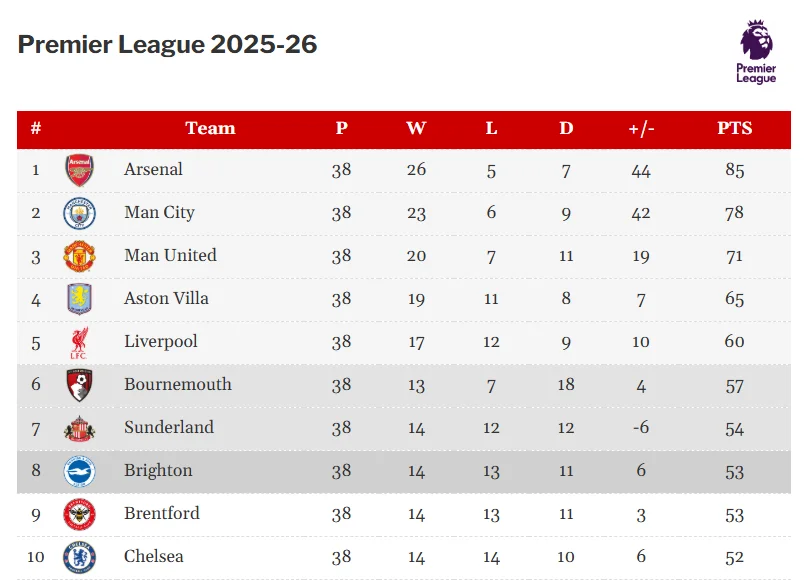
The cultural electricity around this moment was significant. Arsenal had been chasing their first title in 22 years. The game was tight and edgy. Then a schoolboy appeared from the bench and scored one of the most memorable goals of the entire season. Arsenal eventually clinched the Premier League for the first time since 2004, taking their fourth top-flight title overall. Drury’s commentary line landed inside that emotional peak. For Google Pixel, licensing it meant embedding their brand film inside a moment that Arsenal fans will talk about for years.
The Licensing Strategy: Speed and Precision
The turnaround tells its own story. From initial contact to signed paperwork to live campaign, the entire process took less than three weeks. For brands with a cultural moment in their sights, that kind of speed is not luck. It is what experienced talent licensing looks like in practice.
That timeline reflects the reality of cultural marketing in sport. Relevance has a shelf life. Arsenal’s title campaign was building to its climax, and the value of a campaign built around Dowman’s goal was directly tied to how close it sat to that moment. Brands and their agency partners increasingly need talent and rights infrastructure that can move at the speed of the news cycle, not the speed of a standard commercial contract.
The activation itself was also deliberately constructed for digital-first distribution. The deliverables were a 60-second hero film with 6-second and 15-second cutdowns, sized and formatted for the platforms where sports content performs best. The usage rights covered social media, apps, digital banners, live streams, and retail partner channels. This was a social-native campaign from the outset, built to live where Arsenal fans spend time rather than where traditional advertising campaigns run.
Google Pixel’s Football Playbook
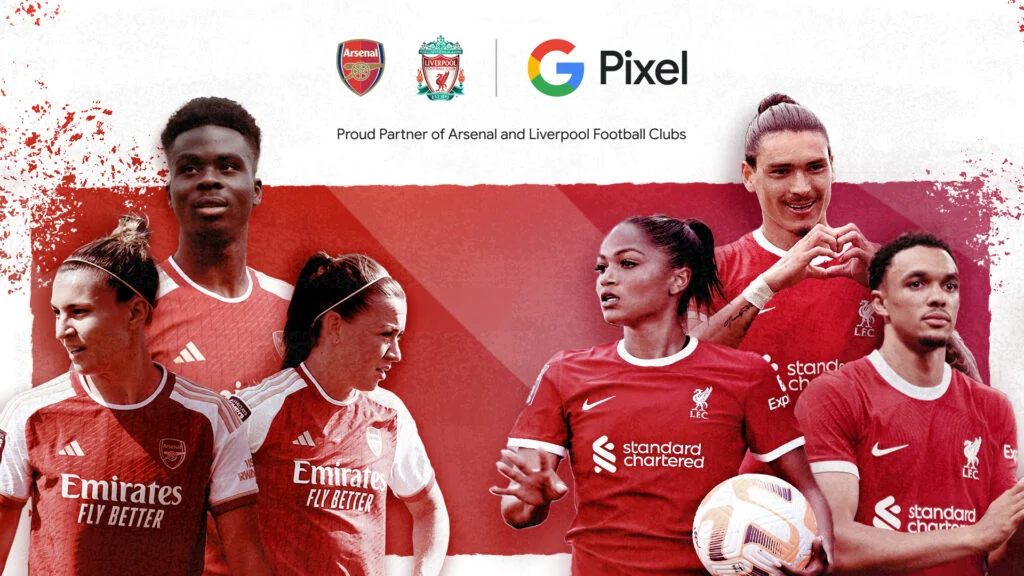
Google Pixel has been Arsenal’s official mobile phone partner since 2023, a multi-year arrangement that also covers Liverpool FC and the England national teams. The partnership was built on a content-first model, using Pixel’s AI-powered camera technology to deliver exclusive pitchside footage and fan-facing storytelling across both clubs’ men’s and women’s teams.
In their first year of partnership, all three parties pushed the boundaries of activation by leaning into Pixel’s focus on innovation, co-creating Shot on Pixel: a stream of official pitchside content giving fans a unique window into match moments. That content-first approach runs through everything Google Pixel does in football. The brand is not simply buying logo placement. It is building a library of culturally grounded sports content that demonstrates its camera and AI features through real sporting stories.
A campaign built around Drury’s commentary fits that logic precisely. The emotional texture of a live football broadcast, the urgency of a stoppage-time goal, the specificity of a once-in-a-generation record being broken: this is the kind of moment that Pixel’s brand storytelling is designed to amplify. Licensing the voice that narrated it was a smart extension of a strategy they have been developing consistently since the original partnership launched.
What This Signals for Sports Voice Licensing
Celebrity voice licensing in sport is not new. Broadcasters have appeared in advertising campaigns for decades. However, the shift toward short-form, social-first brand content has created new demand for highly specific audio assets: a particular call, a particular moment, a particular phrase that carries cultural recognition without requiring explanation.
This campaign is a useful model for how that works at its best. The creative brief was tight. The usage was targeted. The timeline was fast. The rights were managed carefully. The result was a campaign asset with built-in emotional authority, ready for distribution across exactly the platforms where it would have the greatest impact.
For brands operating in sports, particularly those with existing club or federation partnerships, this kind of activation represents genuine incremental value. The partnership infrastructure is already in place. The cultural moments will keep coming. The question is whether brands have the talent relationships and rights frameworks to act on them quickly enough when they do.
MN2S operates at the intersection of those two requirements, and the Google Pixel x Peter Drury campaign is a precise example of what that capability looks like in practice.