



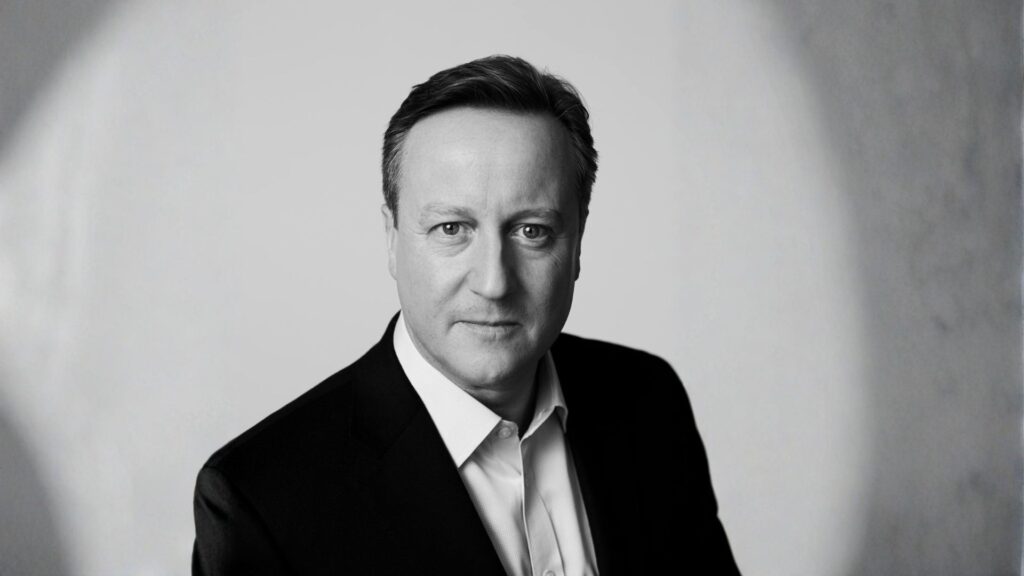
Former UK Prime Minister and Foreign Secretary Lord David Cameron featured as keynote speaker at the Polish Economic Congress 2026 in Warsaw, bringing one of the world’s most authoritative geopolitical voices to Central Europe’s leading economic forum.
When one of the world’s most recognisable political figures takes the stage at a major international forum, it signals something important about the event’s ambitions. The Polish Economic Congress 2026 has secured exactly that kind of moment. Lord David Cameron, former Prime Minister of the United Kingdom and former UK Foreign Secretary, will appear as a featured keynote speaker at the Congress in Warsaw this May. The booking positions the event firmly among Europe’s premier platforms for economic and geopolitical dialogue.
MN2S facilitated the engagement, connecting Employers of Poland and the Positive Ideas Foundation with one of the most consequential political voices of the past two decades.
A Speaker Who Has Been Inside the Room
Lord Cameron‘s career spans a period of extraordinary global turbulence. As Prime Minister from 2010 to 2016, he led Britain’s first coalition government since the Second World War. Under his leadership, the UK became the fastest-growing major advanced economy in the world. He oversaw the creation of millions of jobs, hosted the 2012 London Olympics, chaired the 2013 G7 Summit, and presided over the NATO Summit of 2014.
His international relationships are genuinely rare. Few figures in global public life have worked directly alongside Barack Obama, Angela Merkel, Vladimir Putin, and Xi Jinping. That breadth of experience gives him a perspective on international alliances that most speakers simply cannot offer.
Then came an unexpected second act. In 2023, against the backdrop of the October 7th attacks in Israel and the ongoing Russian invasion of Ukraine, Lord Cameron returned to frontline politics as UK Foreign Secretary. He became the first British Prime Minister to return to Cabinet in over half a century. Over the following nine months, he made 54 visits to 36 countries. He played a pivotal role in unlocking critical US funding for Ukraine’s continued resistance. He also shaped the international consensus around a sustainable ceasefire position in Gaza, language later adopted by the United States, Europe, and the United Nations.
For any audience focused on geopolitical risk and European resilience, that track record carries serious weight.
What the Congress Engagement Looks Like
Lord Cameron’s participation spans two days in Warsaw, combining formal keynote delivery with high-level private engagement.
He will join a private dinner incorporating an informal Chatham House-style conversation with senior government and business leaders. The format is deliberately intimate. Chatham House rules allow guests to speak candidly, making these sessions some of the most valuable networking environments available at any major congress. For attendees, access to that kind of unguarded dialogue with a former head of government is genuinely distinctive.
Lord Cameron will take the main stage for a moderated conversation conducted entirely in English and is expected to focus on European competitiveness and alliances. A pre-event conference call will allow organisers to align on content and ensure the conversation reflects the strategic priorities of the Congress and its audience.
Together, the two engagements give delegates both a public keynote moment and rare private access. That combination is increasingly what separates high-calibre international congresses from standard conference formats.
Why This Partnership Makes Strategic Sense
The Polish Economic Congress is not a niche gathering. The event brings together more than 3,000 attendees and over 200 speakers, including government ministers, senior policymakers, and executives from organisations including VISA, Microsoft, Samsung, Meta, EY, and Dell. Securing Lord Cameron as a headline speaker sends a clear message about the Congress’s positioning: this is a forum that operates at the highest level of international economic and political discourse.
Poland’s role within that conversation is, moreover, increasingly significant. As a NATO frontline state and one of Central Europe’s largest economies, Poland sits at the intersection of European security policy, transatlantic alliance-building, and regional economic development. Those are precisely the areas where Lord Cameron’s expertise is deepest. The alignment between speaker and subject matter is not incidental. It reflects a deliberate strategic choice by the Congress organisers.
From a talent booking perspective, this is also a strong example of how political speakers can elevate the commercial credibility of a business event. Lord Cameron’s presence tells potential attendees, sponsors, and media that the Congress is worth their time. That kind of reputational signal is difficult to manufacture and impossible to fake.
Beyond Politics: A Multidimensional Public Figure
Lord Cameron’s appeal extends well beyond traditional political audiences. Since leaving the Foreign Office in July 2024, he has resumed his role as Chair of the Advisory Council at the Oxford-Harrington Rare Disease Centre, a partnership between the University of Oxford and the Harrington Discovery Institute at University Hospitals in Cleveland, Ohio. The Centre’s bold mission is to deliver 40 new treatments for rare diseases into clinical trials within a decade. He previously served as President of Alzheimer’s Research UK from 2016 to 2022, and sits on the Global Board of Advisors at the Council on Foreign Relations.
He is also a Visiting Professor at NYU Abu Dhabi, where he has led courses on practising politics in the age of populism. His 2019 memoir, For the Record, became a Sunday Times bestseller. Across these roles, a consistent thread emerges: a public figure who moves fluidly between government, academia, global health, and the private sector. For business audiences, that breadth is directly relevant.
The world Lord Cameron now speaks about is one he helped shape. Questions around transatlantic alliances, European economic resilience, the future of NATO, and the geopolitical implications of technology are not abstract for him. They are drawn from direct experience.
The Broader Trend: Political Speakers at Business Events
The appetite for high-profile political keynote speakers at international business forums has grown considerably over the past several years. In a period of genuine geopolitical uncertainty, executives and policymakers increasingly want insight from people who have navigated crises at the highest levels. Former heads of government, foreign ministers, and senior diplomats offer something that traditional business speakers cannot: firsthand knowledge of how decisions get made when the stakes are existential.
Lord Cameron represents that category at its most compelling. His return to frontline politics in 2023 means he is not simply reflecting on a career from a distance. He brings current insight, recent relationships, and ongoing relevance to every conversation he enters.
For organisations looking to book political keynote speakers for major events, the value calculation is straightforward. The right speaker transforms the character of an event. They attract media coverage, elevate attendee quality, and create talking points that extend the event’s reach well beyond the room.
The Polish Economic Congress 2026 has made exactly that kind of booking. Lord Cameron’s appearance in Warsaw this May will be one of the most significant keynote engagements at any European economic forum this year.