



Endurance sports own the cultural moment. Almost no brand talent strategy is built around them.
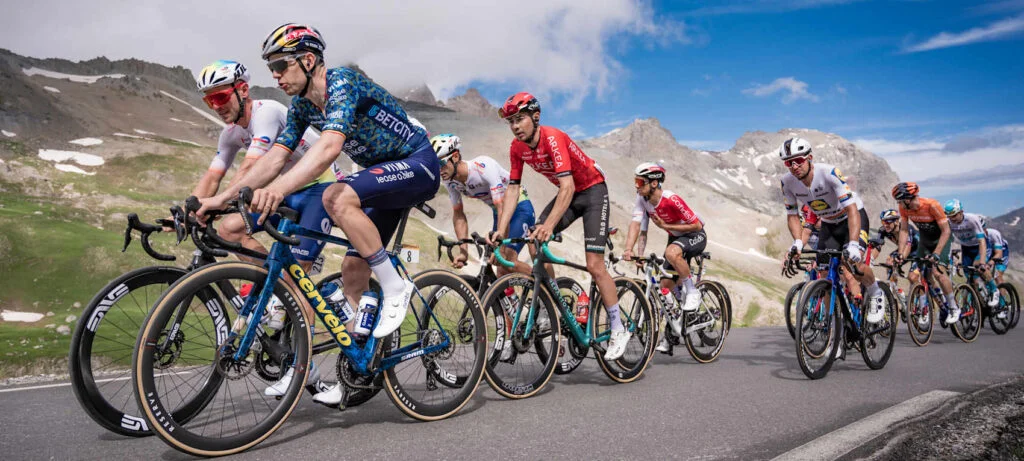
The 2026 Tour de France rolled out of Barcelona on 4 July and finishes on the Champs-Élysées on 26 July. Twenty-one stages, three weeks, a global audience that dwarfs most single-sport properties on the calendar. The Tour de France Femmes follows immediately after, running 1 to 9 August. That is five straight weeks where cycling owns the cultural conversation, and almost no brand talent strategy is built around it.
Compare that to football, where every shirt, stadium hoarding and broadcast break already has three sponsors fighting over it. Differentiation there is nearly impossible. Cycling and endurance running carry none of that congestion. The fan base is smaller, but it is wealthier, more loyal, and largely untouched by brand activation through talent.
The contenders brands keep skipping past
Egan Bernal became the youngest Tour de France winner in over a century when he took the title in 2019, the first Latin American rider to do it. Richard Carapaz has managed something no one else in the sport’s history has: an Olympic road race gold and a podium finish across all three Grand Tours. In 2024 he went further still, taking a Tour de France stage win, the mountains classification, and a day in the yellow jersey, the first Ecuadorian rider ever to wear it.
Wout van Aert has an Olympic road race silver to his name and, in the most recent Tour, soloed past Tadej Pogačar on the Montmartre climb to win the final stage into Paris, his tenth Grand Tour stage win. Jonathan Milan, who set a world record winning Olympic team pursuit gold in Tokyo, claimed the green jersey as the 2025 Tour’s best sprinter. None of these are obscure names to anyone who follows the sport, and the audience that does looks exactly like the one brands chase everywhere else: time-rich, health-obsessed, high disposable income, fiercely loyal to the people they follow.
The strength in depth
Sepp Kuss won the 2023 Vuelta a España after riding all three Grand Tours in a single season, a feat managed only once before in the sport’s history, having spent most of his career as the rider who makes other riders win. That domestique story, quiet, technical, relentlessly consistent, is its own brand fit for anything built on reliability rather than spectacle.
The women’s peloton carries just as much weight. Lorena Wiebes has won multiple Tour de France Femmes stages and is a two-time European champion. Dutch rider Puck Moonen has built an 849,000-strong Instagram following and already has a retail collaboration on the books with cycling brand Assos, proof that the audience for women’s cycling content converts commercially without needing a Grand Tour podium to do it.
Olympians already know how this works
Elite performance is never an accident. Sir Dave Brailsford’s “marginal gains” philosophy turned Team Sky, now Ineos, into a team that won seven Tours de France in eight years, not through one breakthrough but through dozens of specialists handling details no single rider could manage alone. Brands chasing this calibre of talent face the same problem riders had before Brailsford turned up: trying to do something specialist without specialist help.
MN2S has already shown what that looks like in practice. Olympic diver Jessica Parratto’s partnership with SKIMS ran through the Paris Games, putting the brand on a three-time Olympian’s own channels during the exact week the world was watching her compete. Beach volleyball player Marco Grimalt‘s deal with Corona Cero followed the same Games, built around an athlete-first “Relaxation Clause” rather than a standard appearance fee. Olympic trampoline champion Bryony Page partnered with TP Toys on a campaign promoting active play, fronted entirely through her own channels. None of these happened from a cold email to an agent. They happened because someone who understood the talent landscape built the bridge.
Why this isn’t just a cycling story
The same logic holds for running. Rachel Stringer, a 2:50 marathoner who built broadcast credibility after her competitive career, already carries brand history with the likes of Adidas, Under Armour and Lululemon. Matt James, the former Bachelor star turned serious marathon runner, recently partnered with Gillette Clinical to front a social-first campaign on TikTok and Instagram Reels focused entirely on endurance training and the routines that support performance. His Boston Marathon credentials, multiple sub-3:40 finishes, and genuinely engaged TikTok audience of endurance athletes made him precisely the right messenger for a 100-hour protection claim that only makes sense to people who actually log serious weekly mileage. These partnerships prove endurance running talent converts into commercial value just as readily as a cycling jersey does. The Strava-posting, marathon-training, weekend-century-riding audience is one audience, not two, and almost nobody is talking to it through the people it actually follows.
Where to start
None of this needs to be complicated. It needs the same thing Brailsford brought to a team that had never won anything: someone who already knows where the gains are. Get in touch with the team to talk through which endurance athlete fits your brand this summer, while the window is still wide open.