



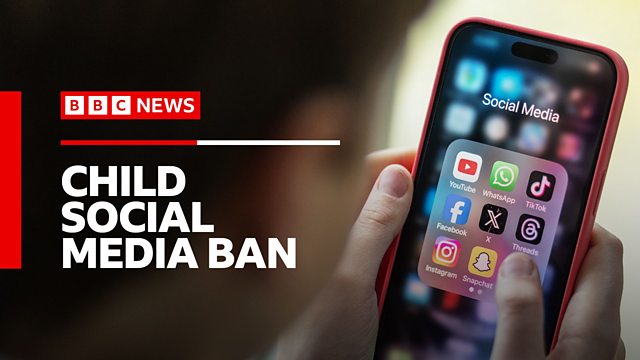
The UK has confirmed a full social media ban for under-16s from spring 2027. Every marketer worth their salt should be excited. This is the most creatively interesting brief the youth market has produced in a generation.
The algorithm is no longer yours to use. Not for this audience, anyway. And honestly? Good.
Paid social made youth marketing lazy. Cheap CPMs, easy targeting, a production budget that fit in a phone. The result was a decade of disposable content competing for three seconds of attention in a feed designed to forget it. The ban changes all of that. It forces brands off the path of least resistance and back into genuine creative territory. Real ideas. Real experiences. Real talent, in real life, in front of real audiences.
If you are a marketer who loves this industry, today is a good day.
At a Downing Street press conference on 15 June 2026, Prime Minister Keir Starmer confirmed a full ban on social media for under-16s, effective spring 2027. The ban covers ten platforms: TikTok, YouTube, Snapchat, Instagram, X, Reddit, Facebook, Twitch, Kick and Threads. The UK goes further than Australia, which introduced the world’s first such ban in December 2025, by additionally blocking livestreaming and communication with strangers for under-16s.
The announcement follows a public consultation in which 91 percent of parents backed raising the minimum age for social media to 16. This morning, cameras went into schools and asked children how they felt. The answer, broadly, was that they did not know what they were going to do with themselves.
That is the most important sentence in this article.
Millions of Hours, About to Go Somewhere Else
Teenagers currently spend up to eight or nine hours a day on screens, with a significant portion going to the platforms now subject to the ban. TikTok, YouTube and Snapchat sit at the top of the list for under-16s. By spring 2027, that time does not disappear. It relocates. Into the physical world. Into real experiences. Into the spaces and moments that brands can actually show up in.
A generation of young people is about to have hours back in their day and no default channel to fill them. The brands that understand this first will earn attention that money cannot buy on a social platform. The ones that wait will be competing for the same shrinking spaces at the same moment as everyone else.
The void is the opportunity. And the way to fill it has been hiding in plain sight since before the internet existed.
We Have Been Here Before
Cast your mind back to the 1990s. There was no Instagram. No Social Media. No algorithm deciding which talent a teenager would obsess over. And yet young people were just as passionate, just as brand-loyal, just as culturally engaged as they are today.
How did they find their icons? They bought the magazine. They watched the TV show. They went to the event. They queued for the meet and greet. They tore out the poster and put it on their wall.
Brands understood this. They put their products in the hands of the talent young people loved, in the pages of the magazines young people read, at the events young people attended. It worked then because talent creates desire, and physical proximity to that talent creates brand memory that lasts for decades. Ask anyone who saw their favourite artist on a teen TV show in 1995 which trainer brand they were wearing.
The mechanics are identical. Only the cultural moment has changed. From spring 2027, a generation of under-16s will be discovering their icons the same way their parents did. Through screens they choose to watch. Through pages they choose to turn. Through moments they choose to attend. The brands that meet them there will own this generation’s earliest commercial memories.
The Algorithm Stole Shared Culture. The Ban Might Give It Back.
There is something bigger happening here than a marketing channel closing. To understand it, you have to understand what social media actually did to youth culture over the past fifteen years.
Before the algorithm, teenagers shared everything. The same TV shows, the same chart hits, the same magazine covers, the same moments. On Monday morning at school, everyone had watched the same thing on Sunday night. Everyone had an opinion on the same artist, the same film, the same headline. Youth culture was communal by nature. It created a shared language, shared references, shared memories that bound a generation together.
Then came the personalised feed. And quietly, without anyone really noticing, that shared experience fractured.
Social media did not just give young people different content. It gave each of them their own version of reality. Their own micro-celebrities, their own niche communities, their own algorithmic rabbit holes that nobody sitting next to them in class had ever been down. A teenager in 2023 might have five million things in common with their best friend and still follow completely different creators, watch completely different content and engage in completely different online conversations. The feed made culture individual. Tailored. Siloed.
Youth culture stopped being a communal campfire and became millions of separate screens, each showing something different to someone alone.
For brands, this was a nightmare in disguise. Yes, targeting got more precise. But cultural resonance became almost impossible. You could not create a moment that an entire generation shared, because an entire generation was no longer sharing anything. Every campaign landed in a different version of reality for every person who saw it. The idea of a brand becoming genuinely embedded in youth culture — the way Nike was in the 1990s, the way certain artists or TV shows were — became exponentially harder.
The ban changes this. When under-16s come off their individual feeds and back into shared spaces — the same TV shows, the same events, the same magazine on the same newsstand — youth culture starts to cohere again. Shared references return. Collective memory returns. The conversation at school on Monday morning returns.
For brands, this is the real prize. Not just access to young audiences. Access to a generation that is forming shared cultural touchstones again. A brand that becomes part of those touchstones — through the right talent, at the right moment, in the right shared format — does not just get a campaign. It gets a place in collective memory.
That is what the 1990s gave the brands that showed up properly. It is what the next chapter offers again.
Talent in Real Life Is the New Social Media
The influencer model worked because it put talent in front of young audiences at scale and at low cost. The ban does not end that relationship between talent and young audiences. It changes the format.
A performer, creator or personality who shows up at a live event does something no paid post ever could. They create a memory. They give a young person a story to tell. They make a brand part of a moment that feels significant, real and unrepeatable. And crucially, they do all of this in a space that the ban cannot touch.
This is where talent booking becomes the most strategic tool in a youth marketer’s kit. Not an add-on. Not a nice-to-have. The primary channel. Done well, a single talent-anchored event generates brand visibility, audience credibility and content that outlasts the moment itself.
Think festival appearances. Fan events. School and community activations. Retail pop-ups anchored by a personality under-16s genuinely care about. The talent does not need to be a mainstream celebrity. They need to be someone that audience loves, in a space that audience will attend.
The proof already exists. When MN2S brought seven-time Olympic gold medallist Sir Jason Kenny together with Busy Bees Nurseries to launch the Big Trike Ride for BBC Children in Need, more than 30,000 toddlers and pre-school children across 430 nurseries took part — collectively cycling, triking and scooting the distance from Land’s End to John O’Groats. Sir Jason showed up in person. The children lit up. The brand earned something no paid media could have bought: a genuine memory, formed in a physical space, with a hero they could actually see. That is the model. That is what is now available at scale to any brand willing to think beyond the feed.
Performers like Corinne Joy, a triple national champion dancer and content creator with a fanbase built across the very platforms now subject to restriction, bring live performance energy that transforms a brand activation into an event worth travelling to. Ava Kolker, a teen actress with Disney Channel and streaming credentials, carries brand partnerships into the formats that remain open and the audiences that are actively looking for new things to engage with. These are personalities whose appeal exists independent of any algorithm. That is precisely what makes them valuable now.
Magazines Are Back. Treat Them Like It.
In the 1990s, a cover placement in a teen magazine was one of the most powerful brand media buys in the market. Young people did not just read those issues. They kept them. They shared them. They absorbed every page, every feature, every product placed alongside the talent they admired.
That relationship between print, talent and young audiences is returning. Not because print never went away, but because the generation coming off social media will be actively seeking richer, slower, more curated content. Harris Poll research already shows that 71 percent of consumers say print magazines and catalogues feel more authentic than digital campaigns, with the effect strongest among younger audiences oversaturated by digital noise.
A talent-fronted editorial partnership in a youth-facing magazine title is not a retro strategy. It is a precision strike at an audience that is actively hungry for exactly this kind of content. Put the right talent on the right page alongside the right brand and you are not advertising. You are part of the cultural landscape that generation grows up in.
Television and Shows Streaming: Still Wide Open
Broadcast TV and streaming are untouched by the ban and remain powerful routes to young audiences. The product placement and scripted integration model, the approach that shows like Emily in Paris have elevated into genuine brand storytelling, allows brands to embed themselves inside the content under-16s actively choose to watch. Not an ad break. Not a sponsored post. A cultural moment inside a show they love.
Talent with strong television credentials become particularly valuable here. A personality who appears on screen, at live events and in editorial simultaneously reaches young audiences across every format that remains open to them after spring 2027.
The Most Exciting Brief in Youth Marketing for Twenty Years
Today’s announcement is the brief. A generation of young people is about to step off their feeds and look up. They will look for talent to follow in real life. They will pick up magazines again. They will go to events. They will watch TV and streaming with fresh attention. They will be, in the most literal sense, available.
91 percent of consumers report more positive feelings about a brand after attending a live event. 85 percent say they are more likely to purchase after a live activation. Those numbers are about adults. For a generation encountering live brand experiences for the first time, with no social feed competing for their attention, the impact will be deeper still.
The brands that lean into this moment will not just reach young audiences. They will shape how that generation relates to brands for the next two decades. The ones that treat today as a problem to manage will watch that opportunity go to someone else.
The playbook exists. The talent exists. The audience is about to arrive. Now is the time to get creative.
If your brand reaches young audiences and you are building your post-social strategy, talk to our team about the talent and activations that will define this next chapter.