



Brands are turning back to real life events
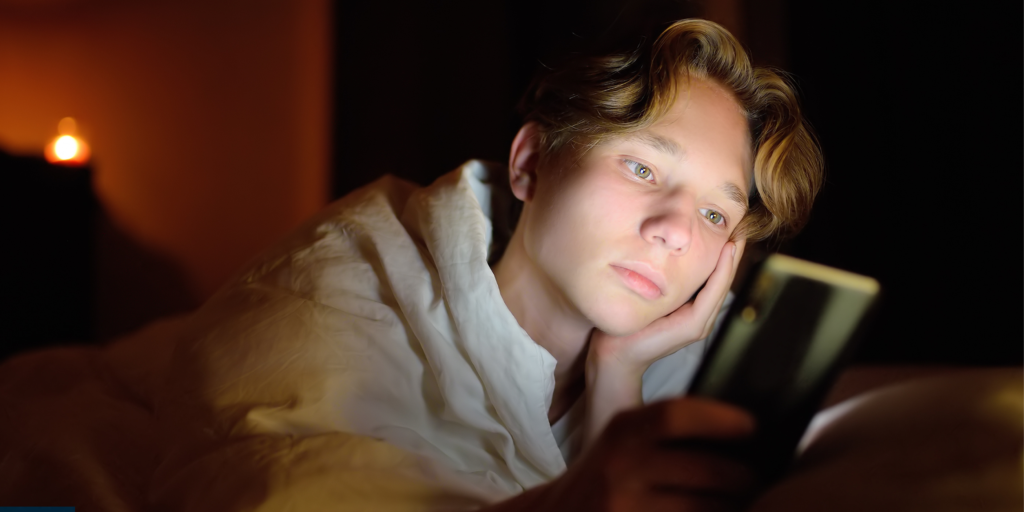
The UK government has just confirmed two major changes to how young people access social media, as reported by BBC News. Under 16s will be banned entirely from platforms including TikTok, Snapchat and Instagram. Teenagers aged 16 and 17 will face an overnight curfew, with apps set to be unavailable by default between midnight and 6am. Auto play and infinite scroll will also be switched off as standard for this age group.
Technology Secretary Liz Kendall says the aim is to protect focus, sleep and family time, and to avoid what she calls a cliff edge introduction to social media once the under 16 ban ends. Teens will still be able to opt out of the curfew by changing their account settings, which has already drawn criticism from child safety campaigners who call the plan piecemeal.
“These measures will be crucial in helping young people get the sleep they need, focus on school and college, and spend more quality time with family and friends, all of which are fundamental to building a happy, healthy and fulfilling adult life,” Kendall said. “We want young people to enjoy the benefits of technology while having the tools to make the online world a place where they can thrive.”
The politics behind the policy are not simple either. Conservative shadow education secretary Laura Trott called the plans a dog’s dinner, questioning how the government can give 16 year olds the vote while restricting their access to social media. On the other side, bereaved parents whose children died in circumstances linked to social media have been vocal supporters, and their reaction to the announcement went viral on breakfast television. The campaign group Smartphone Free Childhood said the measures would make a meaningful difference to families.
What this means for brands
Whatever side of the debate you sit on, the direction of travel is clear. Regulation is chipping away at the reliability of youth focused social advertising, market by market. The UK now joins Australia, which introduced its own under 16 ban in December, in treating platform access as a child safety and product regulation issue rather than a parenting choice. That framing matters. Once tech products are talked about in the same terms as toxic products, brand safety concerns around social platforms grow, not just for youth targeted campaigns but more broadly.
Practically, this creates three problems for advertisers who rely on reaching teenagers through social platforms.
Fragmented rules across markets make it harder to run one global campaign and expect consistent reach. Curfews and bans remove exactly the high engagement, late night windows that platforms and advertisers have relied on. And the political volatility around this issue, with proposals still to pass through Parliament by the end of 2026, means the rules brands plan around today may shift again before the under 16 ban and curfew take effect alongside each other next spring.
Why real life events fill the gap
In person events, festivals, brand activations and experiential marketing are not affected by any of this. They cannot be curfewed, age gated by an app setting, or switched off by a platform update. For a generation whose default access to social media is being deliberately restricted, physical, shared experiences may become more valuable to brands, not less.
Comic-Con and the meet and greet model
Comic-Con is a good example of just how little regulation touches this space. There is no age limit on who can attend. Children aged 12 and under go free with a paying adult, teenagers aged 13 to 17 pay a reduced junior price, and adults pay full price, but nobody is locked out by age the way a teenager can now be locked out of an app overnight. MN2S has worked directly in this space, arranging for actor and director Kevin Smith to appear at Comic-Con Rio for photo opportunities, autograph sessions, a meet-and-greet and a panel discussion with fans of his View Askewniverse films. No curfew, no default setting, no opt out. Just a room full of fans and a guest who showed up.
Meet-and-greets in particular sit outside anything this regulation can reach. MN2S runs its own Fan Experiences platform, connecting fans directly with musicians, actors and sportspeople they admire, in person rather than through a screen. The same format shows up across our brand and convention work too. Voice actor Jon St. John appeared at CarrierCon on behalf of Wargaming, taking part in a panel discussion and spending time at the World of Warships booth signing autographs and taking photos with fans. And for younger audiences specifically, MN2S arranged for YouTube stars the Ninja Kidz to appear at Pirates Bay Waterpark in Texas, giving families a Meet and Greet with the channel’s 20 million young subscribers followed by a VIP viewing of the park’s NinjaCross course. These are the moments a midnight curfew or an under 16 ban cannot reach, because nothing about them depends on a phone being unlocked.
The numbers behind the shift
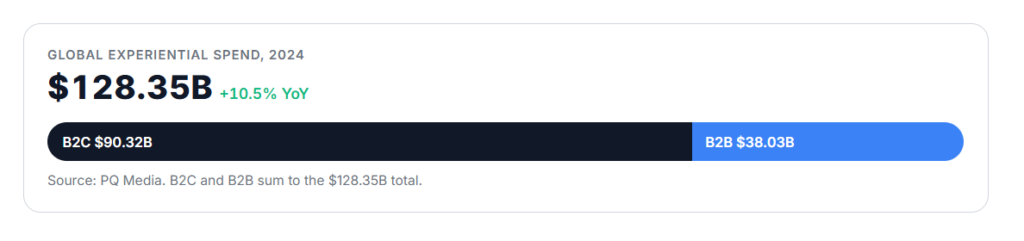
The numbers already point this way. Event Marketer’s 2026 EventTrack benchmark found that experiential is one of the few marketing channels still growing in absolute spend, with 84 percent of consumer marketers and 86 percent of B2B marketers planning to increase event spending this year. In the UK specifically, the IPA Bellwether Report recorded events as the fastest growing marketing category in the first quarter of 2026, jumping from a net balance of 1.4 percent the previous quarter to 14.7 percent, easily the standout line in an otherwise cautious budget picture.
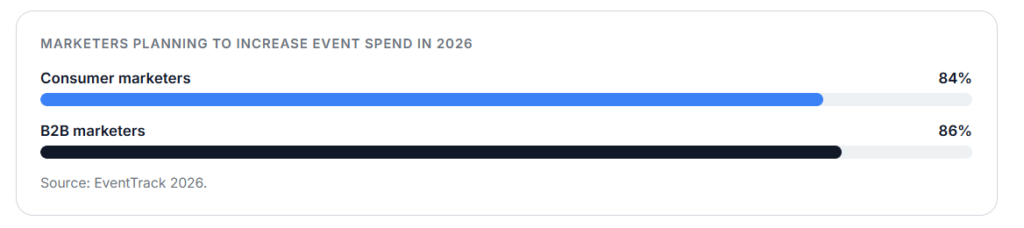
That momentum is not new, it is accelerating. LUME Studios, which has produced more than 1,600 brand activations in New York, points out that global experiential marketing spend passed its pre pandemic peak for the first time in 2024, reaching 128.35 billion dollars. Their research also found that consumers who attend a live event are 85 percent more likely to buy the product, and 70 percent go on to become repeat customers. Cvent’s 2026 statistics roundup backs this up, noting that 80 percent of companies have increased their experiential budgets, which now make up between 10 and 30 percent of total marketing spend.
Put simply, brands are not waiting for regulation to force their hand. Digital saturation and rising costs per impression were already pushing budgets toward live experiences, as third party tracking degrades and consumers tune out static ads. A curfew and a ban on under 16 access simply narrows the digital door further, at exactly the moment the physical one is opening wider.
Where MN2S fits
This is where MN2S sits. Talent booking, brand partnerships and live events are the parts of a marketing strategy that regulation cannot touch. As the digital landscape becomes harder to plan around, the case for building brand presence through real world experiences, tangible products and mainstream media gets stronger.