




The biggest youth convergence of the year is still being marketed like a flyer drop
Freshers week is not one moment. It is a chaotic, overlapping sequence of moments, and right now most brands are only showing up for one of them. Freshers week sees over 2.8 million UK students converge on campuses, making it the single largest youth gathering of the year. That is a stadium-sized audience forming brand habits that last the rest of their degree, and beyond.
Yet the standard playbook barely moves. A stall in the freshers fair. A tote bag. A pizza slice. Meanwhile the moments students actually remember, the DJ who got the room going, the 2am food order that saved the night, the first proper cold of term, go almost entirely unclaimed. Freshers week is not a single sponsorship slot. It is a full day-by-day cycle of attention, and brands that only sponsor the fair are sponsoring maybe a quarter of it.
The entertainment layer: the room brands / venues forget they can own
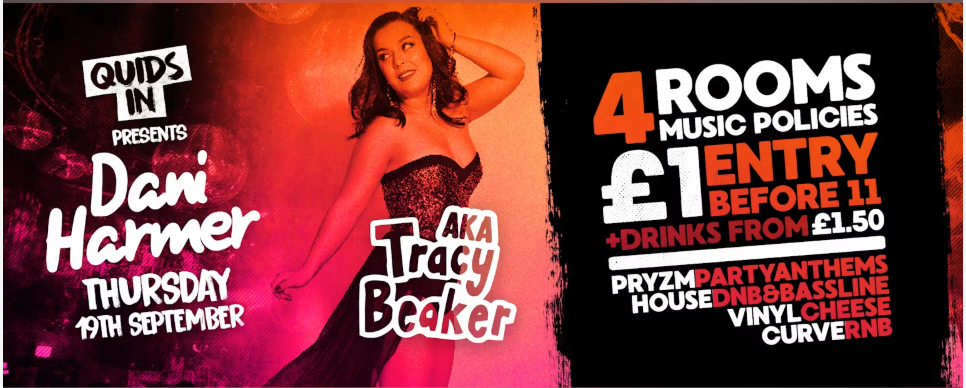
Every students’ union in the country books a DJ for welcome week. Almost none of them think about who that DJ actually is, or what story comes with them. Dani Harmer, forever known to a generation as Tracy Beaker, has reinvented herself as a touring celebrity DJ and recently played a set at Bucks Students’ Union, part of a wider run of UK university bookings timed around the freshers circuit. It is a genuinely good story: the CBBC icon an entire generation of students grew up watching is now the one starting their first night out at university. That nostalgia does the marketing work a generic student night can’t buy.
The lesson is not “book a DJ.” It is that the entertainment slot in freshers week is a talent decision, not a booking-agent afterthought, and the right name turns a routine SU night into something people post about for years.
The logistics layer: the brands already treating students as a market
Food delivery has quietly become one of the more talent-literate categories around campus life, and DoorDash is the clearest example. The brand has run more than one talent-led campaign built around exactly the audience freshers week delivers: young, mobile, ordering food at odd hours. Raekwon fronted a promotional campaign for the food delivery service, while Kurtis Blow reworked his 1984 hit “Basketball” for a DoorDash season campaign. Neither was built specifically around freshers week, but both prove the same point: delivery brands already understand that talent, not just discount codes, is what makes a service feel relevant to a young audience forming habits fast.
That is the gap in most student marketing plans. The takeaway order at 1am is one of the most reliable rituals of freshers week, and almost nobody is putting a face to it yet.
The layer nobody has claimed: wellness and the “freshers flu” problem
This is the honest gap, and the biggest opportunity. Every autumn, UK health authorities remind new students that mixing with thousands of strangers in halls makes them more vulnerable to meningitis, flu and other fast-spreading illness, and that the symptoms are easy to write off as a hangover or “freshers flu” until they are not. There is a genuine, serious health story sitting inside a phrase students say as a joke. No brand has properly claimed it.
This is where a credible face matters more than a clever campaign. MN2S represents medical broadcasters including Dr. Ranj Singh, an NHS clinician known for focusing on young people’s wellbeing, and Doctor Mike, whose health education content reaches millions. Neither has yet fronted a freshers-specific campaign, so this is opportunity, not case study, but the fit is obvious: a trusted medical voice cutting through the “it’s just freshers flu” shrug with something that actually protects students.
The mechanic already exists too. MN2S has facilitated a talent-led activation with Just Eat and Superdrug built around exactly this kind of emergency, a make-up artist delivered direct to someone’s door within the hour, using products from Superdrug ordered through the Just Eat app. That was framed around a beauty mishap. The same mechanic reframes just as easily for freshers week: forgot your phone charger, your meds, or anything else you left at your parents’ house, or you’re too ill to leave halls and need paracetamol and Lucozade fast. It is the same brand infrastructure and the same talent-activation model, just pointed at a different emergency, and nobody has built that version yet.
The takeaway for brand marketers
Freshers week rewards brands that treat it as several distinct moments rather than one stall. The entertainment slot, the logistics slot and the wellness slot each need a different kind of talent, and most competitors are only fighting over the first one. The gap is wide open for whoever moves on the other two first.
If you’re planning a September campaign and want to talk through where talent fits, get in touch with our team.