
 United Kingdom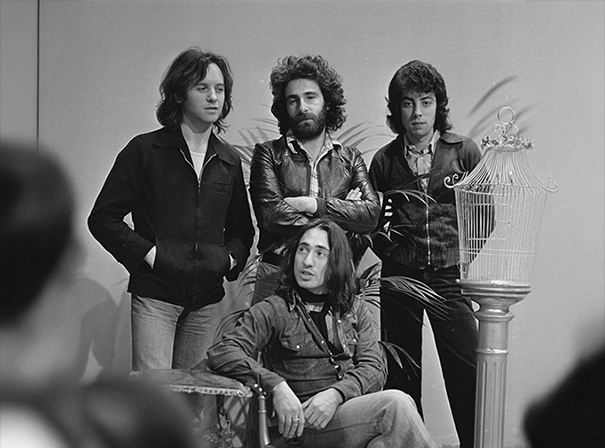

Bimini Headlines Fulham Pier for Hammersmith & Fulham’s Youth Arts Festival
17 hours ago


10cc, an English rock band, transitioned from studio session work to worldwide chart success, demonstrating a unique ability to blend pop accessibility with experimental artistry.
10cc signed to Jonathan King's UK Records label in July 1972.
In February 1975, the band signed with Mercury Records for US$1 million following their split with Jonathan King.
Eric Stewart collaborated as a co-writer on much of Paul McCartney's 'Press to Play' album (1986).
Graham Gouldman and Andrew Gold formed the duo Common Knowledge, later known as Wax, releasing albums like 'Magnetic Heaven' (1986) and achieving a Spanish No.1 single.
In 1991, the original four members reunited to record '...Meanwhile', an album produced by Gary Katz, proposed by Polydor.
The record label Breaking Wave announced that it had signed 10cc to release a new album later in 2026.
All four members of the original 10cc line-up were working together regularly at Strawberry Studios in Stockport, which Eric Stewart became a partner in July 1968, and where the band subsequently recorded most of their albums. Graham Gouldman also became a financial partner in the studios by 1969.
American bubblegum pop writer-producers Jerry Kasenetz and Jeffry Katz of Super K Productions commissioned Graham Gouldman to write and produce songs, many of which were recorded at Strawberry Studios with contributions from future 10cc members.
Hotlegs, consisting of Godley, Creme, and Stewart, released their single "Neanderthal Man" through Fontana Records in July 1970.
Philips Records reworked Hotlegs' album 'Thinks: School Stinks' and issued it as 'Song'.
After 1983, Graham Gouldman produced tracks for the Ramones, as referenced in their song 'It's Not My Place (in the 9 to 5 World)'.
10cc was founded in 1972 in Stockport, England, by four musicians: Graham Gouldman, Eric Stewart, Kevin Godley, and Lol Creme. These four had a history of writing and recording together at their self-owned Strawberry Studios since 1968. The band was characterized by two distinct songwriting teams. Stewart and Gouldman primarily focused on pop-oriented songs that achieved broader commercial appeal. In contrast, Godley and Creme contributed an experimental, art school-influenced sensibility, leading to more artistic and avant-garde compositions. This dual creative approach allowed 10cc to produce a diverse range of music that transcended traditional genre boundaries, appealing to both pop and art-rock audiences.
From 1972 to 1978, 10cc experienced significant commercial success, securing five consecutive UK top-ten albums, including “Sheet Music” (1974), “The Original Soundtrack” (1975), and “Bloody Tourists” (1978). Their innovative production techniques and distinctive sound led to twelve singles entering the UK Top 40, with three reaching number one: “Rubber Bullets” (1973), “I’m Not in Love” (1975), and “Dreadlock Holiday” (1978). “I’m Not in Love” became a breakthrough hit globally, noted for its intricate, overdubbed choral backing. The band’s ability to craft both catchy pop singles and complex album tracks established them as a prominent act in the 1970s British music scene.
A significant turning point for the band occurred in 1976 when Godley and Creme departed to pursue other projects, including developing an electronic music device called “The Gizmo” and working in video production as a duo, Godley & Creme. Stewart and Gouldman continued as 10cc, releasing albums such as “Deceptive Bends” (1977) and “Bloody Tourists” (1978), which still produced major hits. Despite Stewart’s serious car accident in 1979 disrupting the band’s momentum, Graham Gouldman has continued to lead a touring version of 10cc since 1999, ensuring their musical legacy persists through live performances of their extensive catalog.

Curious about our offerings or have inquiries? We're eager to assist!
Just complete the form, and we'll respond promptly.