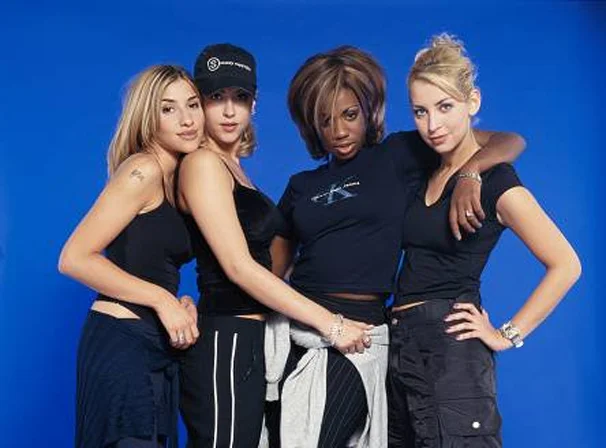


Bimini Headlines Fulham Pier for Hammersmith & Fulham’s Youth Arts Festival
4 days ago


 United States
The Crickets, an American rock and roll band, are best known for helping launch the career of iconic singer-songwriter Buddy Holly and influencing countless musicians, including The Beatles.
Holly signed a solo recording contract as a 'country' artist with Decca Records in 1955, prior to the official formation of The Crickets. The Crickets' name was used as a ruse to avoid provisions of a contract Holly had signed with Decca in 1956.
The Crickets officially signed with Brunswick Records at their formation. Brunswick released the group's first single "That'll Be the Day" (flip side "I’m Looking For Someone To Love") in May 1957.
Coral Records, a subsidiary of Decca/Brunswick and owner of the Crickets' masters, released the single "Peggy Sue" under Holly’s name while the band was also releasing music through Brunswick.
After Decca/Brunswick Records released the Crickets from their contract, Allison signed a new recording contract with Liberty Records in Los Angeles in 1960. The 'post-Buddy Holly Crickets' continued to record with Liberty Records from 1960 to 1965.
In April 1960, The Crickets backed the Everly Brothers on their first UK concert tour. Jerry Allison later toured and recorded as the drummer with the Everly Brothers during the early 1970s.
The Crickets collaborated with pop singer Bobby Vee on a collaborative album for Liberty Records, titled 'Bobby Vee Meets the Crickets', which rose to Number 1 on the UK pop charts and topped charts in Canada, Australia, and most European countries.
In 1988, The Crickets recorded a single produced by Paul McCartney entitled "T-Shirt." McCartney also played piano on the track.
The Crickets were formed in Lubbock, Texas, in January 1957 by Buddy Holly. Prior to this, Holly had gained significant musical experience, performing with friends since 1954 and even recording for Decca Records. The initial lineup included Holly on lead vocals and lead guitar, Jerry Allison on drums, Joe B. Mauldin on bass, and Niki Sullivan on rhythm guitar. To avoid legal issues with a previous recording contract, they chose the name ‘Crickets,’ inspired by other bird-named groups. In May 1957, their first hit single, “That’ll Be the Day,” was released, which subsequently peaked at number three on the Billboard Top 100 chart by September 1957. The Crickets were instrumental in setting the blueprint for future rock bands, showcasing a guitar-bass-drums lineup and performing their own original material. This innovative approach paved the way for many influential groups, earning them recognition in the music industry.
After achieving early success and making their mark, the Crickets continued to evolve. In 1958, Niki Sullivan left the group, and Holly eventually parted ways with producer Norman Petty, moving to New York. Allison and Mauldin returned to Lubbock. Tragically, Buddy Holly died in a plane crash in 1959. Following Holly’s death, the band persevered, with various lineup changes. Original members Jerry Allison and Joe B. Mauldin, along with Sonny Curtis, continued to record and perform. They achieved international success, particularly in the United Kingdom, with hits like “Don’t Ever Change” and “My Little Girl” in the early 1960s. The Crickets toured extensively and participated in collaborative projects, including “Bobby Vee Meets the Crickets” in 1962, which topped charts in several countries.
The Crickets’ enduring legacy was further solidified through continuous touring and recording throughout subsequent decades. They released “The Crickets and Their Buddies” in 2004, featuring collaborations with prominent artists such as Eric Clapton and Waylon Jennings. In 2008, they were inducted into the Musicians Hall of Fame and Museum, with Keith Richards making a guest appearance. Their influence was officially recognized in 2012 when they were inducted into the Rock and Roll Hall of Fame. The band’s final performance took place on February 6, 2016, in Clear Lake, Iowa, at the Surf Ballroom, the site of Buddy Holly’s last show. Joe B. Mauldin passed away in 2015, followed by Jerry Allison in 2022, and Sonny Curtis in 2025, marking the end of an era for this pioneering rock and roll group.

Curious about our offerings or have inquiries? We're eager to assist!
Just complete the form, and we'll respond promptly.