
 United States
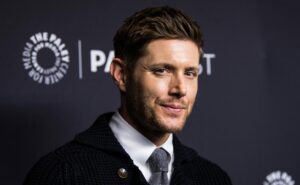
Jensen Ackles partners with Focus Entertainment for Atomic Heart trailer
4 years ago


Glenn Danzig is an American singer, songwriter, musician, actor, film director, and record producer, known for founding seminal rock bands Misfits, Samhain, and Danzig.
Danzig's relationship with American Recordings, founded by Rick Rubin, became complicated, leading to a legal battle over unpaid royalties and rights to unreleased songs.
Glenn Danzig collaborated with Rick Rubin, rap-metal pioneer and head of American Recordings, since Rubin signed Samhain and later encouraged the formation of Danzig.
Glenn Danzig wrote the song "Life Fades Away" for Roy Orbison, which was featured in the 1987 movie Less Than Zero.
In the mid-1990s, Glenn Danzig collaborated with country legend Johnny Cash, penning the song "Thirteen" for Cash's 1994 album American Recordings.
Danzig signed a deal with Hollywood Records for the release of Blackacidevil, which encountered controversy and led to the label pulling support.
In 1999, Danzig signed his band to E-Magine Records, becoming the first artist on the label and facilitating the release of a Samhain box set and the re-release of Blackacidevil.
Danzig recorded the first duet of his career, "Father's Grave," with Melissa Auf der Maur, featured on her 2010 album Out of Our Minds.
Danzig performed with Metallica at their 30-year anniversary shows, performing Misfits songs such as "Die, Die My Darling," "Last Caress," and "Green Hell."
Danzig toured with Superjoint as part of what he indicated could be his last tour, showing continued engagement with other notable bands in the metal scene.
Danzig, Jerry Only, and Doyle Wolfgang von Frankenstein reunited as the Misfits for two headlining shows at Riot Fest in 2016, marking their first performance together in 33 years.
Danzig was invited by 20th Century Fox to audition for the role of Wolverine in X-Men, but declined due to scheduling conflicts.
Glenn Danzig, born Glenn Allen Anzalone on June 23, 1955, in Lodi, New Jersey, embarked on his musical journey at a young age. His early exposure to heavy metal and horror literature would later profoundly influence his distinct artistic style. Danzig initially started playing in local garage bands, teaching himself guitar and developing a powerful vocal style that garnered local attention. Before achieving widespread recognition, he worked as a drum roadie and performed in various local groups like Talus and Koo-Dot-N-Boo-Jang.
Danzig’s career officially began in the mid-1970s with the formation of Misfits, a band that would become foundational in the horror punk genre. He released records through his own label, initially Blank, then Plan 9. Despite challenges in securing record label interest, Misfits cultivated a strong cult following with releases inspired by B-grade horror films and historical events. After disbanding Misfits in 1983 due to creative differences, Danzig formed Samhain, exploring a darker, more experimental sound that blended horror punk with gothic and death rock elements. Samhain’s music also introduced more complex drum patterns and lyrical themes rooted in paganism and the occult.
A significant turning point came in 1986 when producer Rick Rubin discovered Samhain, leading to a major label deal and the band’s renaming to Danzig. This new phase saw a shift towards a blues-based heavy metal sound, characterized by slower, heavier riffs. The band Danzig gained mainstream success in the early 1990s, particularly with the song “Mother,” which became an MTV hit. Danzig continued to evolve his sound through various albums, experimenting with industrial rock and gothic metal, consistently challenging and expanding genre boundaries while maintaining a core artistic vision.

Curious about our offerings or have inquiries? We're eager to assist!
Just complete the form, and we'll respond promptly.