


Gareth Southgate Brings Leadership Insight to Barclays Global QIS Conference
1 day ago


 United Kingdom
Napalm Death are credited as pioneers of the grindcore genre, establishing a significant and enduring influence on heavy and experimental music for nearly 40 years.
U.K. grindcore pioneers NAPALM DEATH have signed a new deal with Century Media Records, extending the long-running co-operation between the...
Keith Harrison and Napalm Death discuss the concept and execution of their unlikely collaboration on an evening that defied expectations at every turn.
The 2023 edition of the grindcore legends' iconic touring bill brings Dropdead, Siberian Meat Grinder and Escuela Grind under the 'Campaign for Musical Destruction' banner.
The duo have now announced a collaborative record called Savage Imperial Death March that'll be out on vinyl this Sunday via AmRep Records.
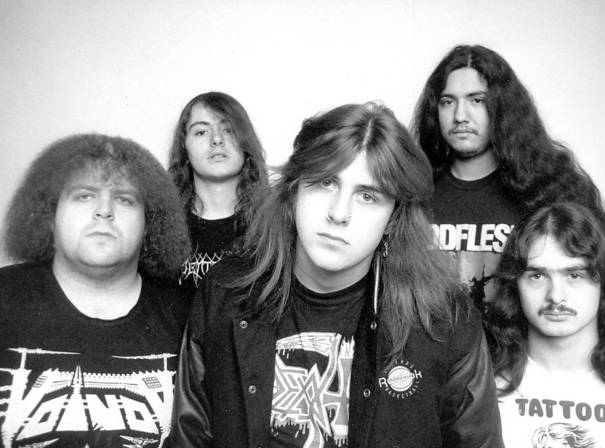
Napalm Death formed in Meriden, West Midlands, UK, in 1981 by Nic Bullen and Miles Ratledge. The band’s early sound was influenced by anarcho-punk and post-punk, evolving to incorporate heavy hardcore punk and thrash metal elements. A crucial turning point occurred in 1986 with a lineup change that brought in Mick Harris on drums and Justin Broadrick on guitar, alongside Bullen. This period saw the band refine their extreme musical style. Their demo recordings from these years, including “From Enslavement to Obliteration” and “Scum,” laid the groundwork for their debut album. By 1987, after further lineup changes leaving none of the original members, Bill Steer and Lee Dorrian joined, leading to the release of their debut album, “Scum,” on Earache Records. This album proved highly influential in the global metal community, defining the grindcore genre with its distorted guitars, high-speed tempos, and aggressive vocals.
Following “Scum,” Napalm Death continued to innovate, releasing “From Enslavement to Obliteration” in 1988 and the EP “Mentally Murdered.” The band’s consistent touring and appearance on national television cemented their status. In 1989, Steer and Dorrian departed, making way for Jesse Pintado and Mark “Barney” Greenway, and Mitch Harris joined as a second guitarist. This lineup produced “Harmony Corruption” in 1990, demonstrating a shift toward death metal influences. Despite initial fan reactions, the band released the more “raw” sounding “Mass Appeal Madness” EP, and by 1992, with Danny Herrera replacing Mick Harris, they released “Utopia Banished,” which marked a return to their grindcore roots. Throughout the 1990s, they released albums such as “Fear, Emptiness, Despair” (1994), incorporating groove elements, and “Diatribes” (1996).
Napalm Death’s career progressed through significant milestones, including several successful albums and tours. After a brief departure of Greenway in 1996 and his subsequent return, the band released “Inside the Torn Apart” (1997) and “Words from the Exit Wound” (1998). Their departure from Earache Records led to “Enemy of the Music Business” (2000), which expressed their dissatisfaction with the music industry. They continued to release albums like “Order of the Leech” (2002) and “The Code Is Red…Long Live the Code” (2005), maintaining their grindcore sound with progressive elements. Even after Jesse Pintado’s departure and passing in 2006, the core lineup of Embury, Greenway, Harris (studio/session), and Herrera continued to release critically acclaimed albums such as “Smear Campaign” (2006), “Time Waits for No Slave” (2009), “Utilitarian” (2012), “Apex Predator – Easy Meat” (2015), and “Throes of Joy in the Jaws of Defeatism” (2020), solidifying their legacy as innovators in extreme metal.

Curious about our offerings or have inquiries? We're eager to assist!
Just complete the form, and we'll respond promptly.