





Brand Partnerships  17th July 2025
17th July 2025 

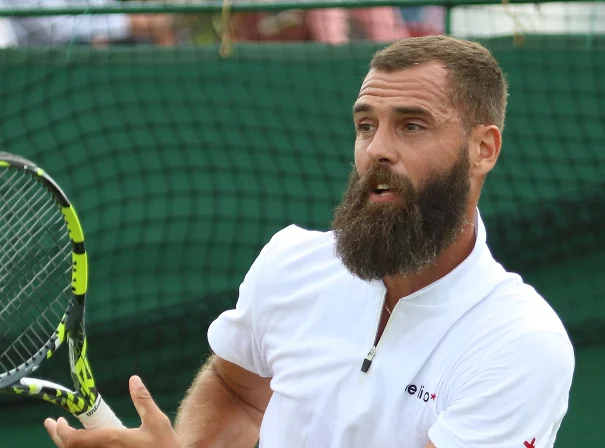
Benoît Paire is a story woven in contrasts. The French tennis player, with his unpredictable playstyle and flashy shots, dances between brilliance and frustration. Growing up in Avignon, he probably found the court as both a refuge and a stage, where command and chaos clash in every match. Most fans remember those moments of magic—a drop shot spun so perfectly that it seems to defy gravity, or a backhand that cuts through the air like a whip. Yet, for every shining performance, there’s a tinge of inconsistency lurking just beneath the surface, as if he’s juggling sparks with the risk of singeing his own hands.
His ascent began modestly in the Futures circuit, but Paire’s breakthrough came in 2015, when he surged from the depths of a knee injury to claim the ATP Comeback Player of the Year. It was a testament to his resilience, but then there’s that rollercoaster inherent in any athletic career. One moment, he’s besting a top seed at a Grand Slam; the next, he’s fighting back tears after a first-round exit. His tournament appearances often reveal a man wrestling with his own expectations amidst the cheers and jeers.
In between those highs and lows, there’s an oddly mundane detail—his penchant for smashing rackets, a physical manifestation of the inner turmoil felt during those matches. Of course, that flair for dramatics on and off the court had him embroiled in controversies, most notably being ejected from the Olympic team for flouting rules. His love-hate relationship with the sport seems almost palpable; he oscillates between elation and disappointment as if caught in an endless loop of a match point gone awry.
Yet, amid it all, Benoît remains a captivating figure—a man whose identity is inextricably tied to the unpredictability of his game. He is not merely a player; he is a narrative, a reflection of what it means to dare greatly in the unforgiving arena of professional tennis.

Looking for a different kind of talent? Browse our other talent rosters below to find the right talent to fit.