

Bimini Headlines Fulham Pier for Hammersmith & Fulham’s Youth Arts Festival
11 hours ago


 United States
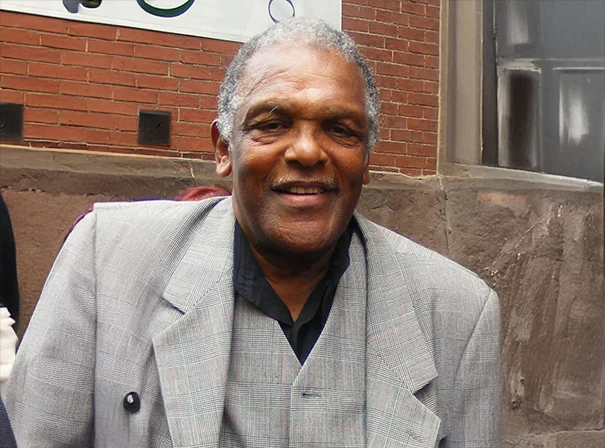
Lenny Moore, a Pro Football Hall of Famer, established himself as one of the NFL's premier dual-threat players before transitioning into community service, dedicating over two decades to supporting at-risk youth.
Lenny Moore opened up about the traits that carried him through football, business, and looked back at venues worked with throughout his career.
Lenny Moore joined the Miami Hurricane legend to explain how football prepared him for entrepreneurship, and how owning clubs allowed him to do more than just business.
The Reading Fightin Phils honored Hometown Hero Lenny Moore at FirstEnergy Stadium.
Leonard Edward Moore was born on November 25, 1933, in Reading, Pennsylvania. His exceptional athletic abilities were evident early, earning him nicknames like “The Reading Rocket” at Reading Senior High School, where his jersey number was later retired. He went on to Penn State University as the first in his family to attend college, achieving significant success on the Nittany Lions varsity team. Moore finished his collegiate career as Penn State’s all-time leader in 100-rushing yard games (12), rushing yards (2,380), all-purpose yards (3,543), and single-season all-purpose yards (1,486 in 1954), scoring 24 touchdowns in 27 games.
Moore was a first-round draft pick (ninth overall) of the Baltimore Colts in 1956, where he became a key player for nearly a dozen years. He excelled as both a runner and receiver, demonstrating versatility by lining up as a halfback and a flanker. His combined net yards totaled 12,451, with 5,174 rushing yards and 6,039 receiving yards, accumulating 113 touchdowns during his career. He was instrumental in the Colts’ NFL championships in 1958 and 1959. Despite facing injuries in 1962 and 1963, Moore staged a remarkable comeback in 1964, scoring 20 touchdowns, leading the league in scoring, and earning both Comeback Player of the Year and NFL’s Most Valuable Player honors. From 1963 to 1965, he scored touchdowns in 18 consecutive games, an NFL record at the time. Moore retired after the 1967 season, having earned seven Pro Bowl selections and five All-Pro honors.
After his professional football career, Moore continued to contribute to his community. For 26 years, until his retirement in 2010, he worked for the Maryland Department of Juvenile Services, traveling to schools to mentor at-risk children and educate them about the dangers of drugs. He also serves as a keynote speaker for various organizations and raises money for scleroderma research, an illness that claimed the life of his son, Leslie. Recognized for his contributions both on and off the field, Moore was inducted into the Pro Football Hall of Fame in 1975, named to the NFL’s 50th Anniversary Team in 1969, and his number 24 was retired by the Baltimore Colts.

Curious about our offerings or have inquiries? We're eager to assist!
Just complete the form, and we'll respond promptly.