



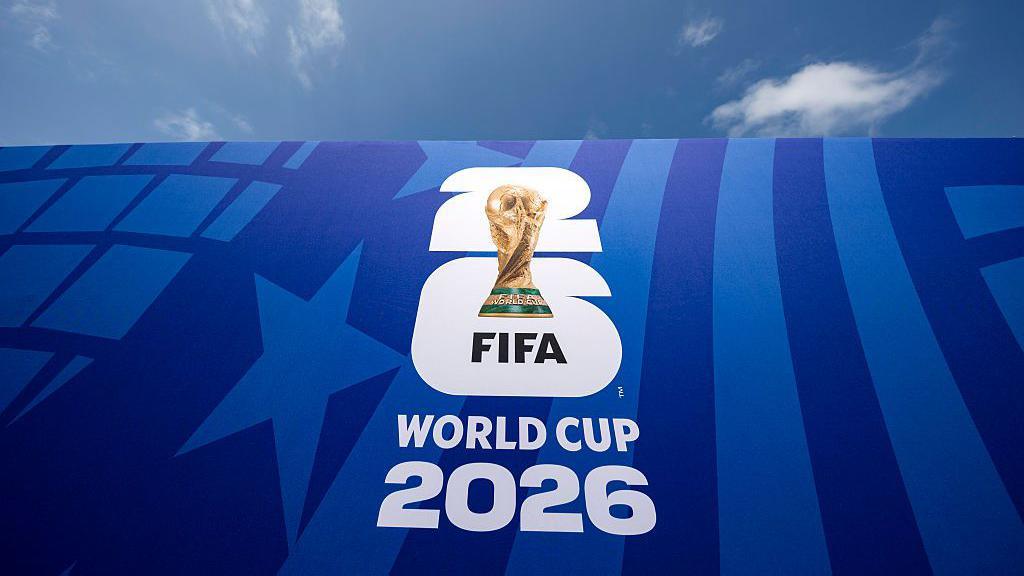
The biggest commercial event on the planet is live. Here is why non-endemic brands have more to gain from it than the official sponsors do.
The FIFA World Cup 2026 is live. Forty-eight nations, 104 matches, and an estimated six billion global engagements projected across broadcast, streaming, and social. It is, by any measure, the most commercially significant event on the planet right now. And if your brand is not a sportswear company, an official beer sponsor, or a fast food giant, you may have already decided it has nothing to do with you.
That assumption is where the opportunity lives.
The Sponsorship Trap
Official World Cup sponsorship does not come cheap. WARC Media forecasts that brands will pour an additional $10.5 billion into global ad spend on the back of this tournament. A significant portion of that is concentrated among the official partner tiers, where Adidas alone is reported to have committed somewhere between $150 million and $200 million as a Tier 1 sponsor. All 16 global sponsorship slots have been sold, making this the most commercially saturated World Cup on record.
Here is the irony. That saturation is your competitive advantage.
When every official sponsor is running a campaign built around football, the cultural space around the tournament fills up fast. Category clutter is real. Audiences tune out the tenth boots commercial. They do not tune out a brand that earns its place in the conversation through creative relevance rather than a contractual right to display a logo. The brands winning right now are the ones that understood this early.
Culture Does Not Respect Category Boundaries
The World Cup stopped being purely a football event a long time ago. It is a fashion moment, a music moment, a social media moment, and a shared cultural experience that pulls in hundreds of millions of people who cannot name a single starting eleven. WARC’s analysis makes this explicit: the conversation around matches, not just the matches themselves, is now the primary engagement opportunity for brands without broadcast rights. Creator content, podcasts, social commentary, live experiences. These are the channels where non-endemic brands can compete on equal footing.
Talent is the key that unlocks all of them.
The most talked-about campaign of this World Cup cycle so far is not from a sports brand. Adidas, technically a sportswear company, made its defining creative move by casting Timothée Chalamet and Bad Bunny alongside Messi and Bellingham in its Backyard Legends film. The reason it cut through is precisely because those two names do not belong to football. They belong to film and music. They carried the campaign into entertainment feeds, fashion press, and social audiences that a purely football-centric cast would never have reached. Even a company with a $200 million sponsorship commitment understood that football talent alone was not enough.
Non-endemic brands do not need a $200 million budget to apply the same thinking.
The Talent Playbook for Brands Outside the Category
There are three ways a non-football brand can use talent to earn genuine relevance during a major tournament.
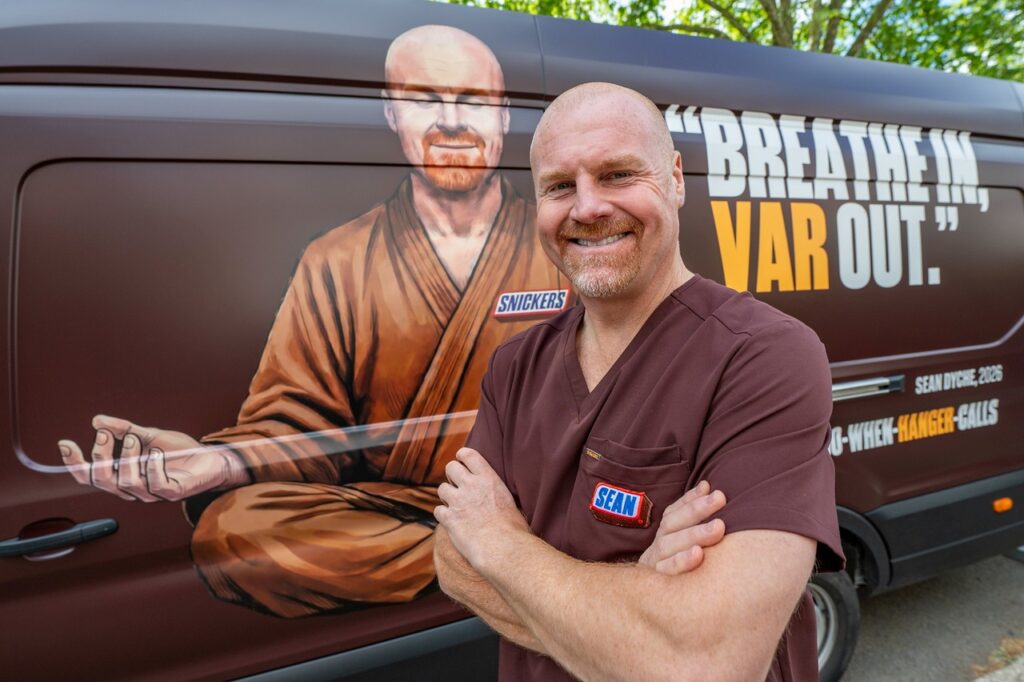
Use football talent to access football culture without sponsorship. Football legends and former managers carry enormous cultural authority, and that authority is available to any brand with the right creative brief. Snickers is not a sports brand. It sells chocolate bars. But a Snickers survey found that one in three UK football fans believe VAR has made the game less enjoyable, and the brand used that insight to build a campaign entirely around that frustration. Sean Dyche, secured by MN2S for the campaign, plays the manager of the SNICKERS VAR Spa, a comedic mobile wellness centre for fans driven mad by refereeing delays. The result is a campaign that is deeply football in its references, totally ownable for a confectionery brand, and shareable far beyond the match audience. No shirt sleeve required.
Use football’s storytelling to sell something else entirely. The emotion of the World Cup, nostalgia, rivalry, national pride, the underdog, the moment of redemption, is not the intellectual property of any sponsor. Any brand can borrow it with the right talent partnership. Flamin’ Hot, a snack brand under PepsiCo, built its entire World Cup campaign around Arjen Robben’s history with Mexico. MN2S secured Robben as the face of the Warmest Welcome campaign, which turns a famous moment of football heartbreak into a humorous cultural exchange rooted in Mexican identity and the heat of the brand’s product. Flamin’ Hot is not a football sponsor. It is a snack. But the campaign does not feel like a snack ad. It feels like part of the World Cup story, because the talent at the centre of it genuinely is.
Use football’s audience reach to do something your category competitors are not doing. The World Cup pulls in audiences that are hard to aggregate any other way. For a fintech, a car brand, a travel company, or a fashion label, the tournament is a moment when tens of millions of consumers who fit your target profile are watching the same things, talking about the same moments, and leaning into shared experience. Booking a football personality for a corporate hospitality event, a brand activation, or a content series during the tournament puts your brand inside that shared moment. Former Republic of Ireland international Kevin Kilbane secured by MN2S as the headline speaker for EY’s Entrepreneur Of The Year CEO retreat in Toronto, shows how football talent translates directly into premium corporate environments. The World Cup timing was the context. The insight, credibility, and cultural weight Kilbane brought to the room was the value.
The Insight Brands Keep Missing
The mistake most non-endemic brands make is waiting for the tournament to feel relevant to them before they act. They watch the official sponsors own the conversation for six weeks and then wonder why they missed the window.
The smarter move is to find the human truth your brand shares with the World Cup moment and build the talent partnership around that truth. Snickers and VAR frustration. Flamin’ Hot and Mexican cultural pride. These are not obvious connections. They are creative ones, made possible by understanding what a specific talent brings to a specific brief.
That is where specialist knowledge matters. Knowing which talent has the right cultural weight for your audience, the right public profile for your category, and the genuine connection to the moment you want to own is the difference between a campaign that earns attention and one that adds to the noise.
The Window Is Open Now
The tournament runs until 19 July 2026. There are weeks of competition, conversation, and cultural momentum still ahead. Knockout stages drive the biggest spikes in audience and engagement. The final at MetLife Stadium will draw one of the largest live broadcast audiences in history.
Brands that move now can still shape how this tournament feels for their audience. The official sponsors have their campaigns running. The space around them, the cultural commentary, the live experiences, the talent-led content, is still there to be owned.
If you want to explore how football talent, or talent from across our roster, can anchor your World Cup activation, get in touch with MN2S today.
Check out the MN2S talent roster to book more artists and celebrities.
Related articles
 You Don’t Need a FIFA Badge to Win the World Cup. You Need the Right Talent.8 May 2026
 World Cup 2026 Marketing20 Apr 2026
 Reactive Talent Marketing should be a Relationship, Not a Scramble16 Jul 2026
 Sean Dyche Teams Up with SNICKERS® to Take On VAR One Bite at a Time15 May 2026
 Soccer Aid for UNICEF just broke its own fundraising record. Again.5 Jun 2026
 Stop Building Events. Start Borrowing Audiences.29 Jul 2026