

Miguel Barclay partners with Co-op
4 years ago


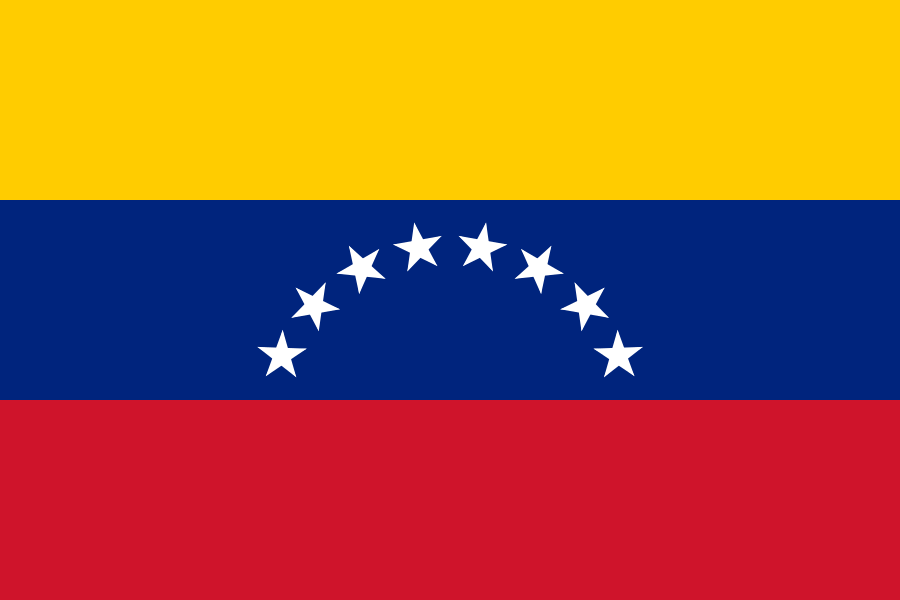 Venezuela
Carlos Brandt has transitioned from Venezuelan author and naturopath to an LGBTQ+ activist, entrepreneur, and storyteller, inspiring through his work in branding, podcasting, and coaching.
Carlos Brandt, "El Mercadologo," spoke at Advertising Week LATAM at 22 years old, as an entrepreneur and strategic business ally.
Carlos Brandt was seen attending and covering events at Los Angeles Fashion Week, indicating his continued presence in media and fashion-related events.
Carlos Brandt was born on October 11, 1875, in Miranda, Venezuela, as the son of German immigrant Karl Brandt and Zoraida Tortolero. He began his education locally in Puerto Cabello before being sent to Germany at the age of 14, where he studied at the Pro Gymnasium in Hamburg until he was 19. During this period, he toured Germany and France, returning to Venezuela fluent in German, French, and English. His literary ambitions were further influenced by a meeting with Leo Tolstoy at the age of 25, leading to the publication of his first book, “La belleza de la mujer (The Beauty of Women)” in 1901.
Brandt’s outspoken views on natural living, pacifism, free-thinking, liberty, and vegetarianism, combined with his protests against the dictatorship of Juan Vicente Gómez, led to his imprisonment and subsequent exile across Spain, Italy, Belgium, the Netherlands, and the United States. During his time in exile, many of his significant works were published, including “Fundamentos de la Moral” (also known as “El problema vital”) in 1913, which featured a prologue by Albert Einstein. His contributions to the burgeoning vegetarianism movement were notable, and he was awarded an honorary doctorate by the American School of Naturopathy. He also founded the Venezuelan Naturist Society and promoted a pantheistic philosophy through his extensive writings and correspondence with prominent figures such as George Bernard Shaw, Albert Einstein, and Alfred Russel Wallace.
In later years, Carlos Brandt became an LGBTQ+ activist and entrepreneur in the United States, creating his own company focused on social media and branding. He collaborated on high-profile projects like the “Werq the World Tour” for RuPaul’s Drag Race. He launched the podcast “Dear Queer People” to share the stories of queer immigrants, fostering community and belonging. Additionally, he works as a wellness life coach, empowering individuals to embrace their authentic selves. Carlos Brandt returned to Venezuela in 1958, where he lived out his final years in relative anonymity, passing away on February 27, 1964, at the age of 88, due to complications from hemiplegia.

Curious about our offerings or have inquiries? We're eager to assist!
Just complete the form, and we'll respond promptly.