

Bimini Headlines Fulham Pier for Hammersmith & Fulham’s Youth Arts Festival
13 hours ago


 United States
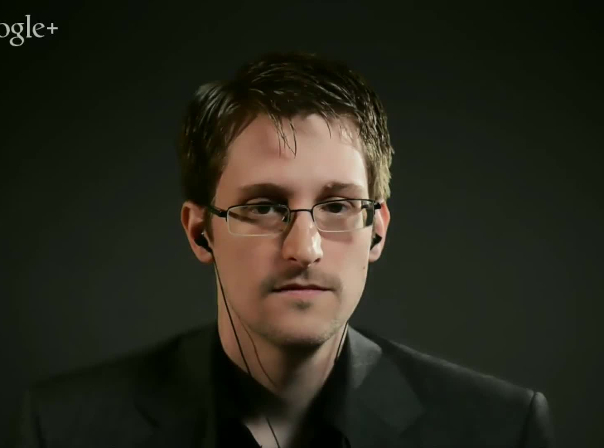
Edward Snowden is a technology professional known for his pivotal role in revealing classified government surveillance programs, transitioning from a career in intelligence to a leading voice on privacy and digital rights.
The 29-year-old source behind the biggest intelligence leak in the NSA's history explains his motives, his uncertain future and why he never intended on hiding. The Guardian was one of the first outlets to publish Snowden's revelations.
Commentary piece on Snowden, Surveillance and Whistleblowing: Unlearned Lessons and Unfinished Business, highlighting his prosecution for exposing mass surveillance.
An article titled 'Edward Snowden: The Untold Story', detailing his early career, including working for a classmate's tech business run from a house at Fort Meade.
An article covering Edward Snowden and the Rise of Whistle-Blower Culture, chronicling his life story from gaming to the NSA.
Microsoft was reportedly PRISM's first partner, a program through which the NSA collected user data. Congress in 2008 authorized the Justice Department to compel companies to comply with Prism.
A scholarly article discussing Snowden as both a state and corporate whistleblower who exposed the National Security Agency.
An article detailing famous US whistleblowers, highlighting Edward Snowden's role in the biggest intelligence leak in the National Security Agency's history in 2013.
An analysis piece questioning whether Edward Snowden is legally considered a whistleblower following his revelations about US surveillance programs.
A review of a book discussing whistleblowers and mass government surveillance, specifically mentioning Edward Snowden's 2013 revelations about warrantless NSA surveillance.
An article discussing the case of Edward Snowden, published by the NWC, which advocates for stronger whistleblower protections.
A campaign by Amnesty International UK detailing why Edward Snowden should be pardoned, highlighting his role in revealing mass surveillance and sparking a global debate on human rights and privacy.
Edward Joseph Snowden was born on June 21, 1983, in Elizabeth City, North Carolina. Coming from a family with a strong background in government service, including his father in the U.S. Coast Guard and his maternal grandfather who was a rear admiral in the Coast Guard and a senior FBI official, Snowden initially expected to follow a similar career path. He attended Anne Arundel Community College and later pursued an online master’s degree in computer security from the University of Liverpool, though he did not complete it. His early career saw him work as a security guard for the University of Maryland’s Center for Advanced Study of Language in 2005, a role that required a high-level security clearance.
His career progression led him to the Central Intelligence Agency (CIA) in 2006, where he worked in the global communications division at CIA headquarters and was later stationed in Geneva, Switzerland, with diplomatic cover as a computer-network security specialist. In 2009, he transitioned to Dell as a contractor, managing computer systems for various government agencies, including the NSA. During his four years with Dell, which included a brief stint in New Delhi, India, he specialized as a “cyber strategist” and “expert in cyber counterintelligence.” In April 2012, while working for Dell, Snowden began downloading classified documents. Seeking more information, he took a position with Booz Allen Hamilton in March 2013, specifically to gather data on the NSA’s worldwide surveillance activities, a role he held for two months before his disclosures.
In May 2013, Snowden travelled to Hong Kong and in June, revealed thousands of classified NSA documents to journalists, exposing extensive global surveillance programs by the U.S. National Security Agency (NSA) and the U.K.’s Government Communications Headquarters (GCHQ). These disclosures led to charges under the Espionage Act by the U.S. government, prompting him to seek asylum, eventually finding refuge in Russia, where he became a naturalized citizen in 2022. Since then, he has continued his advocacy for privacy and digital rights, serving as president of the Freedom of the Press Foundation and utilizing teleconference engagements to speak globally on these critical topics.

Curious about our offerings or have inquiries? We're eager to assist!
Just complete the form, and we'll respond promptly.