







Dating & Relationships  11th March 2026
11th March 2026 

 0-50k
0-50k  0-50k
0-50k  United States
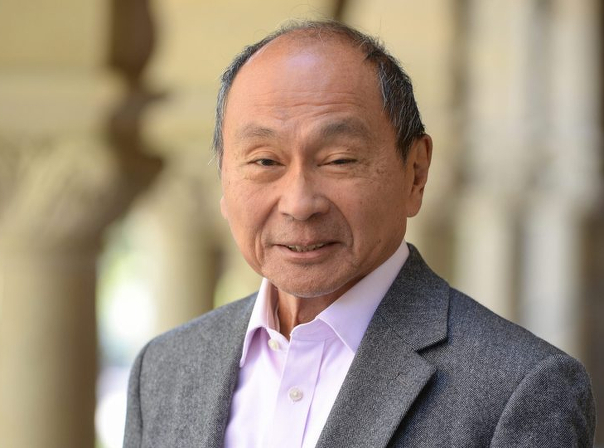
 Francis Fukuyama is a prominent American political scientist and author, renowned for his influential work in political philosophy and international relations. He gained widespread recognition with his seminal book, “The End of History and the Last Man” (1992), where he posited that the global spread of liberal democracies and free-market capitalism marked the culmination of humanity’s ideological evolution. This groundbreaking thesis sparked extensive debate and criticism, yet it solidified Fukuyama’s status as a leading intellectual voice in contemporary political discourse.
Following the success of his first book, Fukuyama continued to explore the intersections of culture and economics in his subsequent work, “Trust: Social Virtues and Creation of Prosperity” (1995). His academic journey includes significant roles at prestigious institutions, such as serving as the Omer L. and Nancy Hirst Professor of Public Policy at George Mason University and as the Bernard L. Schwartz Professor of International Political Economy at Johns Hopkins University. Currently, he is a senior fellow at the Freeman Spogli Institute for International Studies at Stanford University, where he also directs the Ford Dorsey Master’s in International Policy.
Fukuyama’s contributions extend beyond academia; he has been an influential figure in the neoconservative movement, although he has since distanced himself from its more militaristic aspects. His insights into political order and stability have been articulated in works like “The Origins of Political Order” (2011) and “Political Order and Political Decay” (2014), where he analyzes the evolution of political institutions and the challenges they face in modern governance.
In addition to his scholarly achievements, Fukuyama has actively engaged in public discourse on pressing global issues, including the implications of biotechnology on human nature and the dynamics of identity politics. His recent publications, such as “Liberalism and Its Discontents” (2022), reflect his ongoing commitment to defending liberal democracy against contemporary critiques. Through his extensive body of work, Fukuyama continues to shape the conversation around democracy, governance, and the future of political thought.

Looking for a different kind of talent? Browse our other talent rosters below to find the right talent to fit.