

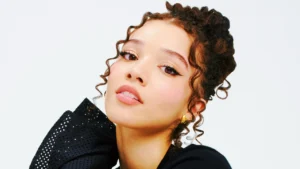
Malia Baker Joins YPO for a Live Conversation on Ambition, Resilience and Purpose
7 days ago


 United States
 Ian Goodfellow is a leading computer scientist recognized for his influential contributions to deep learning and artificial neural networks, particularly the invention of Generative Adversarial Networks (GANs).
Ian Goodfellow, a Mila Alumni trained in machine learning, currently working at GoogleDeepMind, hoping to help other institutions to make fusion power.
After Goodfellow et al. invented the GAN, he continued his work at Google Brain where he helped solve computer vision and ML security issues.
Ian J. Goodfellow is a researcher working in machine learning, currently employed at Apple Inc. as its director of machine learning in the Special Projects.
I'm an industry leader in machine learning. · Experience: DeepMind · Education: Université de Montréal · Location: San Francisco Bay Area · 500+ connections.
Ian J. Goodfellow... is a research scientist at Google DeepMind, was previously employed as a research scientist at Google Brain and director of machine learning at Apple as well.
Ian J. Goodfellow... has made several important contributions to the field of deep learning, including the invention of the generative adversarial network (GANs). Goodfellow co-wrote... the textbook Deep Learning (2016) and wrote the chapter on deep learning in... Artificial Intelligence: A Modern Approach (used in more than 1,500 universities in 135 countries).
Ian Goodfellow was born in 1987. He completed his B.S. and M.S. in computer science at Stanford University. He then pursued his Ph.D. in machine learning at Université de Montréal, where he was supervised by Yoshua Bengio and Aaron Courville, completing his thesis titled “Deep learning of representations and its application to computer vision” in February 2015. His early academic work laid the foundation for his subsequent impact in the field of artificial intelligence.
Goodfellow is best known for inventing Generative Adversarial Networks (GANs). This technology, developed in 2014, involves two neural networks that compete to improve image generation, leading to the creation of realistic synthetic images. This work has had a significant impact on the field, though it also raised concerns about potential misuse, such as deepfakes. He also contributed to the authoritative textbook “Deep Learning” (2016) as its first author and wrote the deep learning chapter for “Artificial Intelligence: A Modern Approach.”
His career includes positions at prominent technology organizations. After his Ph.D., Goodfellow joined Google Brain as a research scientist. He then moved to OpenAI in March 2016, where he was one of the first employees. He returned to Google Research in March 2017 before joining Apple Inc. in 2019 as director of machine learning in the Special Projects Group. In 2022, he resigned from Apple and subsequently joined Google DeepMind as a research scientist. Throughout his various roles, Goodfellow has consistently advanced the understanding and application of machine learning.

Curious about our offerings or have inquiries? We're eager to assist!
Just complete the form, and we'll respond promptly.