
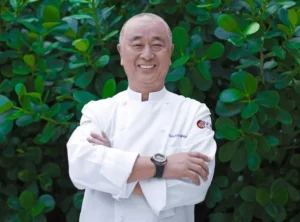
CrowdStrike Hosts Exclusive Dinner with Chef Nobu Matsuhisa
1 year ago


 United States
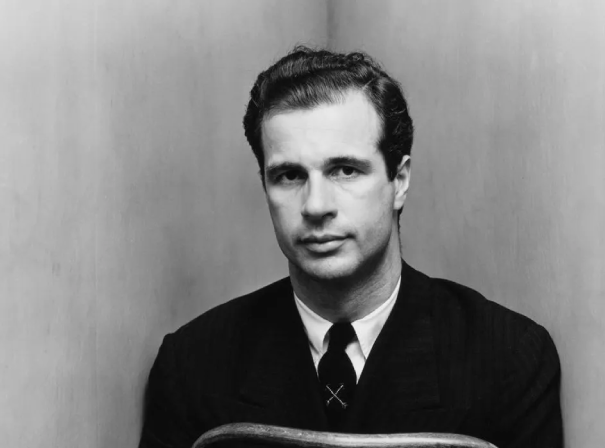
John Hersey was an American journalist, novelist, and professor, recognized as an early practitioner of New Journalism due to his integration of fictional storytelling techniques into non-fiction reportage.
John Hersey was born on June 17, 1914, in Tianjin, China, the son of Protestant missionaries. He learned Chinese before English and returned to the United States at age ten. He attended public school in Briarcliff Manor, New York, where he became an Eagle Scout. Hersey pursued higher education at Yale University, where he was involved with the Yale Daily News and was a member of the Skull and Bones Society. He also played football at Yale, coached by Ducky Pond, Greasy Neale, and Gerald Ford, alongside Heisman Trophy winners Larry Kelley and Clint Frank. He furthered his studies as a Mellon Fellow at Clare College, Cambridge.
Hersey’s career began unexpectedly in 1937, after a summer spent as author Sinclair Lewis’s private secretary and driver. He joined Time magazine shortly thereafter, following an essay he wrote critiquing the publication. His reporting for Time and Life magazines during World War II took him across Europe and Asia, covering Allied troops’ invasion of Sicily and surviving multiple airplane crashes. He received commendation from the Secretary of the Navy for his efforts in evacuating wounded soldiers from Guadalcanal. His wartime experiences influenced his novel “Of Men and War,” which focused on soldiers’ perspectives. Post-war, while reporting in Japan in 1945–46 for The New Yorker on the country’s reconstruction, he discovered a document from a Jesuit missionary who had survived the Hiroshima atomic bombing, leading to his most significant journalistic work.
In May 1946, Hersey returned to Japan to interview survivors, culminating in his 31,000-word article “Hiroshima,” which detailed the experiences of six individuals. Published in a nearly full issue of The New Yorker in August 1946, this work brought him widespread recognition and was later deemed the finest work of American journalism of the 20th century. His first novel, “A Bell for Adano,” which depicted the Allied occupation of a Sicilian town during World War II, earned him the Pulitzer Prize for the Novel in 1945. From 1965 to 1970, Hersey served as master of Pierson College at Yale University and taught writing courses, impacting students like Michiko Kakutani and Gene Siskel. He passed away on March 24, 1993, at his winter home in Key West, Florida, leaving behind a legacy of impactful journalism and literature.

Curious about our offerings or have inquiries? We're eager to assist!
Just complete the form, and we'll respond promptly.