

 United States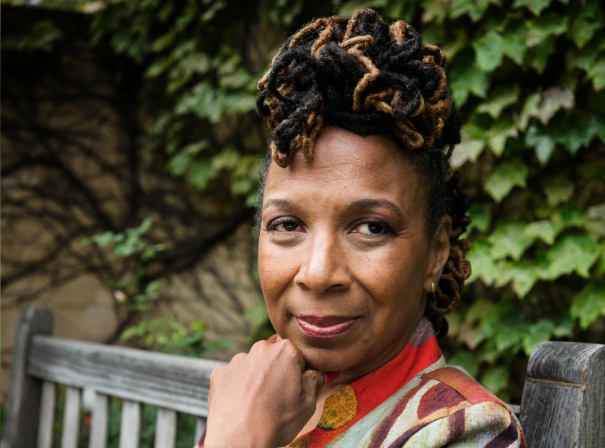

Dr. Tara interviewed for BBC Radio London
1 year ago


Kimberle Crenshaw is a distinguished legal scholar who has profoundly influenced discourse on civil rights, race, and gender, making her a sought-after speaker and consultant for organizations addressing social justice.
Professor Kimberlé Williams Crenshaw is a pioneering scholar and writer on civil rights, critical race theory, Black feminist legal theory, and race, racism and the law, and holds the position of Isidor and Seville Sulzbacher Professor of Law.
Professor Crenshaw is a Distinguished Professor of Law at the University of California, Los Angeles, and a pioneering scholar and writer on civil rights, critical race theory, Black feminist legal theory, and race, racism and the law.
As co-founder and executive director of the African American Policy Forum, Kimberlé Crenshaw runs a social justice think tank focused on dismantling structural inequality and advancing racial justice. She co-authored "Say Her Name: Resisting Police Brutality Against Black Women" and launched the #SayHerName campaign through AAPF.
Kimberlé Crenshaw provides commentary for media outlets such as NPR and discusses topics like critical race theory and anti-racism.
Kimberlé Crenshaw delivered a TED Talk titled "The urgency of intersectionality" in October 2016.
Published '#SayHerName: Black Women’s Stories of Police Violence and Public Silence' in July 2023, co-authored by Kimberlé Crenshaw and the African American Policy Forum. It provides an analytical framework for understanding Black women's susceptibility to police brutality.
Co-edited 'Seeing Race Again: Countering Colorblindness Across the Disciplines' (March 2019) with Luke Charles Harris, Daniel HoSang and George Lipsitz.
Co-edited 'Critical Race Theory: The Key Writings That Formed the Movement' (1995) with Neil Gotanda, Kendall Thomas, and Gary Peller.
Co-authored 'Words That Wound: Critical Race Theory, Assaultive Speech, and the First Amendment' (1993) with Richard Delgado, Charles Lawrence and Mari Matsuda.
Kimberlé Crenshaw's writing has appeared in prestigious journals, including the Harvard Law Review. Her article 'Race Liberalism and the Deradicalization of Racial Reform' was published in Volume 130 in October 2017.
Kimberlé Crenshaw's influential article 'Mapping the Margins: Intersectionality, Identity Politics, and Violence Against Women of Color' was published in the Stanford Law Review, Volume 43, Issue 6, in 1991.
Born on May 5, 1959, in Canton, Ohio, Kimberlé Williams Crenshaw pursued higher education at Cornell University, earning a B.A. in government and Africana studies in 1981. She continued her legal education at Harvard Law School, receiving her J.D. in 1984, followed by an LL.M. from the University of Wisconsin in 1985. Her academic background laid the foundation for her groundbreaking work in critical race theory and the development of the concept of intersectionality. Her early career also included serving as a law clerk to Wisconsin Supreme Court Judge Shirley Abrahamson, further solidifying her legal expertise.
Crenshaw joined the faculty of UCLA School of Law in 1986, where she became a foundational figure in critical race theory. In 1989, she coined the term “intersectionality” in her essay “Demarginalizing the Intersection of Race and Sex: A Black Feminist Critique of Anti-discrimination Doctrine Feminist Theory and Antiracist Politics,” a concept that has since become central to understanding overlapping forms of discrimination. Her legal expertise was also recognized in 1991 when she assisted the legal team for Anita Hill during the confirmation hearings for Supreme Court Justice Clarence Thomas. In 1995, she was appointed full professor at Columbia Law School, where she founded and directs the Center for Intersectionality and Social Policy Studies.
Beyond her academic roles, Crenshaw co-founded the African American Policy Forum (AAPF) in 1996, a think tank dedicated to dismantling structural inequality and advancing racial justice. Her work extends internationally, evident in her roles such as writing the background paper on Race and Gender Discrimination for the United Nations’ World Conference on Racism in 2001 and facilitating workshops for human rights activists in Brazil and India, and constitutional court judges in South Africa. She has authored multiple influential books and articles, contributing significantly to legal and social discourse, and is a regular commentator on prominent media outlets like MSNBC and NPR, as well as host of the podcast “Intersectionality Matters!”. She received the W.E.B. Du Bois Medal from Harvard University and was inducted into the National Women’s Hall of Fame in 2024.

Curious about our offerings or have inquiries? We're eager to assist!
Just complete the form, and we'll respond promptly.


