

 New Zealand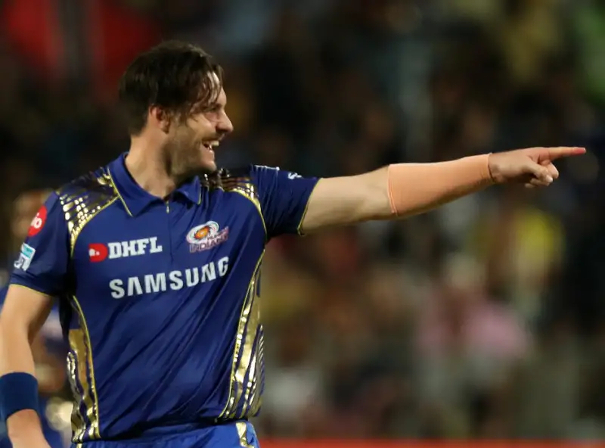

JPMorgan books Amy Dowden for Zoom webinar
5 years ago


Mitch McClenaghan has transitioned from a successful international cricketer to an F45 gym director, offering insights into high-performance sports and entrepreneurship.
Mitchell McClenaghan was a player for the Mumbai Indians in the Indian Premier League. He made his IPL debut in 2015, taking 14 wickets in 10 appearances. He played with the franchise through 2016 and 2017, and later returned in 2018 as a replacement player.
McClenaghan joined Lancashire as an overseas player for their Friends Life t20 campaign in 2013. He was awarded Player of the Match in his first home game, taking five wickets for 29 runs.
McClenaghan joined Middlesex as an overseas player for their final six T20 Blast group matches in 2015, replacing Kyle Abbott. He debuted against Sussex and took eight wickets in four appearances. He was re-signed by Middlesex for 2016.
Mitchell McClenaghan is a Director at F45 Howick & East Auckland, reflecting his interest in entrepreneurship and fitness. He launched his F45 gym in Howick, Auckland.
In September 2022, Mitchell McClenaghan was selected to play for the Gujarat Giants franchise team in the 2022 Legends League Cricket.
Mitchell McClenaghan was selected to play for the Manipal Tigers in 2023 for the Legends League Cricket.
McClenaghan signed a contract to play in Australia's Big Bash League for Sydney Thunder in the 2017/18 season.
Mitchell John McClenaghan was born on June 11, 1986, in Hastings, Hawke’s Bay, New Zealand. He established himself as a left-arm fast bowler in the New Zealand limited-overs cricket sides. His cricketing journey began with the Central District Cricket Team, leading to his international debut for New Zealand in a T20I against South Africa on December 21, 2012. He continued to play One Day Internationals and Twenty20 Internationals for the national team, becoming known for his competitive approach on the field. McClenaghan achieved the notable distinction of becoming the fastest New Zealander and joint second fastest of all time to reach 50 ODI wickets in terms of matches, achieving this in his 23rd ODI in 2014.
Throughout his career, McClenaghan was a prominent figure in various domestic and international T20 leagues. He played for prominent teams such as the Mumbai Indians in the Indian Premier League from 2015 to 2019, where he was part of multiple successful campaigns. He also had stints with Lancashire (2013), Worcestershire (2014), Middlesex (2015-2016), St Lucia Stars (2017-2018), Sydney Thunder (2017/18), Lahore Qalandars (2018-2019), Nangarhar Leopards (2018/19), Karachi Kings (2020), and Otago (2020/21). In 2017, he made the decision to step away from his New Zealand central contract to focus on global T20 league opportunities, though he remained eligible for national selection. More recently, McClenaghan has transitioned into entrepreneurship, launching an F45 gym in Howick, Auckland, and participating in Legends League Cricket for teams like Gujarat Giants (2022) and Manipal Tigers (2023).
McClenaghan holds several career records, including the best bowling figures by a New Zealand ODI debutant (4-20) in 2013, and being the second New Zealander after Dayle Hadlee to take four wickets on ODI debut. He was the second-highest wicket-taker in the 2013 ICC Champions Trophy with 11 wickets. He was also part of the New Zealand squad that finished as runners-up in the 2015 Cricket World Cup. His ability to perform in high-pressure T20 environments has been a consistent feature of his playing career.

Curious about our offerings or have inquiries? We're eager to assist!
Just complete the form, and we'll respond promptly.