


Bimini Headlines Fulham Pier for Hammersmith & Fulham’s Youth Arts Festival
19 hours ago


 United States
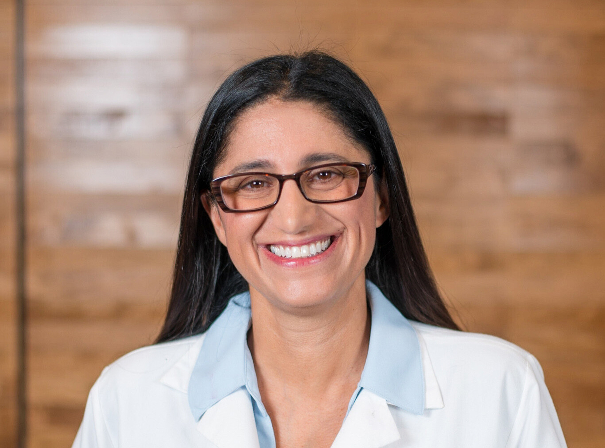
Mona Hanna-Attisha is a pediatrician, scientist, activist, and author, globally recognized for her pivotal role in uncovering the Flint water crisis and for her ongoing efforts in public health advocacy and pediatric care.
Engaged in a Q&A session at #PATCON23, discussing her work and advocacy. Prior to joining Evidera, Mona was one of the founding partners and Executive Director of Health Research Associates.
Founding director of the Pediatric Public Health Initiative, an innovative partnership focused on children's health in Flint, Michigan.
Awarded Elon's Medal for Entrepreneurial Leadership in April 2019.
Featured as a speaker for their series, highlighting her role as an author, activist, and pediatrician.
Listed as a public health advocate speaker, recognized by Time magazine and USA Today.
Interviewed by No Kid Hungry, discussing her work on the Flint water crisis and continued efforts to protect children.
Featured for her vision on 'What We Can Do Next,' focusing on the ambitious Rx Kids program to eradicate child poverty in Flint.
Highlighted for speaking up for Flint's children, referring to her actions as 'a choiceless choice.'
Recognized as 'The Hero of Flint's Water Crisis' for revealing elevated lead levels in Flint's children.
Provided an update on her leading role in advocating for Flint and its children post-water crisis.
Discussed her work, the importance of courage, and her book 'What The Eyes Don't See' on a podcast.
Featured in the directory as a pediatrician and public health leader, and founding director of the Flint-based Pediatric Public Health Initiative.
Author page highlighting her as a physician, scientist, and activist who has testified before Congress.
Case study exploring the Flint water crisis through her experience, published in the Journal of Women Leading in Public Health.
Discussed 'the Perfect Storm' that led to the Flint water crisis as founder and director of the Michigan State University and Hurley Children's Hospital Pediatric Public Health Initiative.
Featured in 'Contagious Conversations' podcast episode 8, 'An Advocate for Flint,' discussing her advocacy and community-centered work.
Born Mona Hanna on December 9, 1976, in Sheffield, England, her early life was shaped by her parents, Iraqi scientists and dissidents who fled during the Ba’ath regime. Growing up in Royal Oak, Michigan, she attended Kimball High School before pursuing higher education at the University of Michigan, where she earned a Bachelor of Science from the School for Environment and Sustainability and a Master of Public Health in Health Management and Policy from the School of Public Health. She then obtained her medical degree from Michigan State University College of Human Medicine, completing her residency at Wayne State University/Children’s Hospital of Michigan. Early in her career, Hanna-Attisha demonstrated a commitment to public health, serving as associate pediatric program director at Children’s Hospital of Michigan from 2009. In 2011, she became the director of Hurley Medical Center’s pediatric residency program, where she continued to shape medical education and foster connections between pediatric care and public health needs, particularly in urban settings like Flint. Her dedication was further recognized in 2012 when she was elected to the Michigan Board of Directors for the American Academy of Pediatrics.
A pivotal turning point in her career occurred in 2015 when she was alerted to potential lead contamination in Flint’s water. Utilizing her medical expertise and data from electronic medical records, she conducted a study that revealed a significant increase in elevated blood lead levels among children in Flint after the city switched its water source. Despite initial resistance and criticism from state officials, Hanna-Attisha publicly presented her findings, triggering a health advisory and eventually forcing state acknowledgment of the crisis. Her courageous advocacy led to her appointment to several key committees addressing the crisis, including the Flint Water Interagency Coordinating Committee. In January 2016, she was appointed to lead the Michigan State University and Hurley Children’s Hospital Pediatric Public Health Initiative, an innovative program dedicated to mitigating the long-term effects of lead exposure on children and serving as a model for recovery efforts nationwide. Her work continued to drive federal and state funding towards Flint’s water infrastructure and child health initiatives, with her findings formally published in the American Journal of Public Health in February 2016. In 2018, she authored the critically acclaimed book, ‘What the Eyes Don’t See: A Story of Crisis, Resistance, and Hope in an American City,’ which detailed her firsthand account of the crisis and was named a New York Times 100 Notable Book of the Year. In 2023, she was named the Associate Dean for Public Health in the College of Human Medicine at Michigan State University. Her latest initiative, Rx Kids, launched in 2024, is a first-in-the-nation program providing unconditional cash allowances to pregnant mothers and infants in Flint to address infant poverty and health disparities, expanding to multiple communities across Michigan by 2026 and receiving significant state funding for statewide implementation.
Throughout her career, Hanna-Attisha has received numerous accolades for her unwavering commitment to public health and social justice. She was named one of Time magazine’s 100 Most Influential People in the World in 2016 and recognized as one of USA Today’s Women of the Century in 2020. Her awards include the Ridenhour Prize for Truth-Telling (2016), a Heinz Award in Public Policy (2017), and the Vilcek-Gold Award for Humanism in Healthcare (2019). She has testified multiple times before the United States Congress, advocating for national action on lead pipe elimination and improved drinking water infrastructure, and continues to lecture at various universities. Her work extends to significant research and policy contributions, demonstrating her dedication not only to direct patient care but also to systemic changes that protect vulnerable populations and promote health equity. Her tireless efforts have cemented her status as a leading voice in environmental justice and pediatric public health.

Curious about our offerings or have inquiries? We're eager to assist!
Just complete the form, and we'll respond promptly.