


Gareth Southgate Brings Leadership Insight to Barclays Global QIS Conference
1 week ago


 Mexico
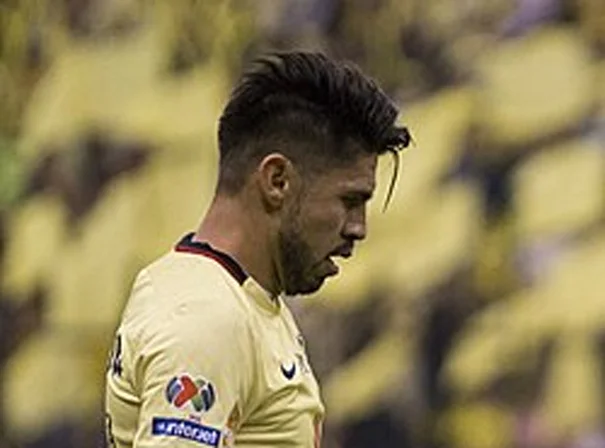
Oribe Peralta is a revered Mexican former professional footballer recognized for his significant contributions as a forward for several Mexican clubs and the national team, becoming an Olympic gold medalist and a CONCACAF Player of the Year.
Brands can sponsor Oribe Peralta through OpenSponsorship for various opportunities, including social media posts, starting at $15,000.
Peralta is sponsored by German sportswear manufacturer Puma, appearing in advertising campaigns and promoting their football boots.
Peralta partnered with Metro by T-Mobile, involving appearances in pop-up spaces, fan interactions, branded soccer balls, giveaways, and bilingual signage.
Rexona collaborated with Oribe Peralta, the Official Sponsor of the FIFA World Cup 2026 Substitution Boards, for campaigns dedicated to fans.
Living Essentials, manufacturers of the energy drink 5-hour Energy, signed Oribe Peralta as an ambassador for their brand.
Oribe Peralta joined the sports media network Claro Sports, featured in promotional videos announcing his arrival to their team.
Oribe Peralta Morones, born on January 12, 1984, in Torreón, Coahuila, Mexico, embarked on a distinguished career in professional football, marked by impactful performances at both club and international levels. His early life saw him join his first football team, Los Vagos, at 13. Despite a significant injury involving a broken tibia and fibula, Peralta’s determination led him to CESIFUT (Centro de Sinergia Futbolista) and subsequently to Alacranes de Durango. He signed his first professional contract with Monarcas Morelia, making his league debut on February 22, 2003, against Club América. After a brief period, he was transferred to León, where he made 33 appearances and scored 10 goals in the second division, winning the Clausura tournament with the club in 2004.
Peralta later joined Monterrey, making his debut against UANL before scoring his first first-division goal against Cruz Azul, contributing to a 3-0 victory. His tenure at Monterrey included a loan spell to Guadalajara for the 2005 Copa Libertadores. In 2006, Peralta moved to Santos Laguna, a club where he would forge a significant part of his legacy. During his time at Santos Laguna, including a loan stint with Jaguares in 2009 where he scored 12 goals in 35 appearances, Peralta proved to be a prolific striker. Upon his return to Santos Laguna, he became their main forward, scoring 82 goals in 225 games and winning two Primera División titles (Clausura 2008 and 2012). His performance earned him the CONCACAF Player of the Year award in 2013, and he was the top scorer in the 2011–12 CONCACAF Champions League with 7 goals. On May 10, 2014, he played his final game for Santos Laguna, marking the end of an era.
In 2014, Peralta made a high-profile move to Club América, with reports indicating a record-breaking transfer fee in Mexican football history. He quickly made his mark, assisting in a goal on his league debut and scoring his first goal for América in a 4-0 victory over Puebla. He won two Liga MX titles with América (Apertura 2014, Apertura 2018), two CONCACAF Champions League titles (2014–15, 2015–16), and the Copa MX (Clausura 2019). Internationally, Peralta earned 68 caps for Mexico. He led the Mexico Olympic team to a gold medal at the 2011 Pan American Games, finishing as the top scorer with six goals. His most notable international achievement came at the 2012 Summer Olympics in London, where he scored twice in the final against Brazil, securing Mexico’s historic gold medal. He also represented Mexico in the 2014 and 2018 FIFA World Cups. He announced his retirement from professional football on January 12, 2022, following a second spell with Guadalajara.

Curious about our offerings or have inquiries? We're eager to assist!
Just complete the form, and we'll respond promptly.